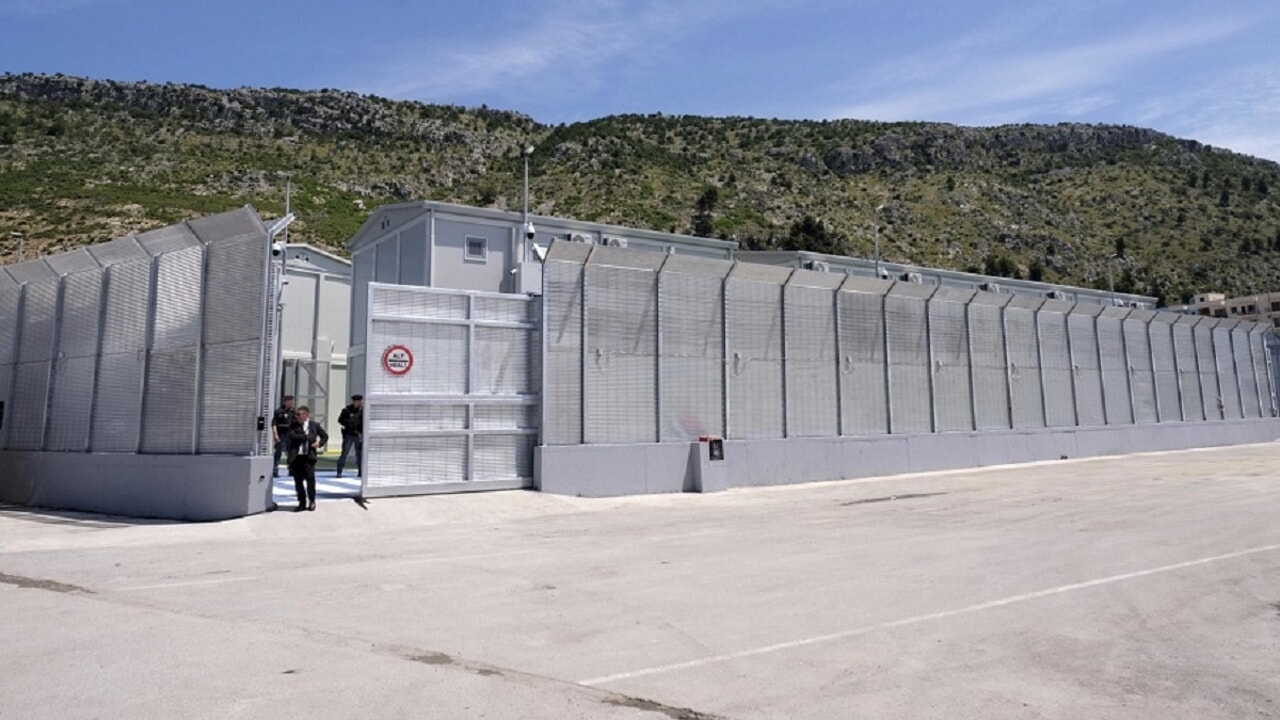
The Meloni government’s plan for migrant centers in Albania receives the approval of the Advocate General of the Court of Justice of the European Union. In his opinion on the Italy-Albania protocol, Nicholas Emiliou explains that the agreement reached between the two countries is “compatible with EU legislation on repatriation and asylum procedures, provided that the rights of migrants are fully protected”.
The opinion
The Advocate General of the Court of Justice spoke in relation to the lawsuit brought by two migrants who had been expelled from Italy and taken to Albania, where they had applied for international protection. Subsequently, two detention decrees were issued against them, which the Court of Appeal of Rome rejected, deeming that the national legislation was in conflict with EU law. The national authorities appealed to the Court of Cassation, which turned to the Court of Justice for clarification. Emiliou’s opinion is non-binding and anticipates the future ruling of the judges.
In his opinion Emiliou explains that EU law “does not prevent” a country from establishing CPRs outside its territory. However, the State remains bound to “respect all the guarantees provided”. A “hat” which includes the right to legal assistance, linguistic interpretation and contact with family members and authorities. Particular attention must be given to minors and vulnerable people.
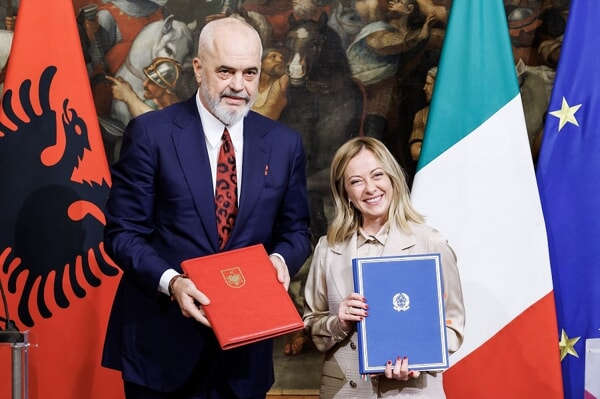
The Italy-Albania agreement
The protocol between Italy and Albania was signed on 6 November 2023. It allows Italy to establish and manage centers for the detention and repatriation of migrants in Albania, while remaining under Italian jurisdiction. The Italian judges have repeatedly spoken out against the detentions and a real executive-toga tug of war has emerged.
The EU Court of Justice
The Court of Justice is the highest judicial body of the European Union. Its task is to ensure that Union law is respected and applied in the same way throughout the Union. It is one of the two judicial bodies that together make up the institution called “Court of Justice of the European Union”.
It is made up of 27 judges and 11 advocates general. Judges different types of cases. It mainly deals with issues relating to Union law raised by national judges and with cases brought by the Commission against Union Member States for infringements of Union law. It also rules on appeals against court decisions.
