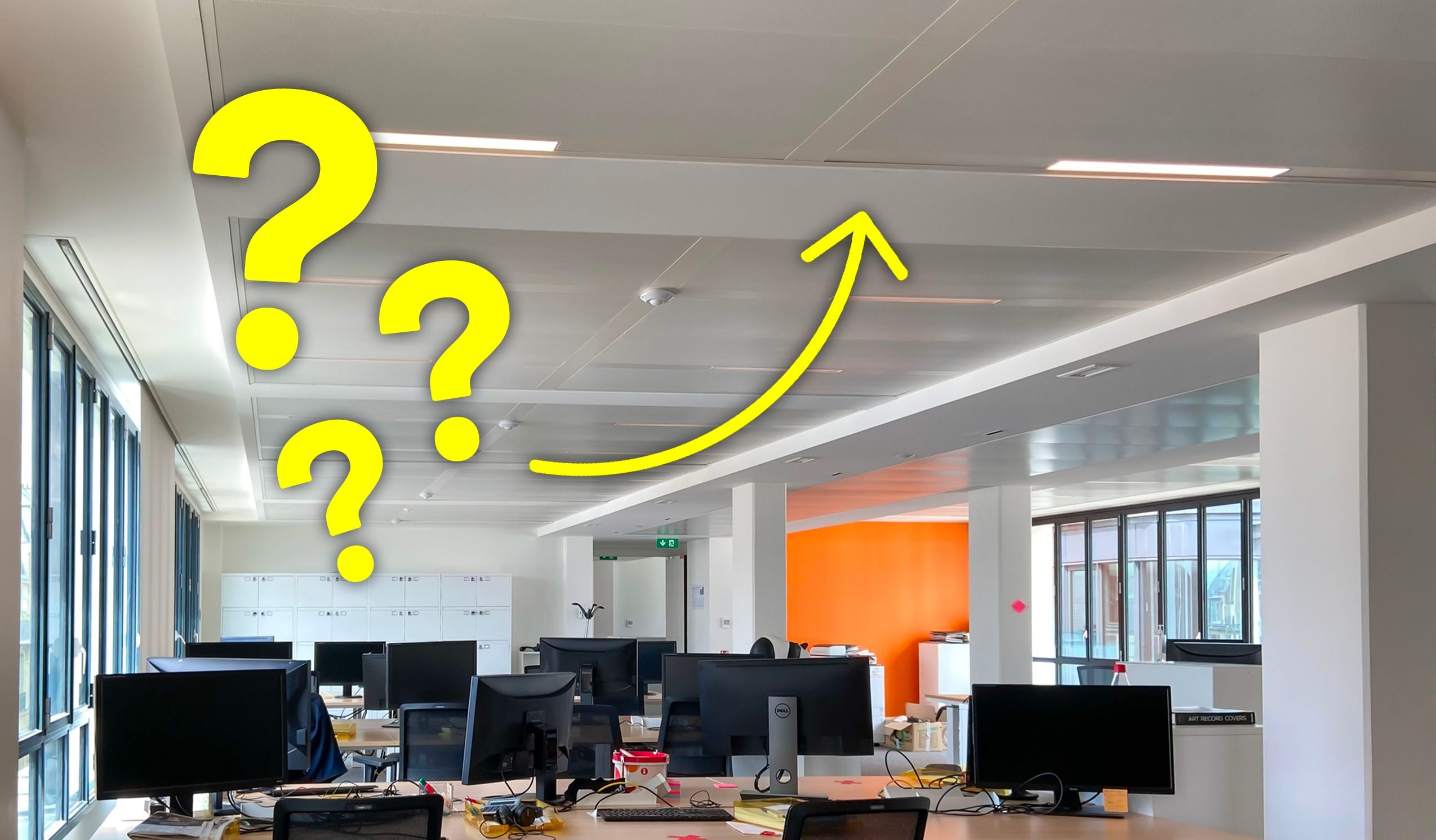
The false ceiling constitutes a non-structural component of the building envelope that allows for physically separate the internal environments of the building from ceiling system component: ventilation and air conditioning ducts, electrical walkways, pipes and other elements not compatible with floor installation.
Not all buildings are equipped with them: adoption depends on complexity of the systemsgive it architectural and functional needsand by the need to implement specific technical performances. This article illustrates its operation, construction configuration and innovative role in risk mitigation systems.
What is the false ceiling for and how does it work
In the most common configuration, a false ceiling consists of a load-bearing structure suspended from the attic through a system of metal hangers vertically developed. A hanger, in simple words, is nothing more than a very thin vertical metal element arranged in a diffuse manner along the suspended surface. They are fixed to this structure finishing slabsvery often in plasterboardinstalled through certified modular systems. In essence, therefore, the false ceiling does not require a calculation to be created, except in some of its particular meanings which we will see later.
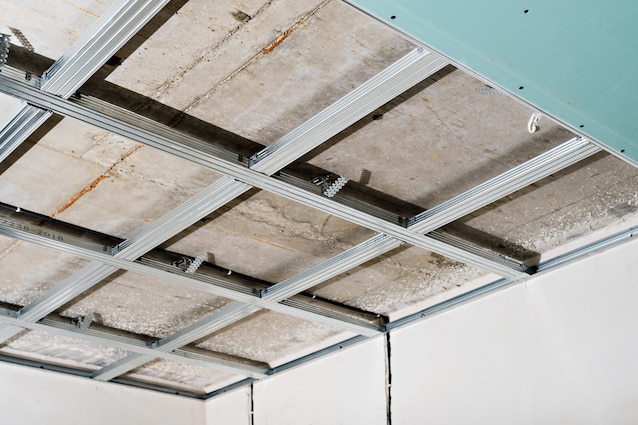
The hanging ensures that the self-weight of the false ceiling is transferred safely to the upper floor, preventing it from detaching. Commercial systems, to ensure these requirements, are generally subject to load tests and certificationsdeformability/vibrations and behavior in operation. Once the false ceiling has been installed, a cavity is created between the intrados of the attic and the paneling surface. Such technical volume it is used to house the system component: ventilation and air conditioning ducts, electrical walkways, pipes and other elements not compatible with floor installation.
Types of false ceiling
A crucial aspect in the choice of system is its inspectability. We can therefore distinguish:
- Fixed systems: usually made of continuous plasterboard, they offer a monolithic and elegant aesthetic result, but require the installation of special “inspection hatches” to allow maintenance of the hidden systems.
- Modular systems: composed of an exposed, or semi-recessed, metal grid which accommodates panels or tiles. These systems allow each individual element to be lifted, guaranteeing immediate and total access to the elevated system network, ideal for complex buildings such as hospitals or business centres.
Through the use of perforated plates or the insertion of mineral wool panels in the cavity, the false ceiling can reduce reverberation and make internal environments acoustically dry and comfortable, an essential feature, as well as a functional requirement, in offices, schools and public spaces.
False ceilings and fire risk mitigation
Since the plasterboards They have good fire resistancedue to the content of chemically bound water and the low thermal conductivity, a false ceiling is also well suited to being used to satisfy fire prevention requirements. In fact, it can be used as a protective screen for structural elements above, such as beams and floors.
With appropriate executive measures – sealing of the joints, continuity of the system, adequate thicknesses and correct anchoring – the false ceiling system + structural element to be protected can be certified in terms of performance REIaccording to fire regulations: R stands for load-bearing capacity, AND for resistance to smoke and flames, THE for thermal insulation. The class REI 60for example, indicates the time of exposure to fire for which the protected element maintains the required performance. It is important to specify that the requirement does not apply directly to the false ceiling (which is not a structural element), but to the system formed by the false ceiling and structural element, and is only valid if all the relevant criteria and design details are respected. In this sense, the choice of the type of false ceiling takes on not only a functional but also a role also performance compared to passive fire protection. This design choice avoids, for example, the creation of particular paints on load-bearing metal elements, thus contributing to the reduction of construction costs of a building.
Seismic risk mitigation
Despite being non-structural elements, false ceilings are vulnerable to seismic action: even modest earthquakes can cause cracks, partial detachments or local collapses. In addition to the economic damage, the collapse of the false ceiling can compromise the safety of the occupantsgenerate or amplify damage to the suspended plant component or even make the environments unusable. The most recent research in the field of seismic engineering has led to the development of suspension and anchoring systems adequate mechanical performancecapable of limiting the relative movements between the floor and paneling, or increasing the ductility of the overall system, creating a energy dissipation transmitted during the seismic event through the controlled damage of the connection elements.
The false ceilings configured in this way are defined “anti-seismic”, in the sense that they guarantee certified performance up to certain levels of acceleration or imposed displacement. It is essential to underline that, similarly to buildings, There is no false ceiling that is completely immune to seismic damage: the behavior always depends on the intensity and characteristics of the earthquake, as well as on the quality of the installation.
