The fireflies they are among the most recognizable insects in the world, but their evolutionary history has remained obscure due to the scarcity of fossils. Now, finally, researchers have been able to shed light on the evolutionary history of these fascinating beetles. A new Chinese study published on Proceedings of the Royal Society B, with Shuailong Yuan as the leader, he described a new fossil species which fills an important gap: Burmese cretoluciolacoming fromBurmese amber of Middle Cretaceousdated to ca 99 million years ago.
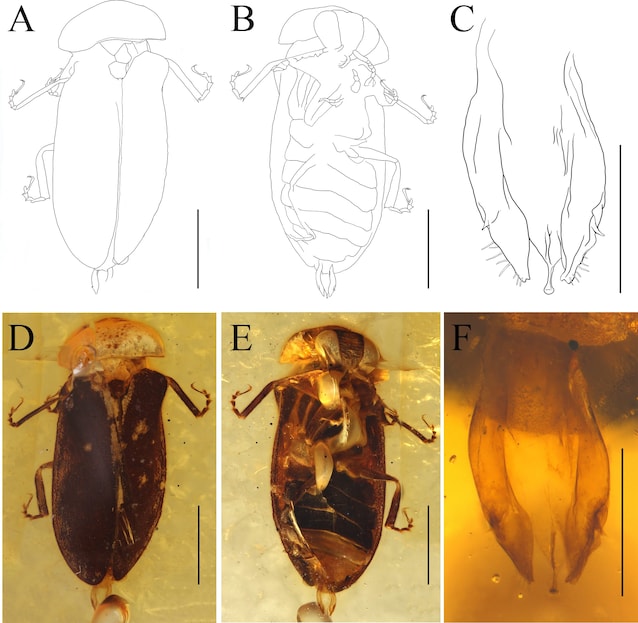
The finding is a male specimen of 6.6 millimeters trapped in tree resin. Amber preserved extraordinary anatomical details of the Cretoluciola (the fossil resin, in fact, preserves the soft tissues better than the rock in order to study the insects well): large compound eyes, thread-like antennae, six abdominal ventrites and a bipartite luminous organ, the structure that produces light in modern fireflies it is one of the diagnostic features of the subfamily Luciolinae.
The phylogenetic analysis has thus placed Cretoluciola inside the Luciolinaemaking this species the first confirmed Cretaceous fossil of this subfamily. This establishes a minimum age of 99 million years for fireflies capable of producing light. The characteristics of modern Asian and African specimens were therefore already present in the age of dinosaurs. The find also calls into question the classification of two other fossils previously attributed to Luciolinae: Flammarionella And Protoluciolaboth from Burmese amber. The study suggests that they belong to distinct evolutionary linesmaking the diversity of Middle Cretaceous fireflies even more so articulated.
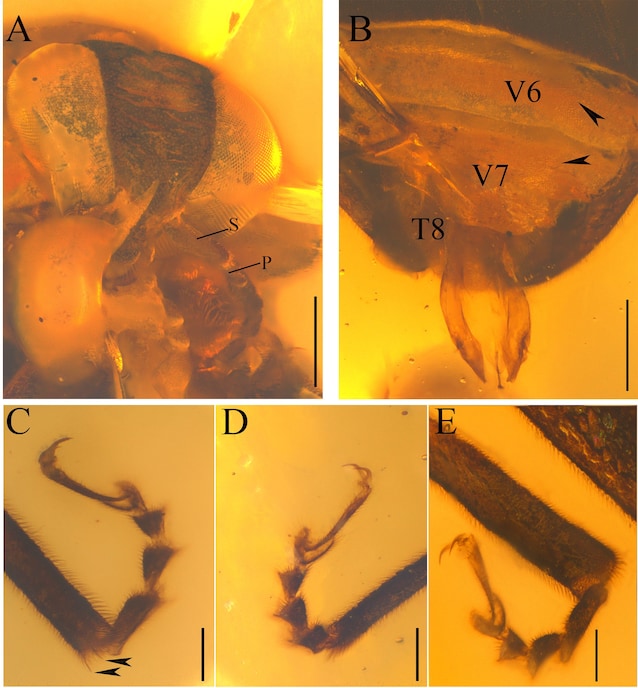
The presence of the luminous organ in the male indicates that it already had bioluminescence a function in courtship 99 million years ago. The authors hypothesized that ancestral fireflies were nocturnal and adopted diversified strategies similar to modern ones. In fact, bioluminescence still performs multiple functions today: in addition to sexual courtship in the dark, it serves as protection mechanism towards predators: it is a “toxic alarm” that warned them that the insect could have a bad taste.
The scarcity of firefly fossils, as for other insects, It depends on their biology: small size, easily degraded remains and preference for environments humid where fossilization is rare. Amber remains one of the few windows available on the diversity of insects of the Middle Cretaceous.
