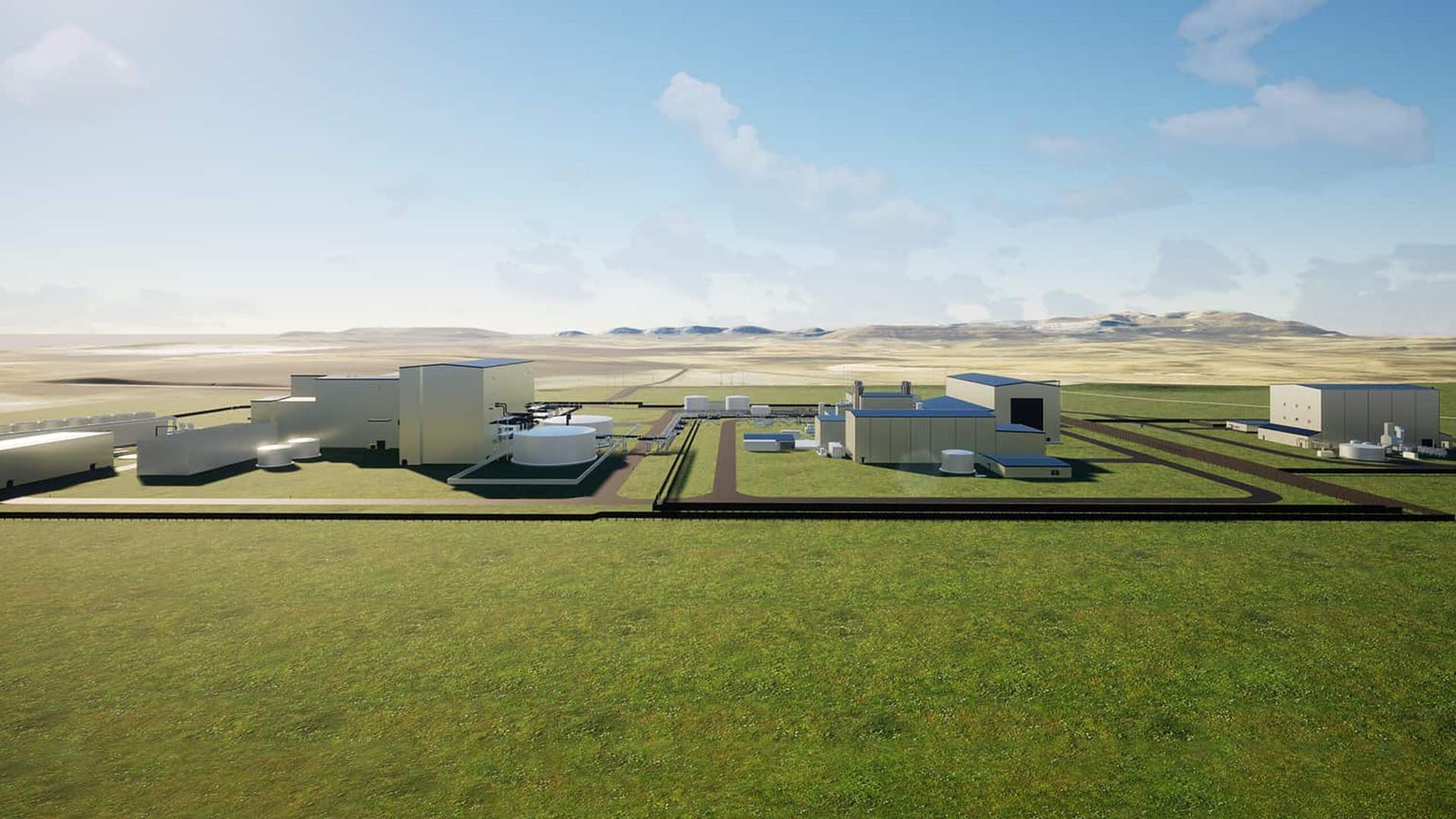
The US Nuclear Regulatory Commission (NRC) has released approval for the start of construction of Kemmerer Unit 1a new nuclear fission reactor by TerraPoweran energy startup founded and financed by Bill Gates. The plant will be built in the state of Wyoming, near a coal-fired power plant which is being decommissioned and will adopt the technology Natrium: a fourth generation reactor (Gen-IV) cooled by liquid sodiumwith nominal power of 345 MWe, expandable to 500MWe through integration with a molten salt thermal storage.
The authorization process, which lasted for years with rigorous safety and technical performance assessments, marks a historical event. It’s about the first commercial reactor authorized for construction by the NRC and the first approval, in 40 years, of a non-cooled light water design. The project has an estimated cost of 4 billion dollarsof which a substantial portion is funded by the U.S. Department of Energy (DoE), and is expected to begin commercial operations on 2031.
The characteristics of the new Nantrium nuclear reactor
Natrium is a fast nuclear reactor jointly developed by TerraPower and GE Hitachi Energy, belonging to the latest generation Small Modular Reactor (SMR) category. Its technological configuration involves the use of liquid metallic sodium as heat transfer fluid primaryintended for the removal of heat generated in the core and the cooling of the fuel elements. The high boiling point of sodium (883°C) allows the system to operate a pressures significantly inferior compared to water-cooled nuclear reactors, benefiting from greater safety margins, plant simplification and a potential reduction in construction costs.
Natrium is designed to use HALEU (High Assay Low Enriched Uranium), a type of uranium a low enrichment characterized by a relatively higher concentration of the fissile isotope Uranium-235 compared to the levels typically adopted in traditional nuclear reactors. The use of this fuel allows you to opt for more compact designs and with one greater neutron efficiencyin line with the technological targets of fourth generation nuclear reactors. In this context, the DoE is financing the development of a domestic supply chain for the production of HALEU, in order to reduce dependence on foreign supply chains and strengthen national energy security.
The functioning of the thermal storage system: liquid sodium cooling
The liquid metallic sodium, after having removed the heat from the reactor core, transfers the thermal energy to a system of molten salts, which are stored in a “hot” storage tank of large capacity that performs the function of storage of thermal energy. Near the latter, pipes are installed crossed by a flow of water, which absorbs the heat stored in the molten salts until the conditions of superheated steamsubsequently used in a turbine for the generation of electricity. After releasing their energy content, the molten salts are directed towards a storage tank “Freddo“, ready for a new work cycle.
Therefore, one of the distinctive features of the plant is the separation functional Between the island nuclear And the energy conversion islandmade possible through the thermal storage system. This configuration ensures greater operational flexibility, allowing the modulation of output electrical production and the temporary management of demand peaks of up to approximately 500 MWe.
The next construction phases of Kemmerer Unit 1 in the USA
Once construction of Kemmerer Unit 1 is complete, TerraPower intends to apply for the grant operating licensewhich would allow it to operate for a period of 40 years. However, the issuing of the authorization will be subject to verification by the NRC that the completed infrastructure complies with current regulatory requirements and guarantees adequate levels of operational safety. If these criteria are met, Natrium could be considered new model of electricity generation that is reliable, flexible and free of direct carbon emissions. Due to its design features, the system would potentially result replicable and exportable in different geographical contexts, as well as integrable with non-programmable renewable energy sources, such as wind and solarhelping to improve stability and resilience of the electricity grid.
The initiative promoted by TerraPower represents one of the most significant attempts in recent years to relaunch the development of new generation nuclear power, in a context characterized by sustained growth in global energy demand and the need for sustainable electricity generation. In this scenario, the US company announced a agreement with Half aimed at the construction of eight plants with Natrium technology, for an overall capacity of 2.8 GWe. The power plants would be intended to provide energy to data centers and computational platforms dedicated to the development and operation of artificial intelligence systems.
