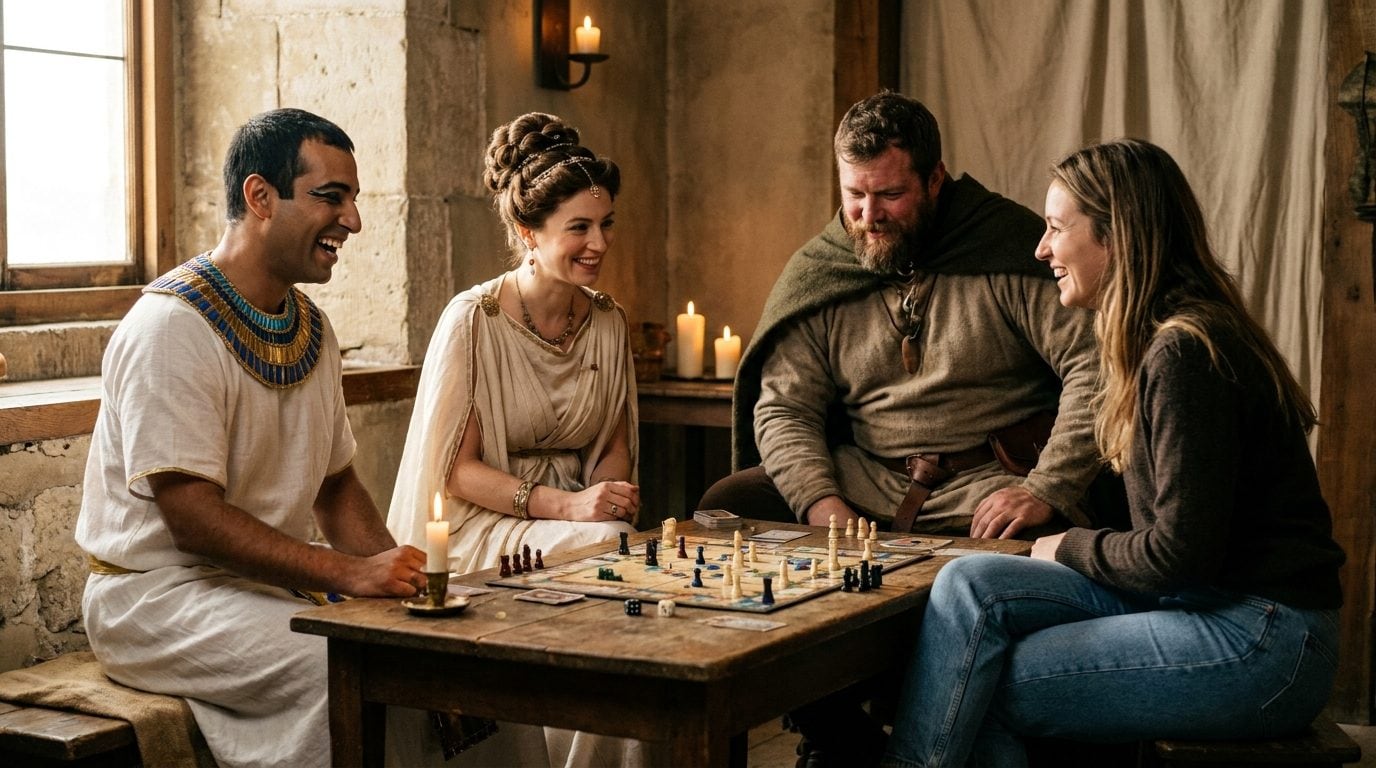
Board games they serve to satisfy social, cognitive and other needs. Their origins are very ancient: they date back at least to the 4th millennium BC. C.that is, over 5000 years ago, and there are theories according to which they could be even older.
A recent discovery has shed new light on the games of Greek and Roman civilization: in the city of Ptolemaisin Libya, archaeologists have found numerous gaming tables carved into the rock, offering unprecedented evidence of the importance that recreational activities had for the citizens of the ancient Greek settlement in public life and the social habits of the time.
All human civilizations have had their games: the Egyptian civilization knew the senet, the Sumerian one the real game of Urthe Roman one the game of latrunculi. The history of games, moreover, did not end with the end of ancient civilizations. In the Middle Ages, popular games still established themselves today, such as chess, lady And backgammon. In recent decades, board games have undergone a real boom, despite having to suffer the video game competitionwhich made them lose some of their popularity.
Board games, by a very general definition, are games practiced on a specific surface (a board, a chessboard with squares, etc.), on which pieces and markers move. I am widespread since the origin of civilization because they respond to numerous needs: social needs, because they create relationships with other people; stress reduction, because they offer a form of entertainment; cognitive needs, stimulating thinking and the development of strategies; other types of needs.
Games in ancient Mediterranean civilizations: astragali, dice, senet, royal game of Ur
The oldest board games date back to the first Mediterranean civilizations, that Egyptian and that Sumerian. First of all, ancient peoples knew the astragalithat is, small bones of hoofed animals which, thanks to their tetrahedral shape, served as natural dice, with four faces. From the astragali they derived the actual diceequipped with six faces, also very ancient and dating back to at least 3000 BC. The astragali and dice could be used both as standalone game, be like tool for board games.
The origin of board games is also very ancient. In Egypt a game was widespread, the senetwhich consisted of moving pieces on a sort of chessboard, making them advance by throwing dice or astragali. The first attestations of the senet date back to the period around 3300 BC., but the game became more popular in the following centuries. It probably had functions not only recreational but also religiousrepresenting the passage from the earthly world to the afterlife.
A similar game, slightly later, was widespread in Mesopotamia: the real game of Urdating back to the mid-3rd millennium BC and considered an ancestor of today’s backgammon.
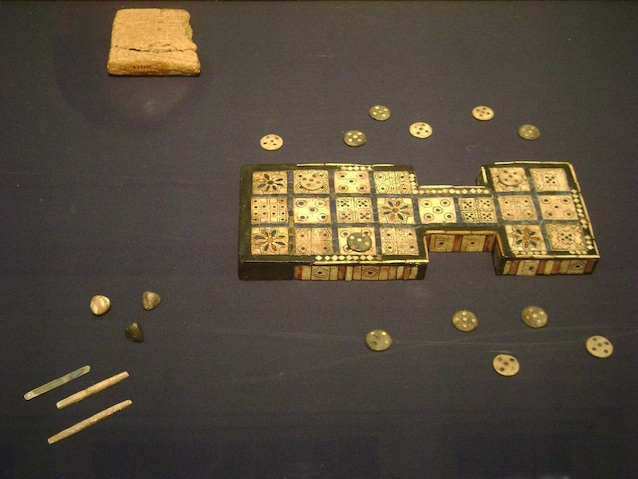
The precise rules of the Egyptian and Sumerian games are not known. Modern versions, including those available online, are based on interpretations that are not historically grounded.
Greece and Rome: petteia And latrunculi
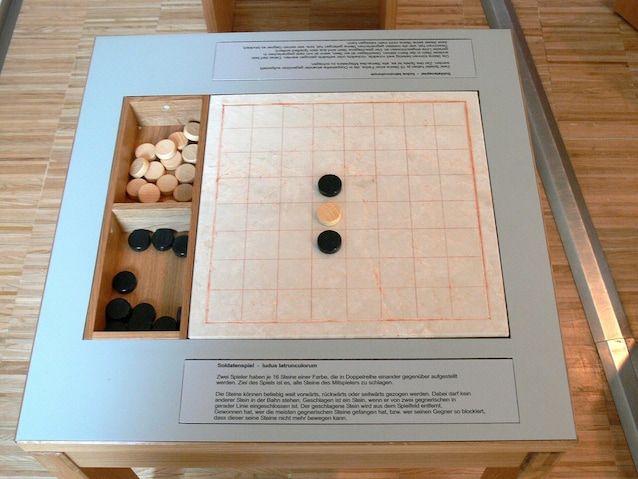
Board games were also very popular in Greek and Roman civilizations. In Greece there were various games with pieces, united under the term petteia. Among them, the pentagram game and the city game. In Rome, however, the ludus latrunculorum (bandits game) sometimes simply called latrunculi, which consisted of moving the pieces, precisely the latrunculi, represented by small stones, on a chessboard.
The exact rules are not known. Probably, a brigand was considered captured, and therefore lost, when surrounded by two opposing brigands, but this is, however, an unproven interpretation. They stay the number of pieces and dimensions are also unknown of the chessboard: perhaps eight squares per side or, according to other interpretations, 12 x 8.
In Roman civilization they were also very widespread dicewidely used despite numerous attempts to ban them.
Middle Ages and modern age: chess, checkers, backgammon and playing cards
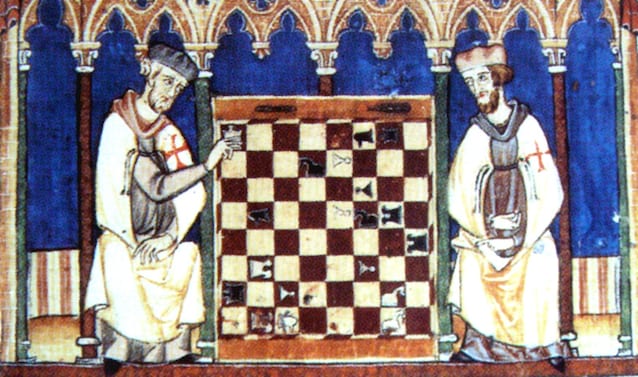
In the Middle Ages games destined for great popularity were invented. The most important is chess, whose origins are to be found in an Indian game, known as caturanga, attested from the 6th century AD. C. Around the year 1000 incomplete versions of chess, traveling along the Silk Road, arrived in the Middle East and from there to Europe. As the years passed they underwent various changes and around the 16th century they took on their definitive form, which is still widespread today.
In the same period in Italy another game destined to become very popular began to take definitive form: la lady. In many countries the backgammonplayed in various versions until the eighteenth century, when the rules were codified for the first time.
In the Middle Ages, a “competitor” of board games also became widespread: playing cards, originating in China and arriving in Europe via Egypt.
Contemporary age: the boom in board games and the competition from video games
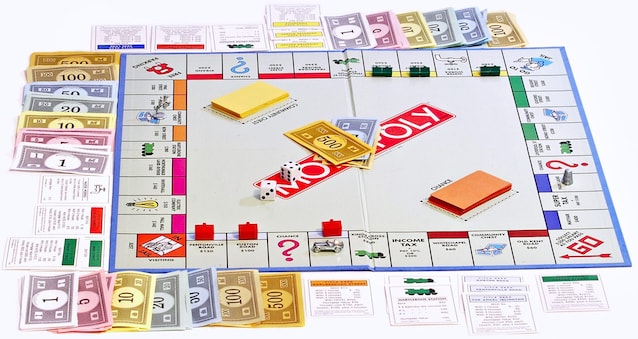
In recent centuries a real boom in board games. In the twentieth century, growth became much faster thanks to socio-cultural changes and to the greater availability of cheap materialssuch as plastic and paper. Therefore, very popular games were born. Among the most important is the Monopolythe famous “entrepreneurial” game introduced in 1935 in the United States and derived from another pastime, The Landlord’s Gamewhich has existed since 1904.
From 1948 it is instead the Cluedoin which players must discover the perpetrator of a crime. In 1957 in France the Risk (whose Italian version is the Risk!), whose aim is to conquer territories by moving specific pawns. Games with questions and answers are also very popular, the best known of which is Trivial Pursuitlaunched on the market in 1983. The number of new board games released year after year has grown enormously.
For several decades, board games have had to cope with the video game competitionwhich have taken away part of their popularity, without however completely supplanting them, in consideration of the fact that board games can guarantee aggregation and collective entertainment to those who play them, to a greater extent and in a different form than videogames.
Furthermore, i two types of games are sometimes intertwined: many board games have become videogames, thanks to the creation of numerous electronic versions; in some cases, from the most popular video games, such as Civilizationsboard games are derived.
Sources
D. Parlett, The Oxford History of Board Games, New York, Oxford University Press, 1999
Giampaolo Dossena, Encyclopedia of games, Turin, UTET, 1999
Board Game Geek Fragments Greek city times magazine Johann Huizinga, Homo Ludens, Einaudi, 2002 (original edition 1938)
