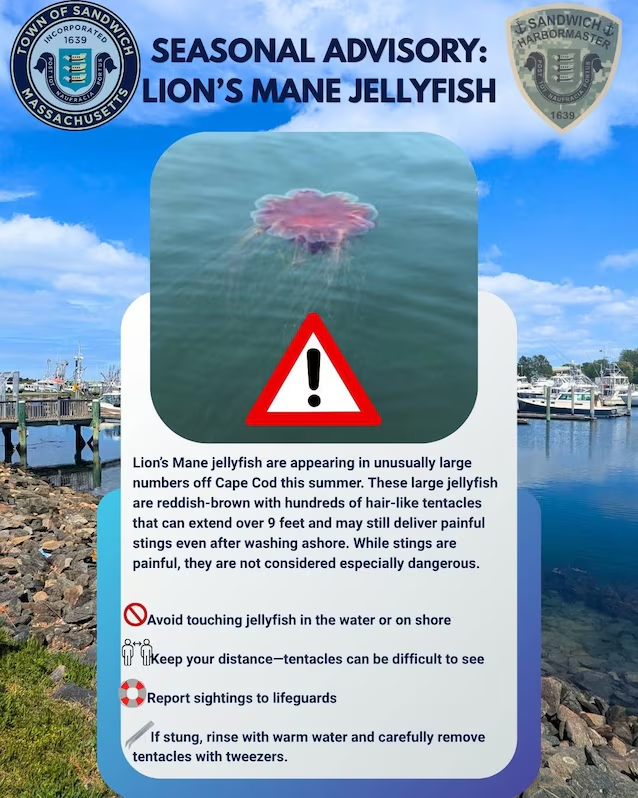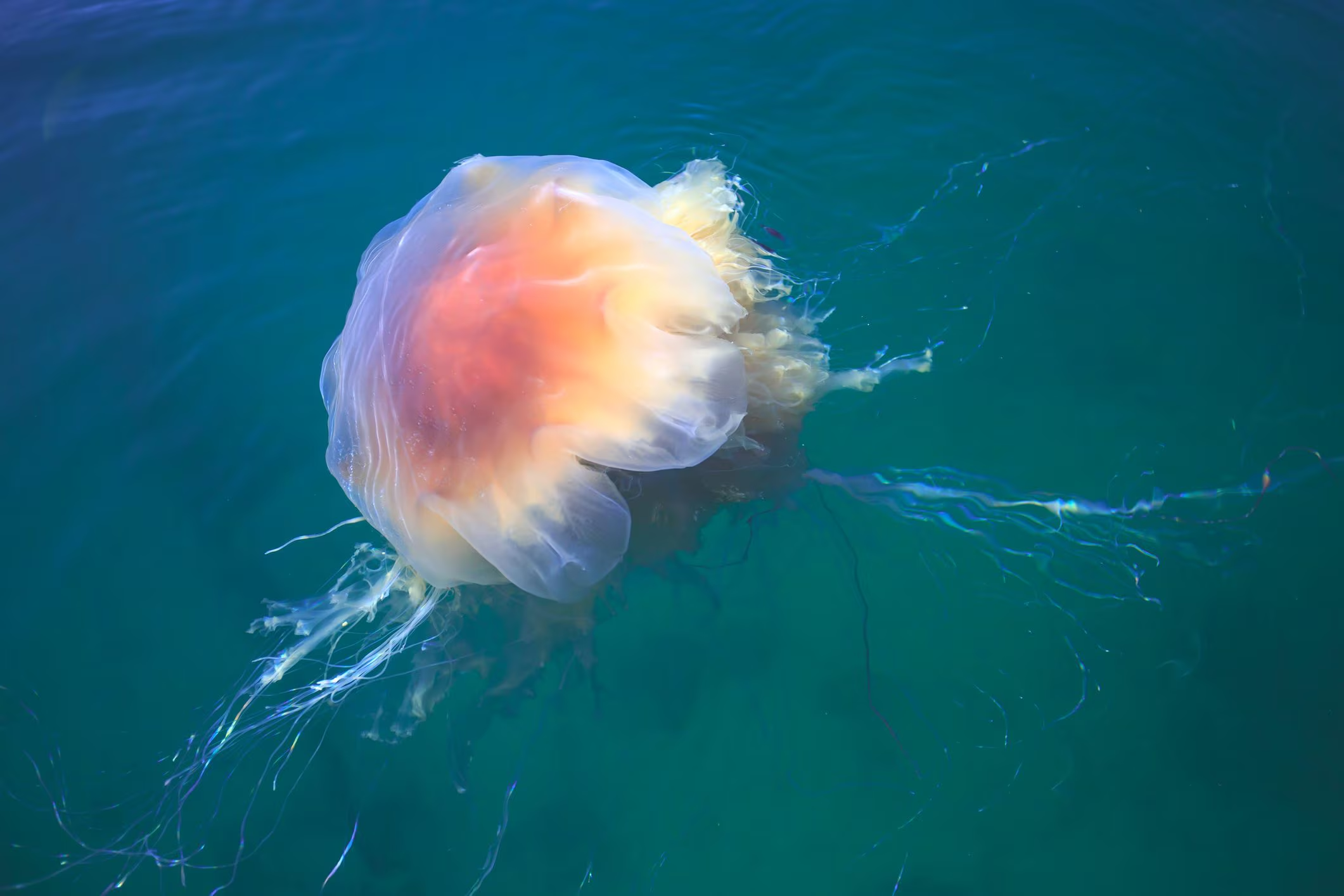
Along the coasts of Cape Codin Massachusetts, is experiencing an unusual density of Lion’s mane jellyfish (Cyanea capillata), known to be among the jellyfish species largest on the planet. According to data reported by the Sandwich Marina, sightings of this animal – whose tentacles can reach lengths greater than those of a blue whale – began early in May 2026, culminating in a flowering (in biological jargon bloom) in mid-June. The species is normally seen from late spring to summer.
The phenomenon, linked to the temperature of the water and the motion of the sea currents, has brought numerous specimens both offshore and on shore. In light of this concentration, the New England Aquarium has published an information note inviting swimmers to maintain a safe distance to avoid accidental contact.
How big is Cyanea capillata
The Lion’s Mane (Lion’s mane jellyfish in English) takes its name from its long and thin tentacles, which are reminiscent of the thick mane of a lion. Below the bell (the “umbrella” part of the body, which can measure up to about 1.8 meters in diameter) hang over 1,000 stinging tentacles. However, establishing whether it is absolutely the largest jellyfish in the world depends on how this record is defined, and the debate is still open. Some experts, in fact, believe that the title belongs to Nomura jellyfish (Nemopilema nomurai), whose bell can reach 2 meters in diameter. In any case, both are fully classified as giant jellyfish.
But it is on the length of the tentacles that this species sets the record: they can in fact exceed 30.5 meters. Blue whales can grow to similar sizes, but on average these enormous cetaceans stop at approximately 27 metres. The largest specimen of lion’s mane jellyfish ever recorded had well-long tentacles 36.5 meters.
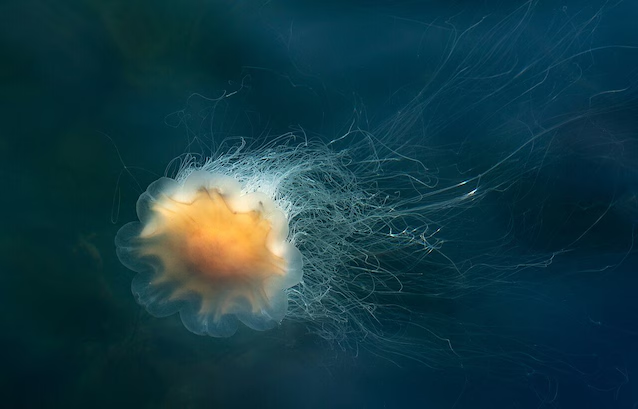
In addition to length, the lion’s mane boasts another record: according to the Guinness World Record, it is the jellyfish heaviest on the planet. Since it is not an easy task to collect and weigh creatures of this size and consistency, the official estimate is around 1 ton.
Habitat and diet: where this giant of the seas lives
The lion’s mane is a typical species of cold and temperate waters: found in the Arctic Ocean, the North Atlantic and Pacific, as well as the Baltic Sea and the North Sea. It is predominantly a deep-sea animal, but currents can push it towards the coasts, as is happening this summer in Massachusetts.
From a nutritional point of view, this jellyfish ranks above small fish and other prey, it unfolds its network of tentacles and lets itself descend slowly, trapping everything it encounters and paralyzing it with its nematocysts. The menu includes plankton, small fish and even other jellyfish. Although it is usually described as a solitary animal, the lion’s mane can gather in real schools.
Is it stinging? Sting and risks for humans
How dangerous is it? Contact is painful but, in the vast majority of cases, not lethal for a healthy person. The greatest danger is linked to the thread-like nature of the tentacles, very difficult to spot in the waterand to the fact that they keep their stinging capacity intact even when the animal is beached. In the event of a sting, the correct practice explained by the Massachusetts authorities involves washing the area with hot water and removing residual fragments using tweezers, absolutely avoiding rubbing the injured part with bare hands.
Precisely in light of these risks, the New England Aquarium published a warning on social media inviting bathers to be extremely cautious, recommending observing the specimens only from a safe distance and reporting their presence to the lifeguards. Similar phenomena had already occurred in the past, for example in 2020and according to experts factors such as water temperature and the availability of food could contribute to these surges. Jellyfish they do not actively swim like fish but they move driven by currents and winds, so their massive presence in an area depends a lot on dynamics of local sea currents.