At Baths of Trajanon the Colle Oppioa Romean important intervention by restoration and enhancement of thesouth-western exedra and of underground tunnel of the complex, built as part of the program PNRR Caput Mundi. The intervention affected both the upper monumental spaces and the underground path, improving their conservation, accessibility and use. The structure of the Baths of Trajan dates back tobeginning of the 2nd century d. C.
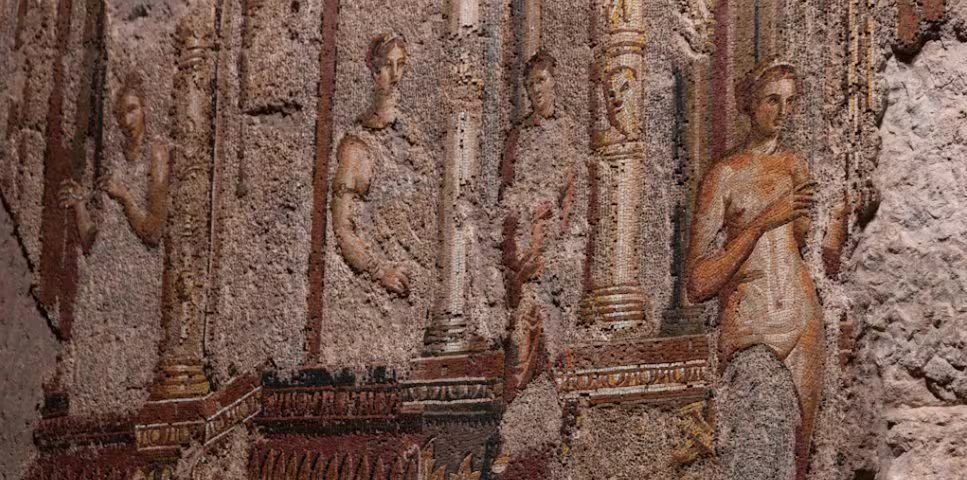
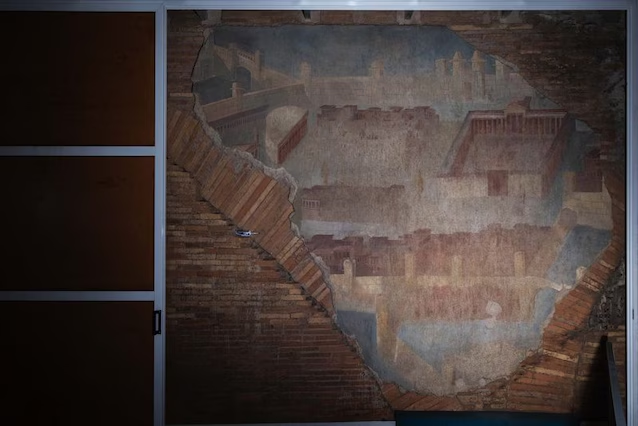
The exedra (architectural space of form semicircular), with a diameter of approximately 30 metersretains a structure that testifies to function cultural of the spa. The two rows of niches along the walls were probably intended to house wardrobes for books and documentswhile the steps could accommodate the public during readings and meetings. Particularly significant is the recovery of the underground gallery, where two important artistic testimonies are preserved: the fresco of the so-called Painted City and the Big Mosaic. The first represents a rare one urban view created in perspectivewith a surface area of over 10 square meters; the mosaic, however, constitutes one of the most important decorative testimonies of the area: it is a tall work five metreswhich represents an architectural structure, probably a theatrical front.
These two enormous masterpieces, opened to the public for the first time, are both precedents compared to the structure of the Baths of Trajan. They are in fact in a previous stratification level olderrelating to highly valuable structures dating back to second half of the 1st century d. C.that is, a few decades before the construction of the spa structure.
The restoration and recovery works were also accompanied by new archaeological investigationswhich allowed go into detail knowledge of the environments and underlying structures. Among the new features reported is an additional band of mosaic with the representation of a port cityas well as remains of important marble coverings.
The project returns thus to the knowledge and visit of a lesser-known part of the Baths of Trajan, allowing us to read the monumental complex not only through its great architecture, but also through the underground spaces and decorations less known.
