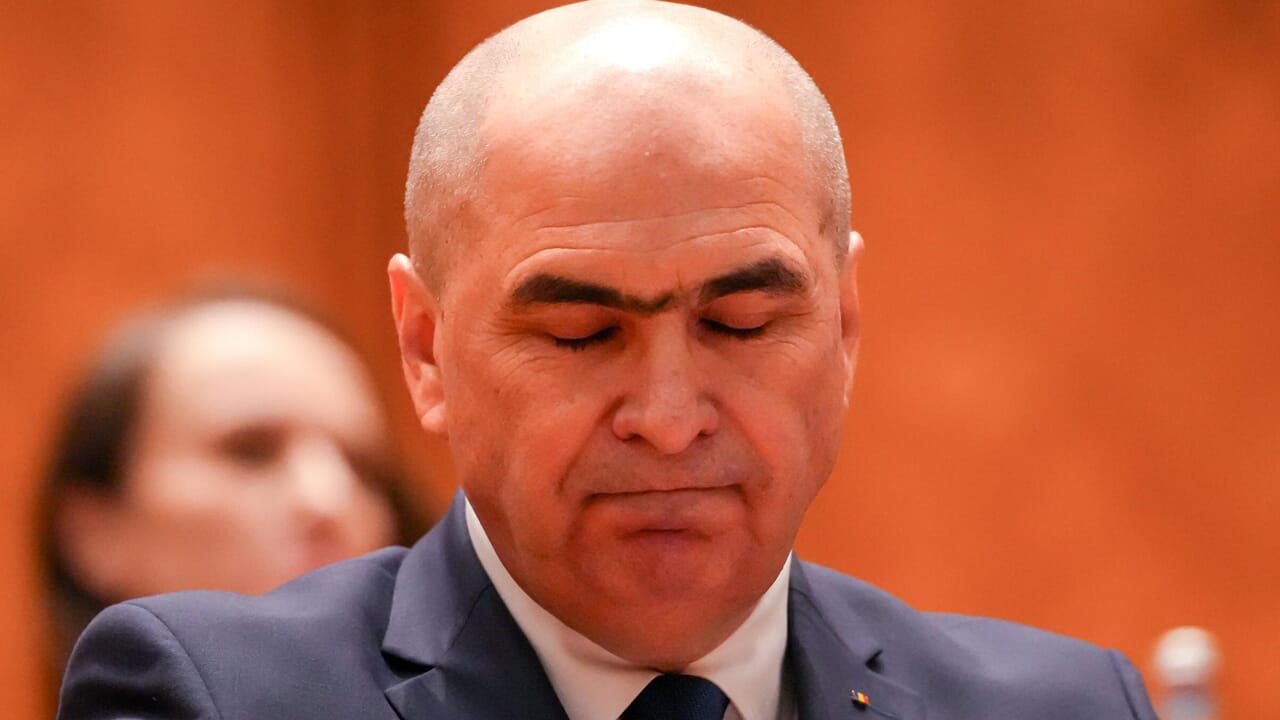
An unusual alliance puts an end to a pro-European political experiment. The Romanian parliament has cast a vote of no confidence in the government led by Prime Minister Ilie Bolojan, approving a motion of censure presented by the Social Democrats and the far-right Alliance for the Unity of Romanians (Aur) party, both in opposition. Now scenarios of political and geopolitical instability are opening up for the Central-Eastern European country.
Parliament’s vote
The motion was approved on Tuesday 5 May and obtained 281 votes in favour, well above the threshold of 233 needed. In particular, parliamentarians from the Social Democratic Party (PSD) and opposition forces voted for the fall of the executive. The government now remains in office with powers limited to ordinary administration until the formation of a new executive.
The fall of the executive comes at the end of a political crisis that opened in recent weeks, culminating in the withdrawal of support from the PSD, which had denounced the loss of the parliamentary majority and strong differences on the government’s economic line. The Bolojan government took office in June 2025 as a pro-European coalition composed of several political forces: the defectors of the PSD (the only centre-left formation in the majority), the liberal conservatives of the National Liberal Party (Pnl), the right-wing conservatives of Union to Save Romania (USR) and the party of the Hungarian minority (right) Hungarian Democratic Union of Romania (UDMR).
Consultations for the new prime minister
The coalition had progressively lost cohesion on key issues such as fiscal reforms and deficit management. The move to the opposition PSD was decisive, which first withdrew its ministers and then supported the motion together with other political forces, including the ultranationalists of Aur. During the parliamentary debate, the opposition accused the government of having worsened the economic situation, citing inflation, slowing growth and reduced purchasing power.
Bolojan rejected the criticism, calling the motion “cynical and artificial”, claiming the measures taken to contain the deficit. With the approval of the parliamentary act, the government remains in office only for current affairs, with limited powers, until the formation of a new executive. According to the Constitution, the President of the Republic Nicusor Danm will now have to start consultations with the parties to designate a new prime ministerial candidate, who will have the task of obtaining the confidence of Parliament. The scenarios remain uncertain: hypotheses include the formation of a new coalition government, a minority executive or, in the event of a prolonged stalemate, the use of early elections, even if the latter option remains difficult to implement.
