The secret Duce between cocaine and betrayals in the forbidden diary of Margherita Sarfatti
Never had Benito Mussolini been seen so closely and described so intimately – personal and political – by anyone who had known him. Because none of those who spent time with him, sometimes a lot, had ever been truly “intimate” with him. His wife Rachele, who wrote a memoir in the 1950s, his daughter Edda, also the author of a book, the hierarchs who survived the post-war period, the driver, the butler, the private secretary, all gradually dedicated to writing their own personal tome of memories.
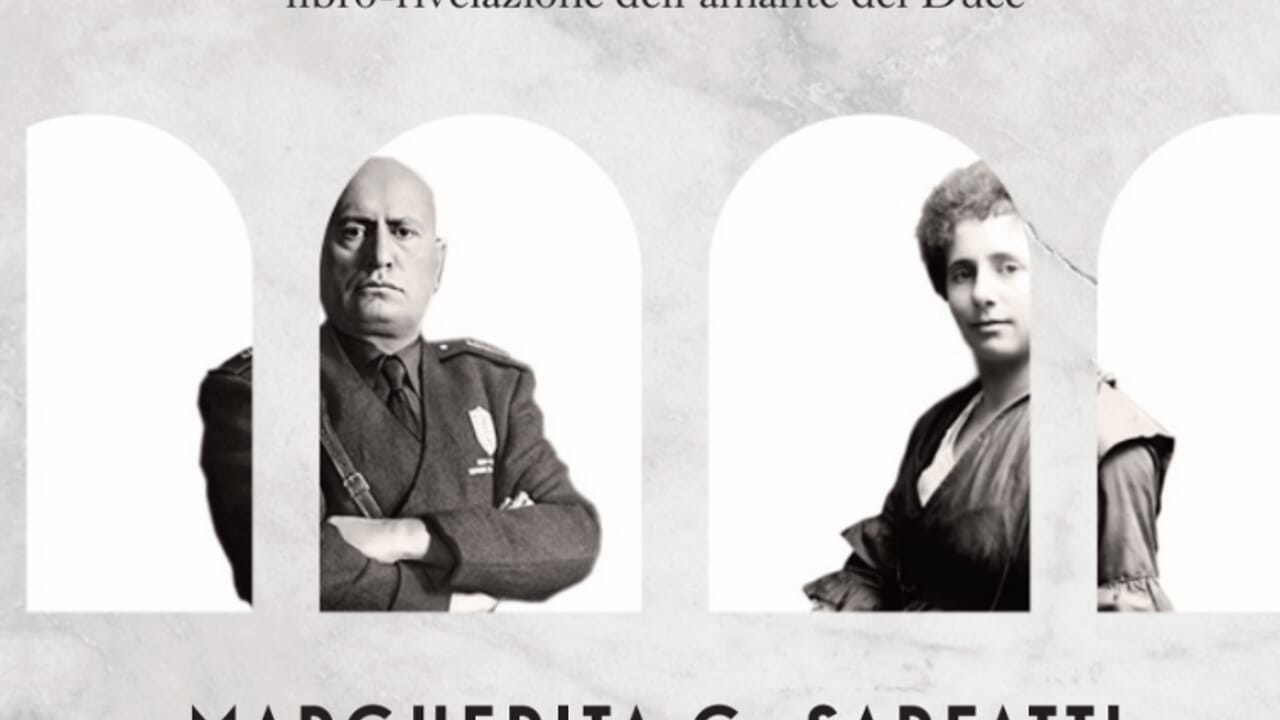
There is a person who, more than any other, was “united” with the former dictator, with the man who deprived Italy of freedom for twenty years, and that person had never spoken until now. She is Margherita Sarfatti, journalist, writer, cultural organizer of Jewish origin, who had a long and very close sentimental and intellectual relationship with the Duce, something that none of the many lovers of the leader of fascism had managed to do, and who now speaks to us through a memoir-biography of Mussolini, written in 1947 and until now never published in Italy. It is the very famous “My Fault, Mussolini as I knew him” that Margherita proposed in vain immediately after the war to some New York publishers and which after those rejections was placed in a drawer, from which it comes out today for the first time by Paese Edizioni (252 pages, 20 euros) and which has been in bookshops since Friday 8 May with the title of “It’s my fault. Mussolini as I knew him”.
Mussolini told by Margherita Sarfatti
Biographers and historians have been talking about My Fault for years, explaining that Margherita had asked that it not be published in Italy, so the manuscript remained in the archives of the Gaetani-Sarfatti family (the direct heirs) and then of the Mart of Rovereto. And they rightly talk about it, because Sarfatti’s text is full of historical innovations (how could it have been otherwise…) of a personal and political nature. Mussolini is described in his private moments, when together with Margherita he played the violin in the evening to relax or rode along the Appian Way, indulging in reflections on life and his childhood. And Sarfatti outlines a very detailed psychological analysis of him, portraying him as a man incapable of loving, alone, who with his arrogant external attitude balances an intimate insecurity, victim of a sexual bulimia that leads him to make advances on his sons’ wives.
Mussolini’s sexual bulimia
Slave of cocaine, around 1920-21 (at the time on free sale) and later of the blackmail of some Roman women of ill repute. A man who at a certain point completely loses his sense of proportion, is overwhelmed by the arrogance of power and the circle of incompetent and corrupt people with whom he surrounds himself. First of all her family, of which Margherita paints a disturbing picture. In Sarfatti’s words, his wife Rachele is a crude illiterate and a bad mother, perhaps even half-sister of Mussolini himself, full of lovers (Sarfatti accredits at least two), Edda is a hired and capricious half-nymphomaniac, probably not Rachele’s daughter, but of a Russian with whom Mussolini had a clandestine relationship in 1910, the male children of drunken dunces intent only on exploiting notoriety to accumulate privileges, the Ciano regime profiteers who certainly took money abroad at the end of the war. Margherita shows no mercy even for Claretta, who in her opinion is a vulgar and no good manipulator, who when she met Mussolini had already had a child aborted by someone else, and her sister, Miriam Petacci, also the Duce’s lover. A very dark picture, with various ideas that have never emerged over time.
Historical news
But the historical part is also full of news. Starting with the revelation of what happened at the Quirinale on the morning of 4 January 1925, when Vittorio Emanuele, according to Margherita (something that has never emerged in the stories of historians) refused to sign the decree – dissolving parliament and arresting opposition deputies – that Mussolini had brought to the King. Also new are the implications on the Matteotti crime and on the stories that Mussolini told Margherita about the sinister practice of “disappearances without leaving a trace” that some German para-terrorist organizations had put into practice in that period. Also very interesting are the details on the first meeting between Mussolini and Hitler (in Stra, in June 1934), when the Duce still detested the Nazi leader. Margherita tells what the chronicles of the time were silent about, that is, the gesture of the umbrella that Mussolini addressed to Hitler once he had boarded the train and disappeared on the horizon.
In short, a text that will give a lot of work to historians, but which in the meantime is also intended to be read by many who are curious about our past and who wish to illuminate corners that until now have remained a little darker than others.
