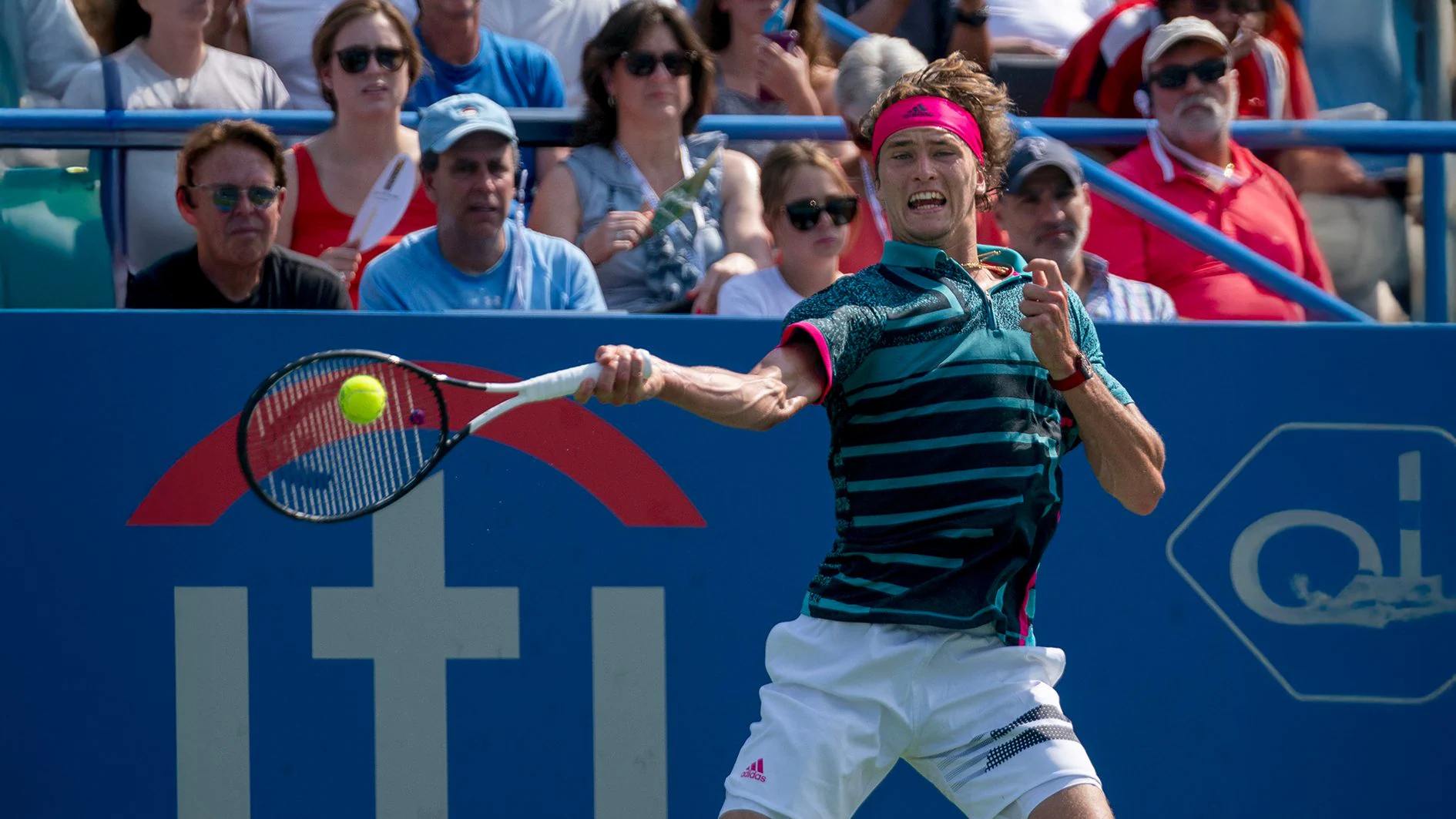
Sascha Zverev he is the man of the moment in the world of tennis. The 29-year-old German, whose career was crushed between two generations of phenomena (the Big Three – Federer, Nadal and Djokovic – and Sinner and Alcaraz), has finally managed to establish himself at Slam level, winning Roland Garros and the US Open in a single season and will try to become No. 1 at the end of the year in the race that will last until the ATP Finals in Turin, shoulder to shoulder, point by point, with Sinner. After the final in New York, won against the host Ben Shelton, the Hamburg giant also stood out for a touching dedication to his mother Irina, a former tennis player, who placed emphasis on an aspect that is often not mentioned in the analysis of his career: living with the diagnosis of “type 1 diabetes” since the age of 4a disease that destroys the cells of the pancreas that produce insulin as explained by the Ministry of Health. To support those facing the same challenge as him, he created the Alexander Zverev Foundationan organization that guarantees treatment, medicines and assistance to diabetic children in the most disadvantaged countries. His journey has become an example, “an inspiration”, so much so that it was cited by the director general of the WHO in a post on
“I want to thank a person who never watches my games, but who is the most important in my life. When your 4-year-old son is diagnosed with diabetes and the doctors tell you that life and sports are going to be very, very limited for that child, it takes a very, very strong mother to walk out of those clinics and say, ‘My son is going to be whoever he wants to be. If he wants to be a tennis player, he’s going to be a tennis player. If he wants to do something else, he’s going to do something else. But this disease will not define us. My mother He is the most important and strongest person I know” (Sascha Zverev)
Zverev, a palmares synonymous with sporting consistency
Throughout his career Zverev has won so far 26 ATP titlesamong which the two Slams won this year, two ATP Finals and the gold medal in singles at the Tokyo Olympics. In 2022 he suffered a serious ankle injury during the Roland Garros semi-final against Rafael Nadal, a serious injury to three ligaments that forced him to undergo surgery and a long convalescence. The paradox is that at the end of the tournament he rose to 2nd place in the world rankings for the first time, but by staying away from the courts in November he dropped out of the top 10 for the first time since July 2017. With strength and determination and scrupulous attention to athletic preparation, also aimed at preventing ankle relapses, the German has managed to slip into the Sinner-Alcaraz duopoly over the last year and now the top of the rankings is no longer a utopia.
The late public announcement at 25 years old
As the Ministry of Health explains, type 1 diabetes is an autoimmune disease in which the pancreas stops producing insulinthe critical hormone that acts as a “key” to allowing the body to turn glucose into energy for muscles. Sufferers must therefore administer insulin from outside for their entire lives.
Although he has lived with the condition since he was a child, Sascha Zverev has decided to speak openly about type 1 diabetes “only” in 2022. The occasion was the launch of the foundation that bears his name, based in Hamburg, whose board also includes his brother Misha. The foundation aims to finance beneficial projects for sick children and help in the distribution of medicines and treatments for those who are unable to access them. Here are his words: “I didn’t want the world to know, for it to become an excuse for the way I played. But when I won the Olympic gold (in Tokyo 2021 ed.) and got to number 2 in the ranking, I understood that it was time to help others. Many people aren’t even well informed, they don’t know what type 1 diabetes is, I wanted to make diabetic children and the whole world understand that it is possible to chase your dreams.”
The Zverev case in tennis: injections during court changes
Type 1 diabetes cannot be cured, but must be managed constantly. The daily goal is keep blood sugar stable to avoid serious long-term complications (such as damage to the heart, kidneys and eyesight).
Since insulin would be degraded by stomach enzymes if taken orally via tablets, the only solution isinjection. Those who suffer from it must administer the hormone on average 4-5 times a day using special needle pens according to the basal-bolus model described byAmerican Diabetes Association and by the Italian Standards for the treatment of diabetes mellitus published by the Italian Society of Diabetology. Alternatively, as reported by the Ministry of Health, they exist subcutaneous insulin pumps: small technological devices that release insulin continuously over 24 hours, adapting to the body’s needs to avoid glycemic swings.
The Zverev case is emblematic. By its nature, tennis is a predictable sport often long and exhausting games (even up to 5 hours) and the German was always forced to have several insulin injections during field changes. This means having to think about the match, the opponent and even your own state of health at the same time. The German explained it well to Reuters at the beginning of 2026: “Every time I go on the pitch I play two games. And the second is invisible. It can be something as simple as deciding when to take a sip from my water bottle or when to take an energy gel, up to injections. From the outside it seems like a normal change of pitch, but I’m already planning the next one.” In fact, Zverev plays with a CGM sensor on his arm which serves to signal when blood sugar levels are too high and an immediate injection is needed, first of all for his health, since hyperglycemia can cause damage to blood vessels and increases the risk of heart attack, stroke and kidney failure.
Zverev and the “accidents” in diabetes management on the pitch
Type 1 diabetes can get worse especially in warmer weather and a small hitch is enough to complicate things. As happened to Sascha Zverev during the semifinal of the ATP 500 tournament in Halle (Germany) this year against Taylor Fritz, when the German was “deceived” by a sensor malfunctionwhich indicated blood sugar levels much higher than actual ones. Zverev stopped for an injection, but since those values were not real, the insulin significantly lowered his blood sugar levels, and the result was severe hypoglycemiawhich can lead to tremors, weakness, dizziness, dizziness and confusion. To remedy this, the German was forced to immediately take 350 grams of sugar: «I drank one glucose drink after another. It’s like drinking three and a half liters of Coca-Cola during a game. It’s hard to feel good having to manage all this sugar” he then explained in the press conference, once the fear had passed. This “accident” happened because high temperatures (which are monitored anyway thanks to the Heat Rule in tennis) can alter the sensor readings.
Another unpleasant episode happened to Zverev during Roland Garros 2023. In the third round against Frances Tiafoe he was prevented from injecting insulin during court changes by the supervisor, unaware of his pathology. The episode sent the current world No. 2 into a rage, but paradoxically it was an opportunity to make the entire tennis circuit more aware of the difficulties of an athlete suffering from type 1 diabetes: «In ATP tournaments I inject insulin during court changes, but here it wasn’t possible. I was forced to leave the court and they told me that they would consider it as a toilet break, but there are only two per match, and in a 5-set match I might even need 4 or 5 injections for my health. An absurd situation, because if I don’t take insulin I can feel sick”. Grand Slam tournaments are self-regulating and the short circuit returned in the following match when Aurélie Tourte, chair umpire of his round of 16 match against Grigor Dimitrov, assured him that she would not count it as a toilet break if he needed the injection.
