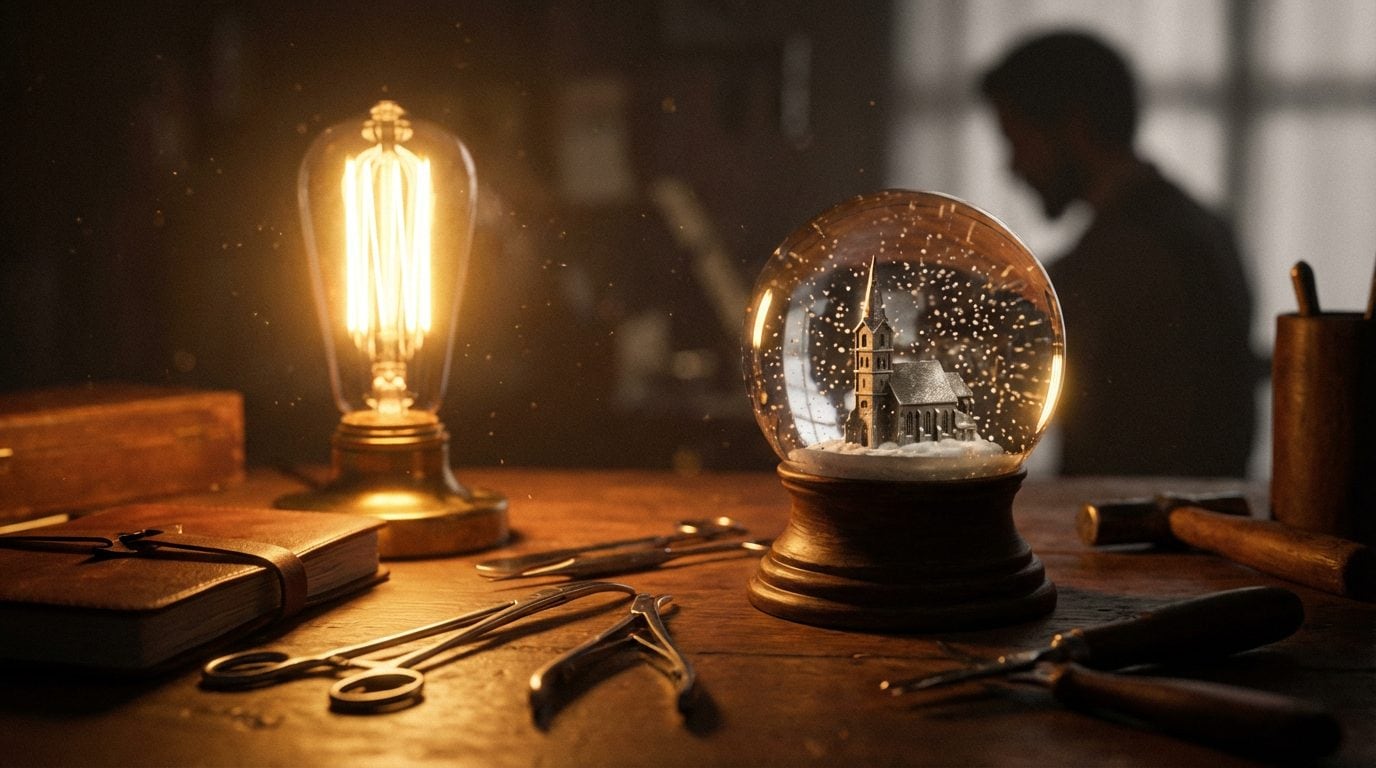
It might seem really curious, but the snowballs — the dioramas enclosed in a glass bowl that we overturn to make it snow on the painted landscape — are born from a hospital experiment: their inventor, Erwin Perzy Iin reality, he was trying to improve the electric light bulb.
These objects (also known as “snow globes” and “snow globes”), which have been crowding the windows of souvenir shops all over the world for years, became famous above all in 1941, thanks to the film by the well-known director Orson Welles “Fourth Estate”. In the film, Welles (who is also an actor) holds a snowball in one hand and utters his last word: “rosebud”. It was the first time this object appeared on the big screen, and it immediately gained popularity, becoming a symbol of childhood nostalgia.
How Erwin Perzy Accidentally Invented the Snowball
The story begins in 1905, when Erwin Perzy I, a mechanic who enjoyed building and repairing surgical instruments for local doctors in Vienna, was tasked with finding an economical solution for amplify the light in hospital operating rooms.
Perzy, who was a particularly creative man and a keen observer, was inspired by an instrument seen by shoemaker local: a glass globe filled with water that served as a magnifying glass. So, he placed a light bulb next to one of these water-filled balls, and then added reflective materials to increase the illumination. Among these materials, in addition to metal and glass splinters, there were some white particles that floated before sinking, just like snow.
Visually, it was quite captivating, and so an idea came to mind: a friend of his was making and selling pewter souvenirs to pilgrims on the Mariazell Basilica (south of Vienna), and Perzy asked him to make him a small miniature church to place in the wooden base of the glass sphere. Then, he inserted it inside, filled it with water and white wax particles, and voilà: here is the snowball as we know it today.
Perzy immediately sensed that the object would arouse curiosity and that it would sell a lot, so he did patent application for a “glass sphere with snow effect”. Shortly after, he founded a company with his brother Josef, with whom he ran a small workshop in the back of his house at 87 Schumanngasse: even today, if you wanted to go to Hernals, in the 17th district of Vienna, you can find a three-story building with an old driveway with a sign “Original Wiener Schneekugelmanufaktu” (Original Vienna Snowball Manufacture).
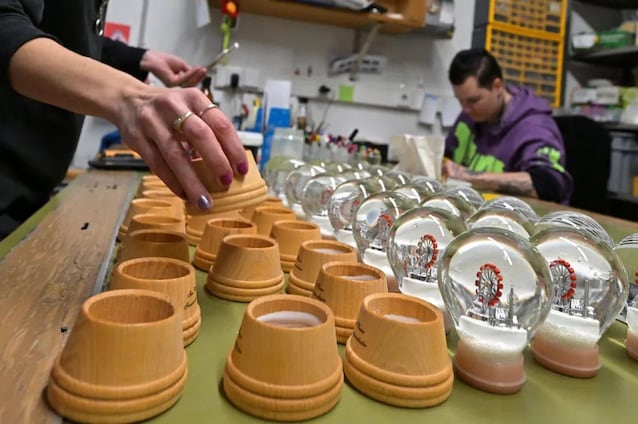
Soon, in addition to the large sales in local markets, the popularity of this object grew so much that it reachedEmperor Franz Josephwhich gave the inventor a Award for Austrian Toy Manufacturer. During World War II, the son Erwin Perzy IIwho in addition to making snowballs also repaired bicycles and typewriters for the American troops present in Austria, managed to forge close relationships with some Americans, marketing the snowball also in the United States.
But are we absolutely sure that Perzy’s snowball was really the first snowball in history? According to collectors, it is undeniable that the first patent for this object was presented by him. However, there have also been other examples of snow globes, predating Perzy’s. According to the researcher’s report Anne Hilker the first snow globe would be the one containing a miniature of the Eiffel Tower of the Paris Universal Exhibition of 1889.
How to make a snowball and what is the liquid inside it
If this story has made you want to make a DIY snow globe, then you will need:
- a glass jar with cap
- a small waterproof figurine
- strong glue
- water (better if distilled)
- glitter or fake snow
- glycerine
- silicone
First of all, glue the figurine to the center of the cap and let it dry well. Then, the jar should be filled almost to the brim with water. Next, add a small amount of glitter or fake snow and a few drops of glycerin (which serves to slow down the falling of the flakes rather than settling immediately). Finally, close the jar tightly, sealing it with silicone to avoid leaks.
In industrial versions, inside the liquid there may also be a small amount of alcoholuseful for preventing mold and bacteria or to prevent the contents from freezing.
