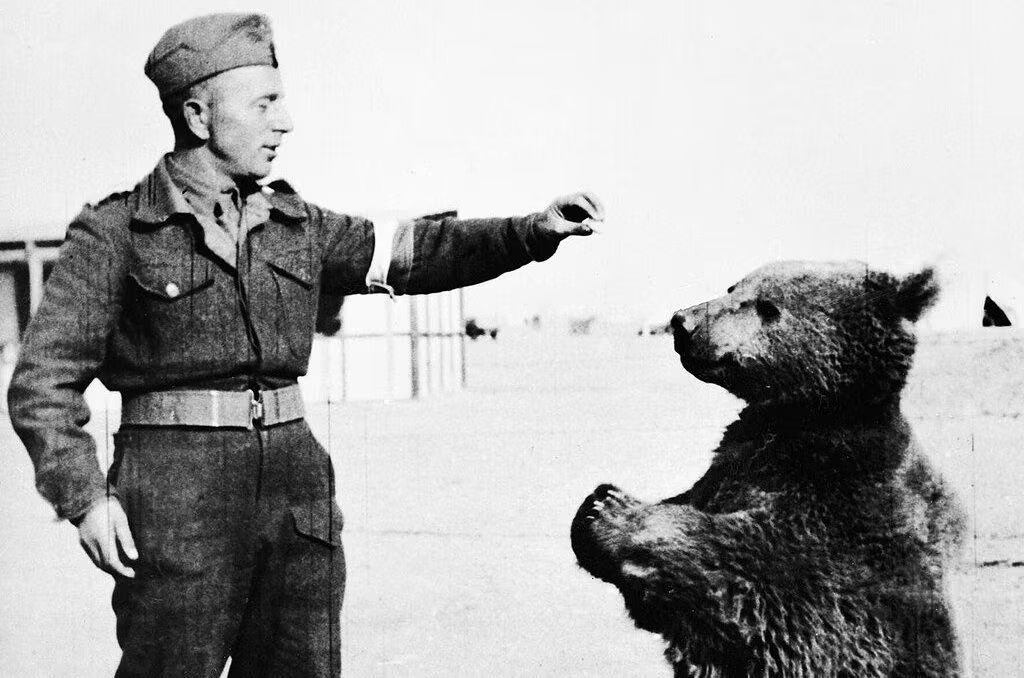
Wojtek the bear, born in 1942 near Hamadan, Persiais an ursid famous for having “fought” during the Second World War. Less than a year after his birth he came into contact with the Polish soldiers ofAnders Armya unit formed in the Soviet Union and later attached to the British Army. The soldiers “adopted” the bear, who in 1944, after having been regularly enrolled, was moved to Italy. He was present at Battle of Monte Cassino and many other war actions.
At the end of hostilities he was transferred to Scotland and locked up in Edinburgh Zooin which he remained until his death on December 2, 1963. Today Wojtek enjoys great popularity and in several countries monuments in his honor.
Wojtek and Anders’ army
Wojtek was an ursid, belonging to the species ofSyrian brown bear (ursus arctos syriacus), born in 1942, in Iran. When he was less than a year old his fate crossed that of the “Anders Army”, a Polish military unit under the orders of General Wladislaw Andersformed in 1941 in the Soviet Union to fight against the Germans.
In this regard, it should be remembered that in 1939 the USSR, after having signed a non-aggression pact with Nazi Germany, attacked Poland from the east, capturing and deporting tens of thousands of soldiers. In 1941, when the German army, violating the 1939 pacts, invaded Soviet territory, the Moscow authorities re-established the diplomatic relations with the Polish government in exile, which was based in London, and freed the prisoners to raise an army to fight against Germany. The command of the army was placed on General Andersalso a prisoner in Russia.
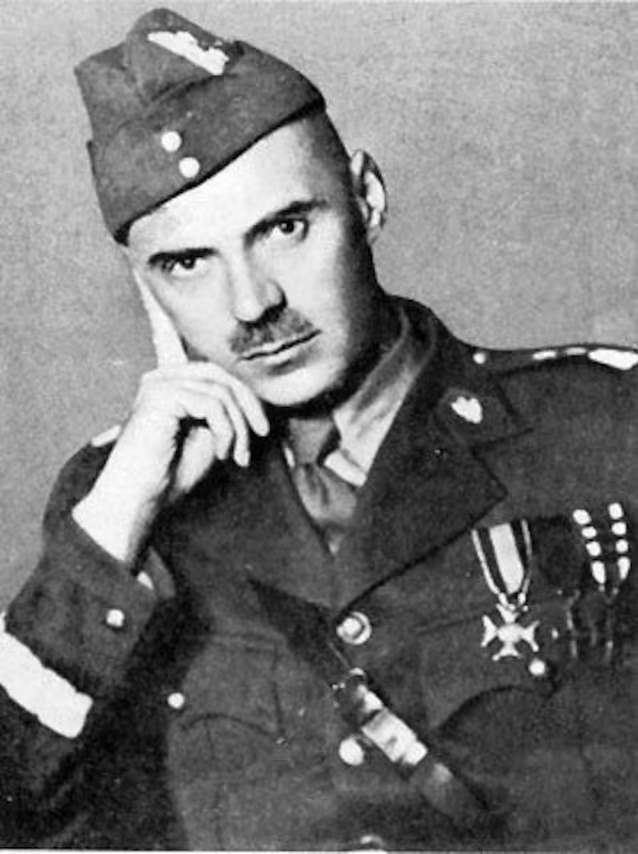
The recruitment and training of soldiers began in the Soviet Union, but in 1942, following an agreement with the United Kingdom, Stalin agreed to transfer the soldiers to Iranalong with numerous civilians, to continue training under the control of the English army. It was there that the soldiers came into contact with Wojtek: on 8 April a group of soldiers marching towards Tehran came across a young Iranian in the company of a bear and a refugee, Irena Bokiewicz, who was traveling with them, convinced an officer to buy the animal. The bear was baptized Wojtek, short for Wojciech, a name still widespread today, and taken to a camp near Tehran. The name meant “joyful warrior”, from the Polish “woj” (warrior) and “chiech” (joy, sorrow).
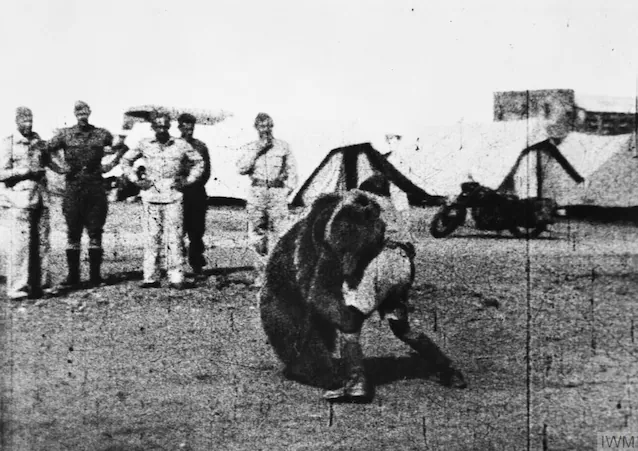
It was later donated to the 2to Transport company, which later became 22to Artillery Supply Company. Wojtek followed the unit as it moved from Iraq to Egypt through Syria and Palestine, soon becoming the mascot of the soldiers, some of whom enjoyed challenge him in improvised wrestling matches. The bear, for his part, imitated the behavior of the soldiers, drinking beer, which was apparently his favorite drink, and chewing cigarettes.
The bear soldier who liberated Italy during the war
In 1943 Anders’ army formed, together with other units, the Polish II Corps and was attached to the 8thto English army, famous for defeating the Italians and Germans at El Alamein. In 1944 the Corps, transferred to Italy on ships of the British Navy, took part in the campaign for the liberation of the Peninsula. To be transported to Italy, Wojtek was officially enlisted in the Polish II Corpscomplete with identification documents and with the rank of private, because the regulations of the British navy prohibited taking animals on board.
Wojtek therefore followed the 22to Company. In May 1944 he was present in Cassino when the battle broke out to overcome the Gustav line, the series of defenses set up by the Germans to slow down the Allied advance. The latter attempted several times to occupy the hill on which the Abbey of Montecassino stands and, after some unsuccessful attempts, on 18 May the The Polish Corps managed to conquer it. The action had great strategic importance, allowing the Allies to advance towards Romewhich would be released on June 4th.
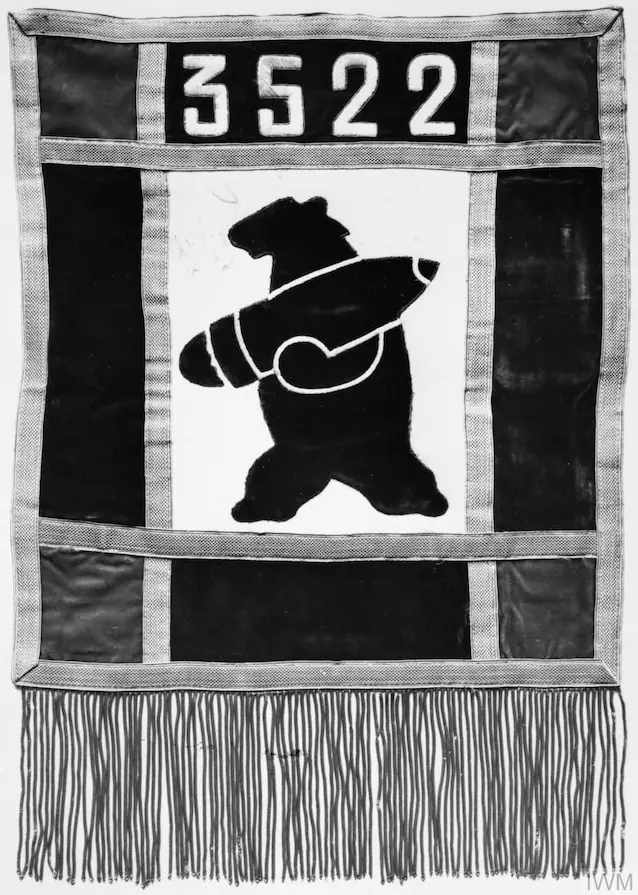
Wojtek was above all a mascot, but in the course of the battle he also provided a “military” contributioncarrying heavy crates of ammunition (the circumstance, doubted by some authors, is proven by the testimonies of Polish and English soldiers). After the conquest of Monte Cassino it was promoted to corporal and the 22ndto company was allowed to use the image of a bear carrying ammunition as its emblem.
After the war: Wojtek’s last years, death and memory
Wojtek remained in Italy, attached to the Polish II Corps, until the end of the war. In 1945 it was moved to Scotland together with the 22nd company and two years later he was locked up in the Edinburgh Zoo. Like many Polish soldiers who had fought, including General Anders, Wojtek he did not return to Polandin which in the meantime a communist regime linked to the Soviet Union had come to power. The bear remained in Edinburgh Zoo for the rest of his life, occasionally being visited by British and Polish soldiers. He died in 1963.
Wojtek’s story is very fascinating and they were erected in his honor monuments in different citiesboth in the United Kingdom and in Poland – especially after the fall of the communist regime in 1989. The bear is also popular in Italy: statues depicting it are present in Cassino ea Imola. There are also cartoons, comics and websites dedicated to Wojtek.
