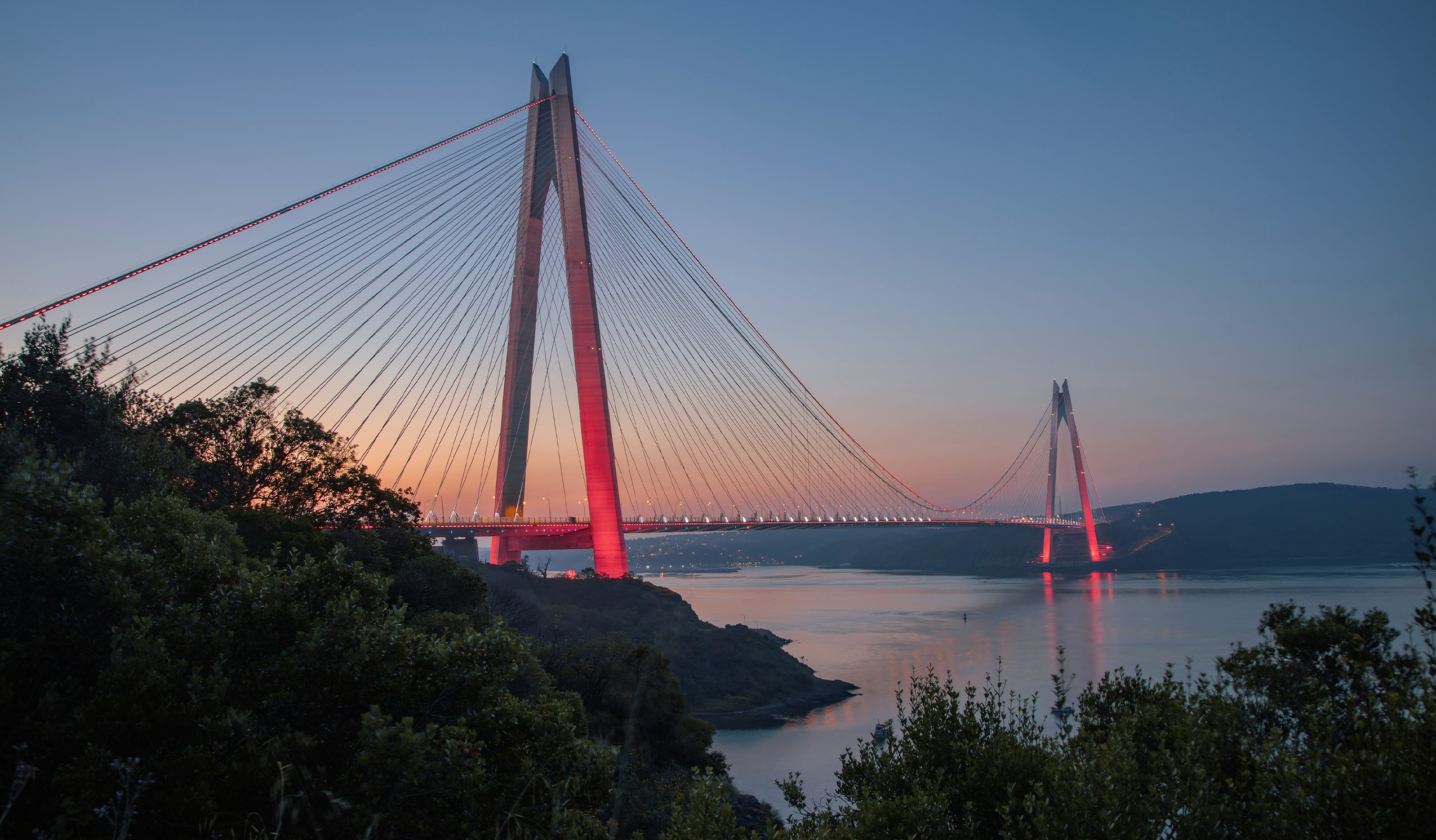
The Yavuz Sultan Selim Bridge in Istanbul it is the bridge widest in the worldwith a width of 59 meters. This bridge, which was christened “third Bosphorus bridge”, is also the longest suspension bridge to accommodate a railway, with a main span of 1,408 metres. The work is part of the major Northern Marmara Motorway project, which involves a total investment of 4.7 billion dollars. Opened in 2016The Yavuz Sultan Selim it is located in the northern part of the Bosphorus in Türkiye, just before the Black Sea. From the beginning, its construction was surrounded by strong symbolic references to history and mythology. The works began on May 29th, the date that commemorates the conquest of Constantinople, while the inauguration took place on August 26th, the anniversary of a fundamental battle in Greco-Turkish war.
Yavuz Sultan Selim, an extraordinary feat of engineering
The Yavuz Sultan Selim Bridge is an extraordinary feat of engineering: it is the longest and widest hybrid bridge in the world (cable-stayed and suspended at the same time) and furthermore it is also the bridge with the tallest towers in the worldwhich exceed 320 meters in height!
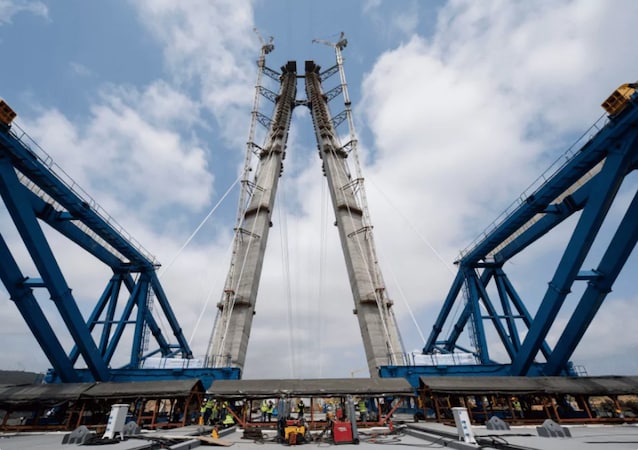
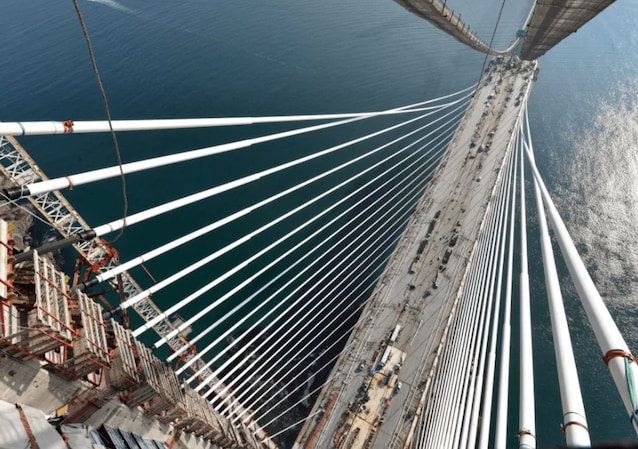
The deck, the widest in the world, hosts two carriageways from four lanes eachseparated by a central railway corridor a double track. The expected operating speeds are 120 km/h for vehicles, 160 km/h for passenger trains and 80 km/h for freight trains. They are also present at the edges of the deck two 2.5 meter pedestrian walkways wide each.
The two main piers are “A” shaped, formed by a pair of inclined pillars with triangular section, made of reinforced concrete. The central span, 1,408 meters long, extends between the two piers and is composed of long steel segments 24 meters and by the weight of 840 tons each. The side spans, access viaducts and anchor blocks are instead made of concrete. For its construction were employed 241,000 m³ of concrete, 65,000 tons of steel for the structures, 31,000 tons of steel for the armor e 29,000 tons for pre-stressed cables. The excavation and filling operations involved the movement of 897,000 m³ of lands and 32,000 m³ of materials.
The world’s widest hybrid bridge project
The design took into account the significant seismicity of the area, located along the Anatolian fault, one of the most active in Turkey. Italy actively participated in the project, in fact the main contractor was the Italian company WeBuild in joint venture with the Turkish company IC İçtaş.
The architectural project bears the signature of Swiss T-Engineeringin collaboration with the famous engineer Michel Virlogeux. His most notable works include the Vasco da Gama Bridge in Lisbon, one of the longest in Europe, and the Normandy Bridge in France, which until 1999 was the longest suspension bridge in the world.
