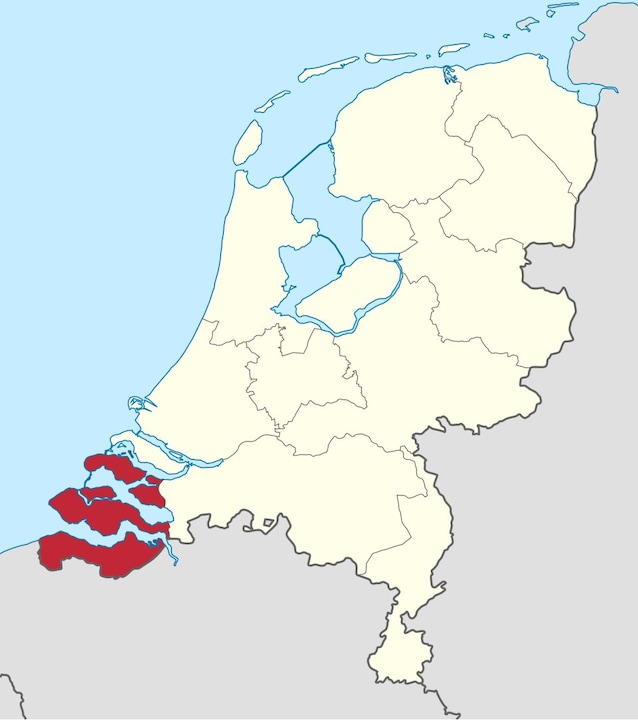
When we think about New Zealand what immediately comes to mind is the archipelago in the Pacific Ocean, located on the other side of the globe from Italy. But is there an “Old Zealand” that the colonizers took inspiration from when naming this new territory? Well yes, and this place is found in the Netherlands, Europe: Zealand (Zealand in Dutch) is a region located in the south-western part of the Netherlands (about 70 km from the city of Antwerp), made up of several islands in the North Sea and which is over 17,700 km from New Zealand. Its name means “land of the sea”.
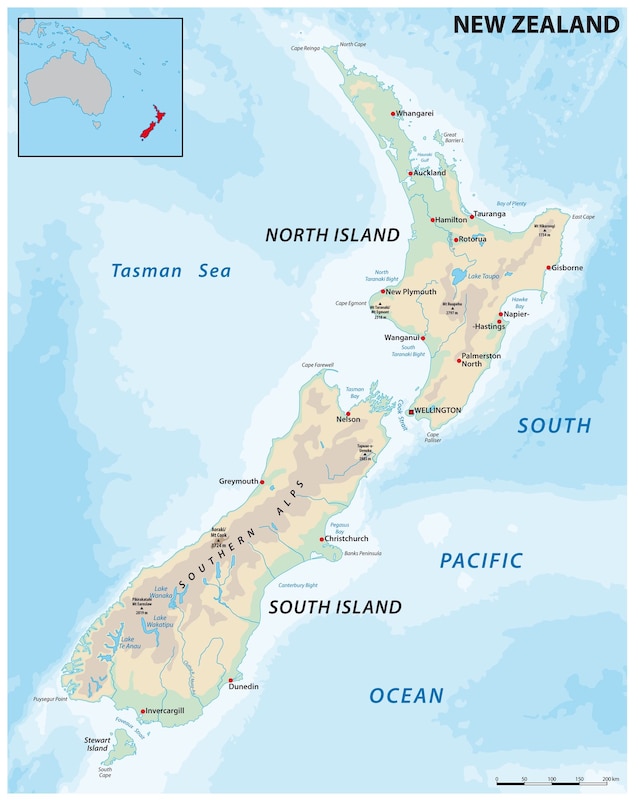
The link between the two “Zealands” dates back to December 1642when the Dutch navigator Abel Janszoon Tasman became the first European to sight theSouth Island of what is currently New Zealand, which was called in the Maori language Aotearoa (“land of the long white cloud”). At that point, Dutch cartographers renamed that territory New Zealand: the association, however, was not entirely casual, but due to the fact that both regions are insular.
This is a typical practice of the colonial era: Westerners, in fact, used to assign the names of cities or regions of the explorers’ country of origin to newly discovered places, prefixing them with the adjective “new”. It is no coincidence that it was always the Dutch who founded the city of New Amsterdam (later replaced in New York by the English) or to insert Nieuw Holland (New Holland), the ancient name by which theAustralia, before being renamed so by the British.
After being “discovered” by Tasman, Europeans left New Zealand unexplored until 1769, when the English James Cook (to whom we owe the name of Cook Straitwhich separates the North Island from the South Island) ne mapped the coasts in an expedition carried out in the name of the British Crown. With the signing of the Treaty of Waitangi in 1840, New Zealand formally became a British Crown colony: this gave rise to European settlement and a series of clashes with the indigenous Maori population. In the 1852 New Zealand achieved self-government as autonomous colony of the British Empireonly to then have the flood recognized independence legislation within the Commonwealth with the Statute of Westminster of 1931formally ratified by the country in 1947.
