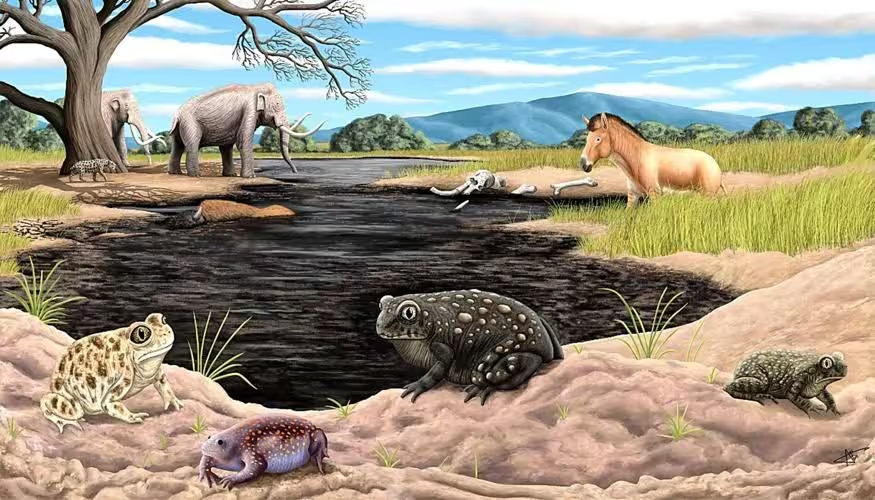
A new extinct species of spade toadbelonging to the family of Scaphiopodidaewas identified thanks to the analysis of hundreds of fossil remains found in California. The discovery, published on Journal of Vertebrate Paleontology by researchers J. Alberto Cruz and Emily L. Lindsey (del Samuel Oschin Global Center for Ice Age Research of Los Angeles), broadens the framework of North American biodiversity between the end of the Pleistocene and the beginning of the Holocene (between 45,000 and 11,000 years ago), turning the spotlight on very small animals such as amphibians.
The precious fossils at the center of this new study come from La Brea tar pitsin Los Angeles. This is a paleontological site of exceptional importance made up of natural pools which, for millennia, have acted as real traps, perfectly preserving the bones of the unfortunate animals that fell into them. Although today they offer us this unprecedented insight into small amphibians, the La Brea pits are known worldwide above all for large mammals from the end of the ice age, like mammoths and saber-toothed tigers.
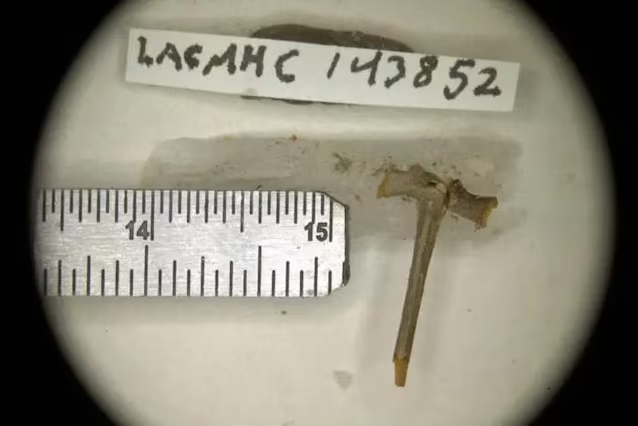
The new species was recognized thanks to a detailed comparison bones with those of living spade toads and other North American fossils. Some elements of the skeleton, in particular parts of the pectoral girdle and limbs, present a combination of anatomical characters that does not correspond to any current speciesjustifying the identification of a new species. It has been named Spea labreae. Spea is the name of the genus of living spade toads, while labreae refers to La Brea, the site of the discovery. The study shows how even finds collected over decades (the fossil remains of these amphibians, in particular, were collected in 1929) may reveal new species as they come reviewed with updated systematic criteria.
The authors also used the amphibian fauna of Rancho La Brea to reconstruct the environment of the time. In addition to the new spade toad, the deposit has returned salamanders, frogs and other toadsspecies that require humid habitats and the presence of temporary or permanent water collections for reproduction. Their association suggests that the landscape around the tar pits was more diverse and wetter than today’s Los Angeles metropolitan area, with a patchwork of woods, prairies and wetlands capable of supporting a rich community of amphibians.
The distribution of fossils also indicates that some lineages currently absent from the region were present in southern California during the late Pleistocene. THE climate changes occurred at the end of the last glaciation, together with habitat transformationwould have contributed to the regional disappearance of some populations and, in the case of the new species described, probably to its own extinction. La Brea continues to provide valuable information not only on large vertebrates, but often on small animals as well neglected. It is precisely the latter that can offer particular indications sensitive on environmental conditions of the past and aboutevolution of ecosystems of California over the last tens of thousands of years.
