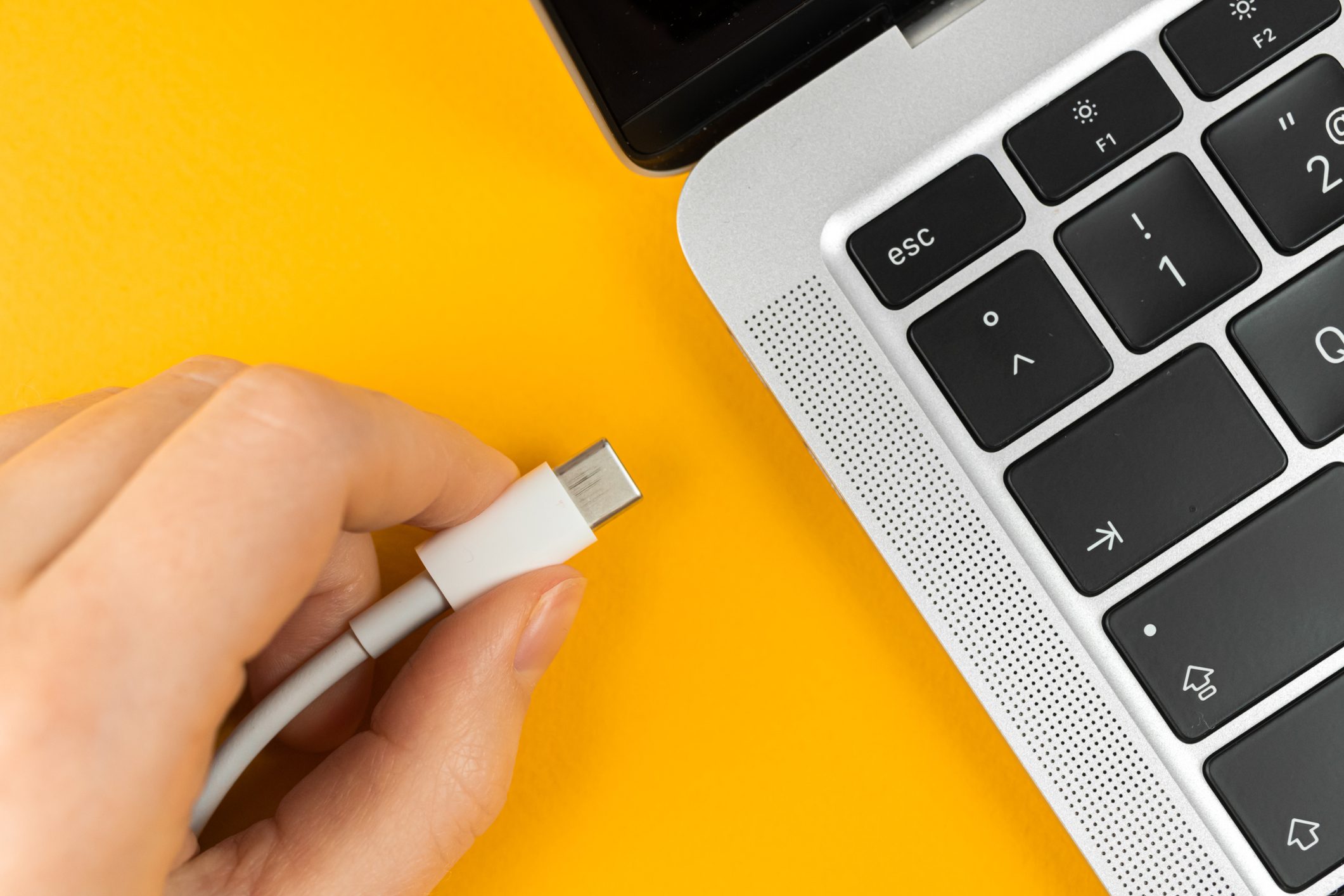
From the April 28, 2026 laptops sold in the European Union must necessarily support the USB-C chargingguarantee support for the standard USB Power Delivery (if they exceed 15 watts of power), the sales packages must clearly indicate the charging performance and specify whether the power supply is included in the package or not. Regarding this last point, portable PC manufacturers will have to guarantee consumers the possibility of purchasing a device that There is no charger in the package.
The news does not come as a bolt from the blue. The scenario we have just told you about has in fact been known for three and a half years and is the final extension of a regulatory process that began with Directive (EU) 2022/2380, designed to standardize the charging methods of portable electronic devices and reduce the environmental impact of unused battery chargers. This is a directive approved by the Council of the European Union in October 2022. From December 28, 2024the regulation was applied to smartphones, tablets, digital cameras, headphones, earphones, game consoles, portable speakers, e-readers, keyboards, mice, portable navigation systems and headsets sold in the EU. Now it’s the turn of the laptops.
The regulations on USB-C for charging laptops: what changes from April 28th
The heart of the legislation is based on three fundamental technical requirements. The first is theUSB-C port required for cable charging: it is a reversible connector, which can therefore be inserted in both directions. The second requirement concerns the support for the USB Power Delivery standard for all devices exceeding 15 watts of power: this technology, as explained in the document drawn up by the EU bodies «is capable of delivering up to 100 watts of power and thus leaves plenty of scope for the further development of fast charging solutions». The third element is transparency towards the user: the packaging must clearly indicate the charging performance and, furthermore, specify whether the power supply is included or not.
And it is precisely this last point that explains why we will increasingly see laptops sold without a charger. The legislation does not explicitly require it to be eliminated, this should be clarified. However, it forces manufacturers to offer at least a version without power supply. From an industrial point of view, maintaining two variants of the same product (therefore one with a magazine and one without) could lead to an increase in logistics costs. And this could push the vast majority of manufacturers to “cut the bull’s head” by conforming to a single version without a magazine, leaving the user the possibility of purchasing it separately.
The economic and environmental implications of the single charging port
The lack of a charger in the sales package of the next laptops opens up a whole series of issues economic and environmental considerations. Regarding the first point, it must be said that those who already own a USB-C charger will be able to avoid purchasing an additional power supply; those who don’t own one, however, will find themselves having to incur a significant additional expense, especially for laptops that require high-power power supplies. A USB-C charger with Power Delivery support over 100 watts can easily exceed 40-50 euros even in the cheapest ranges. The legislation, however, aims at an overall saving estimated in the order of hundreds of millions of euros per year, thanks to the reduction of superfluous purchases.
Another central aspect is the environmental impact. Unused chargers represent a significant share of electronic waste: we are talking about approx 11,000 tons per year. By encouraging the reuse of existing power supplies, the directive aims to reduce this quantity and, consequently, the ecological footprint linked to the production and disposal of electronic components.
The exception to the “rule”
Not all laptops, however, fully fall under the obligation. The regulation applies to laptops that require charging up to 240 watts: beyond this limit there is no obligation to respect it. More power-hungry devices, such as gaming laptops or mobile workstations with high-end dedicated graphics cards, often require power supplies of 250 watts or more. In these cases, we will continue to see proprietary connectors alongside (and not replaced) by the USB-C port.
