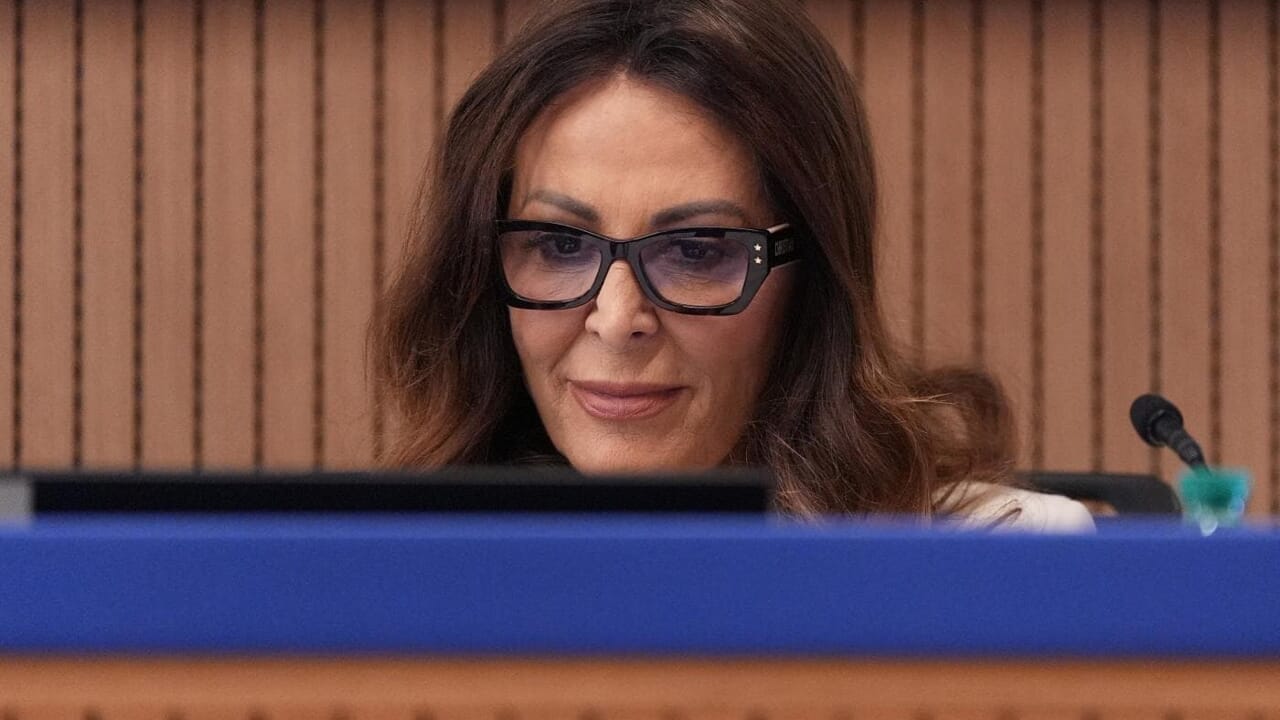
We are even obliged to agree with Daniela Santanchè
Giorgia Meloni obtained, after twenty-four hours of resistance, the resignation of Daniela Santanchè as Minister of Tourism. It is worth rereading the political news from a medium-term perspective: lining up its long series of investigations and judicial problems, and the referendum campaign that has just ended, disastrously, for the government of which it was part and for its political leader, Giorgia Meloni. So, let’s recap. Until two days ago, the Government majority, and the Prime Minister Giorgia Meloni in particular, explained to Italians that it was necessary to vote yes in the referendum confirming the Nordio reform because, by separating the careers of public prosecutors and judges more clearly and at a constitutional level, the profound reasons for criminal guaranteeism would be protected in a more solid way – or finally solidly, the yes supporters would say. Those reasons that want defendants and suspects to be innocent until the final sentence. The same reasons that demand, in fact, full equality of tools between the prosecution and the defense. The merits of the issue have been widely discussed in recent months, and the sovereign people have expressed themselves in a clear and incontrovertible manner. But the point here is to remember – it doesn’t take long, as just a few days have passed – with which arguments the constitutional reform was defended by its drafters and promoters.
“My criminal record is clean”
In fact, Minister Nordio, Giorgia Meloni and many of the supporters of the reform have explained to us, for months and with growing intensity and virulence, that the Italian Constitution, as it is, does not sufficiently guarantee these reasons, and for this reason it was necessary to confirm their reform. Those of criminal guaranteeism, of the irreconcilable difference between prosecution and defense, between the position of those under investigation and those who are convicted, are, upon closer inspection, the reasons that Daniela Santanchè claims in the letter with which, after twenty-four hours in which she made her former friend Giorgia suffer, she tenders her resignation: “My criminal record is clean”, and technically she is right. Not only technically, but also politically, Santanchè is right, if Nordio and Meloni were right when they explained – the former also consistently with his long history as a jurist, the latter as the political head of the coalition that approved the reform – that the criminal judiciary that investigates and the one that judges are too closely linked, and the trials then end up continuing because of this, often leading to late acquittals that rain down on lives and careers that are largely affected. This was what was not said, and also what was said, even worse than that, of this electoral campaign. And at this point it is not really clear with what courage, two days after the disastrous result of the Referendum for the government and the Prime Minister, it is she who is asking for and obtaining the resignation of Santanchè, who has not been under investigation for a week but for much longer, and whose judicial position, undoubtedly very critical, would certainly have deserved an evaluation of merit and opportunity much earlier, as long as we accept that certain evaluations in politics can and must be made even before convictions: but this principle has always seemed to be harshly opposed precisely by Meloni, and indeed also embraced in the electoral campaign as an argument for the “Yes”.
But there is another point, even more important, on which we have to agree with Santanchè compared to Meloni, on the resignation. The question is entirely political, and Santanchè writes it clearly in his letter: “Yesterday perhaps abruptly (you will understand my state of mind) I represented to you my non-availability for my immediate resignation because I wanted it to be separated both from the comments on the referendum because I would not want to be the scapegoat for a defeat that was certainly not determined by me, also awaited the result in Lombardy and even in my Municipality (Zone 1, that center of Milan, the only area of the city in which the yes vote won, even if obviously not thanks to Santanchè, ed.) I also wanted my resignation to be separate from the contingent and very different affair that concerned the Hon. Del Mastro who also pays a high price. Having made this clear, I have no difficulty in saying “I obey” and doing what you ask of me.
“I didn’t lose the referendum”
With this barrage of scapegoats, Meloni seems to want to tell the world that she didn’t lose the referendum. Or rather, she lost it, but it was their fault. Some might even want to believe it. Well, not us. This very high dust that Meloni raises with the scalps of undersecretaries, former associates of criminals, heads of cabinet who insult magistrates, or ministers with a widely and long problematic entrepreneurial track record, does not erase history: Meloni lost the referendum by playing it on the front line, by forcefully making it his own. He lost her. By resigning Santanchè first, by first convincing La Russa to stop defending her, would things have gone differently? Who knows. It seems hard to believe. The important thing is that you, Giorgia Meloni, don’t believe it. In that case, the crash would be guaranteed.
