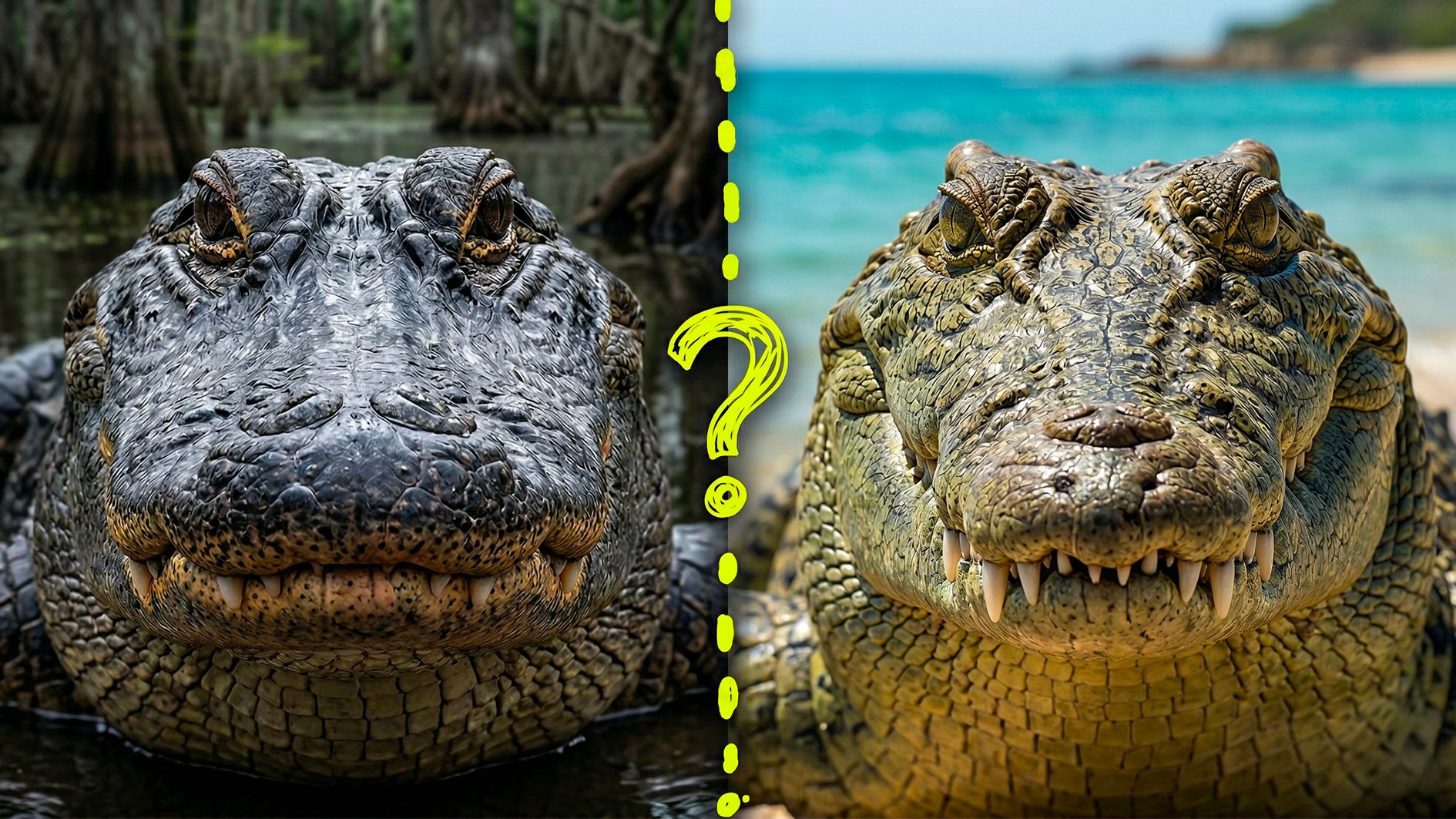
At first glance they seem the same: armored body, elongated snout, sharp teeth and a perpetually menacing expression. However, crocodiles And alligators they are different animals, with evolutionary histories, habits and physical characteristics that distinguish them precisely. Both belong to the same order of reptiles, i Crocodyliaand share a common ancestor dating back to the end of the Triassic. Today, they survive alone 23 speciesdivided into three families: Alligatoridae (alligators and caimans), Crocodylidae (crocodiles) e Gavialidae (the gharials, with their very thin snouts). The main differences are found in the shape of the muzzle and legs, in the habitat in which they live, in the size and color of the body.
How to distinguish crocodiles and alligators
Characteristics in appearance: U-shaped snout and V-shaped snout
The quickest difference to distinguish a crocodile from an alligator is the shape of the muzzle. In alligators the snout is wide, rounded and U-shapedwhile in crocodiles it is narrow, pointed and V-shaped.
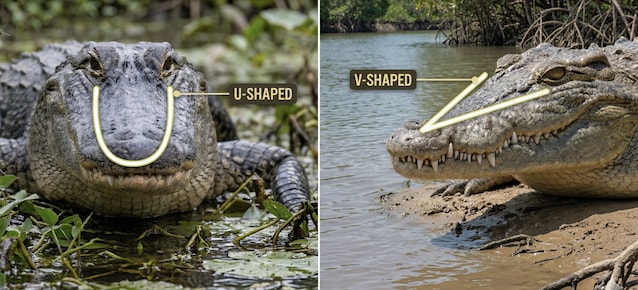
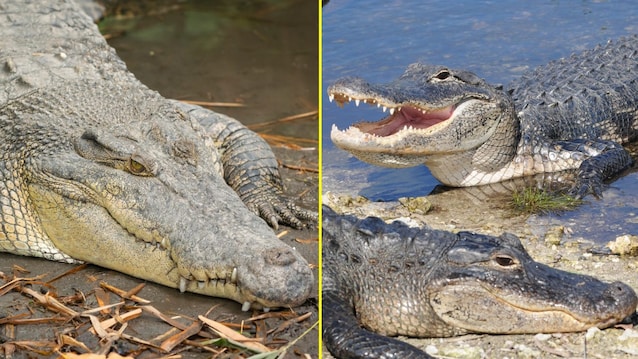
Closely linked to the shape of the muzzle is the question of teeth. In alligators, when the mouth is closed, the teeth of the lower jaw disappear inside the upper jaw and are not visible from the outside. In crocodiles, however, the upper and lower teeth fit together alternately, and the fourth tooth of the lower jaw always protrudes upwards in a clearly visible way, even with the mouth closed.
Where they live: freshwater vs. saltwater
Alligators and crocodiles are generally found on different continents and in different environments. The alligators are linked almost exclusively to fresh waters: theAlligator mississippiensisthe American alligator, lives in the states of the Gulf of Mexico; theAlligator sinensisthe Chinese one, is instead a species at critical risk of extinction, with a few hundred specimens remaining in the eastern humid areas of China. THE crocodiles they are instead much more distributed (Africa, Asia, Australia, Central America) and many species tolerate or prefer environments of brackish or salt water close to the coasts. Although they can tolerate both habitats for short periods, current crocodile species are divided into 12 freshwater species including the Nile crocodile (Crocodylus niloticus) and 2 species of saltwater crocodiles, the American crocodile (Crocodylus acutus) and the Saltwater crocodile (Crocodylus porosus).
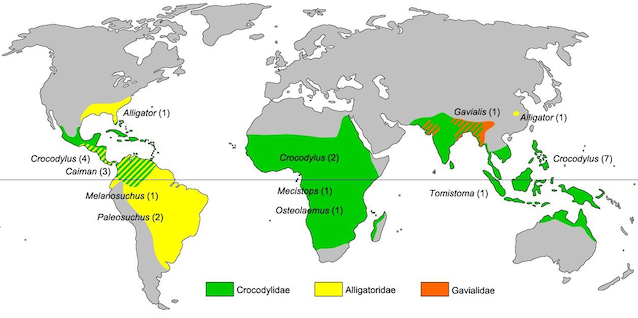
The reason for this difference is also physiological, crocodiles possess salivary glands on the tongue capable of expelling excess salt from the body, allowing them to live in marine environments. This partly explains why crocodiles have colonized almost all of the world’s tropics. The only place in the world where the two families live together is South Floridain Everglades National Park.
The color and size
The color of the coat can also help distinguish these two species. Alligators tend towards the dark gray or blackwhile crocodiles are generally greenish-brown or olive.
As for size, the crocodile marine (Crocodylus porosus) is the largest living reptile in the world (in terms of body mass), it can exceed 6 meters and ton of weight, and holds the absolute record for bite force among all animals. The American alligator reaches i 4-6 meters. However, the CNR recalls a worrying fact: over the last two centuries, due to intensive hunting, the average size of adult crocodiles has progressively reduced, as the largest specimens are eliminated before they can reach their potential size.
Behavior: Who is more aggressive and dangerous
Crocodiles are generally considered more aggressive of alligators. Crocodiles lurk on the banks to ambush their prey and cause on average over 1,000 human deaths per year in the world. Alligators, while capable of attacks, generally display aggressive behavior only when provoked. Both reptiles, despite their apparent laziness in sunbathing, are more fast than they seem. Adult crocodiles can reach top speeds on land between 24 and 35 kilometers per hour which, if combined with the most powerful bite in the animal kingdom (3,700 PSI or 25,510 kPa), make it an apex predator. The diet of alligators and crocodiles includes fish, turtles, birds and mammals.
