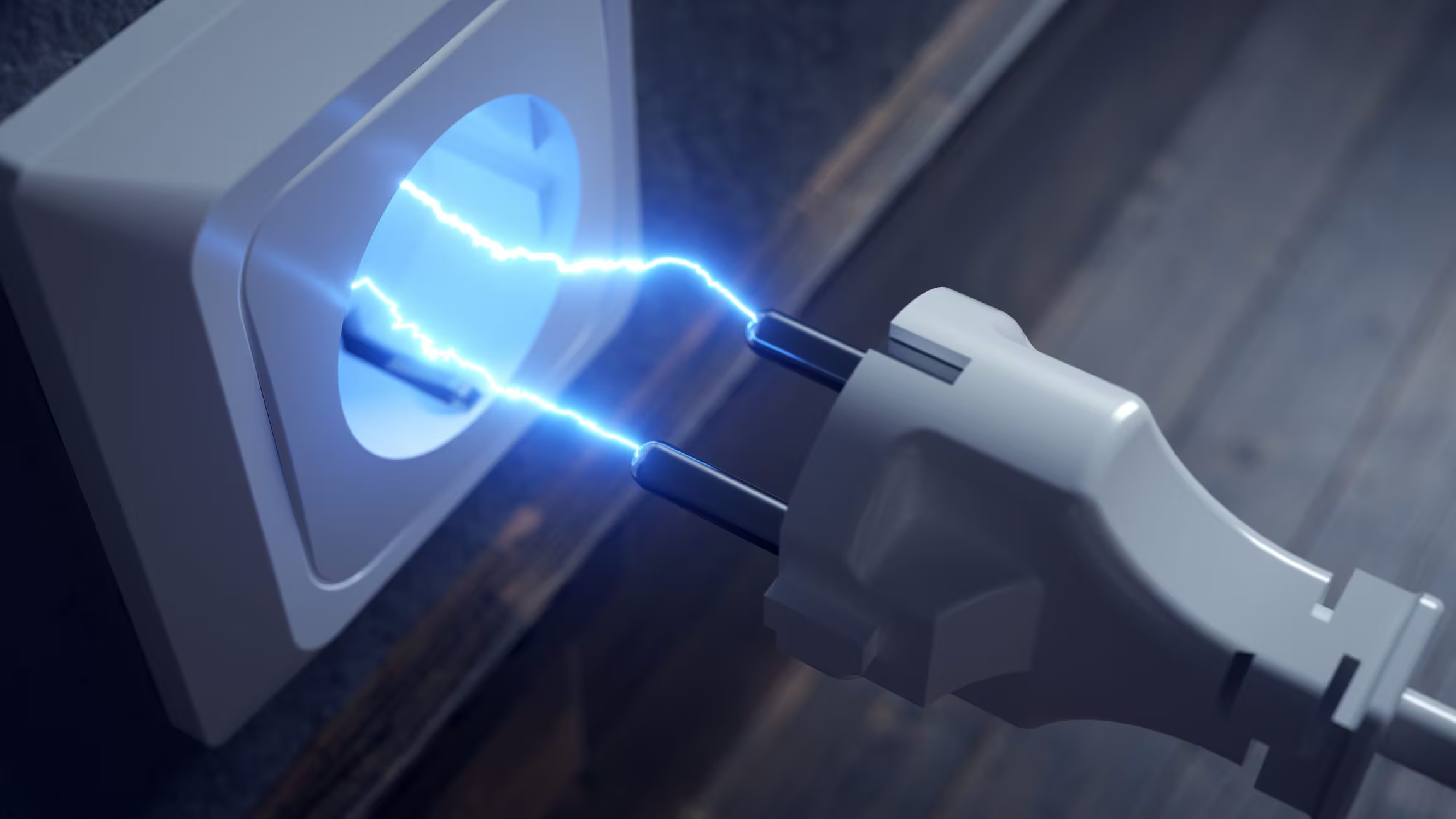
Have you ever inserted one plug into the socket and notice for a few moments a very small spark? If so, you’ve probably wondered why the socket sometimes sparks when we plug it in and whether there’s anything to worry about about the “health” of your home’s electrical system. In principle, this phenomenon could occur when the metal contacts of the plug meet those present in the socket. If the device immediately begins to draw current, a very small discharge through the air may occur for a fraction of a second. This discharge is essentially an electric arc, that is, a passage of current that forms between two conductors when a small space remains between them for an instant. The result we see is a spark, sometimes accompanied by a slight “click”.
A very short and small sparkwhich appears just as we plug in a high-power appliance and then disappears, generally shouldn’t cause us to worry. But if the phenomenon is more intense, in intensity or frequency, we should be very careful and call a professional electrician to check the socket or home system.
Causes of sparks and when to worry
The situation therefore changes, and indeed changes, when the phenomenon becomes more intense and possibly repeated. One of the possible reasons why this happens could concern thesocket wear. Over time, the internal contacts may no longer adhere properly and the connection may become more unstable. In such conditions the current may create small arcs each time a plug is inserted or removed.
Another possibility, especially in the case of a persistent arc flash, is an electrical fault, such as a short circuit or a faulty connection. A short circuit is an anomalous contact between points of the circuit at different potential, for example between phase and neutral or, in certain conditions, between phase and earth. In these cases, very high currents and electric arcs can develop, with the consequent intervention of the system’s protections. A damaged plug, especially one with exposed conductors, can also encourage arcing.
THE’humidity represents an additional risk factor. If water or moisture enters the socket, it can reduce insulation and encourage leakage currents or, under certain conditions, arcing. For this reason, particular attention is needed in humid environments, such as kitchens and bathrooms, where it is important to adopt adequate protection against possible electrical leakage.
And then there’s the question of overload to consider. Connecting too many devices, especially if they have a high absorption, can bring the current flow beyond a safe threshold, causing overheating of the conductors, sockets, etc. In the presence of a socket that produces sparks, therefore, the use of multiple power strips to power high loads is strongly discouraged.
What makes the difference is not only the presence of the spark, but the way in which it manifests itself. An occasional small flash while connected may be within the realm of normality. A big sparkle, persistent or what appears spontaneously should not be underestimated and should rather be considered as a possible danger signalespecially if a popping noise comes from the socket, if blackening, burns or melted plastic appear, or if you smell something burning.
What to do safely
To summarize, therefore, if you notice the birth of a small spark when a high absorption device is inserted, without any other anomalous signals appearing and without the phenomenon repeating itself after connection, the situation may not be worrying and you could limit yourself to monitoring the situation. But if the sparks were to intensify in frequency or sizeor if burn marks appear, Stop using the socket immediately and have it checked by a professional.
