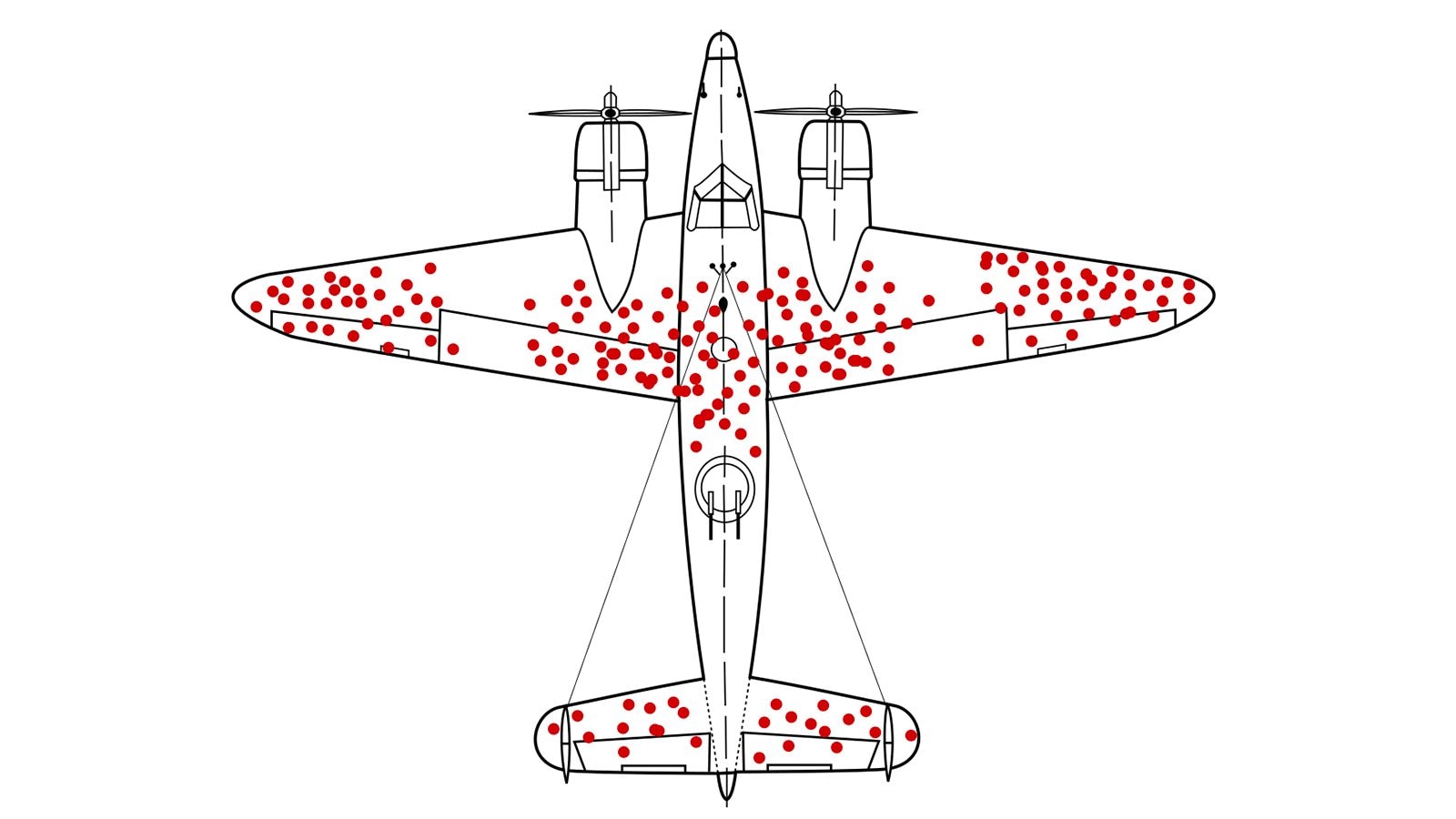
The bias survivor (Survival Bias in English) is a sort of logical and statistical error Unconscious that makes us consider only those aspects of a question that have overcome some type of selection ignoring those aspects that have not passed this process. Let’s take an example: if we see an ancient Roman bridge still intact, it is easy to think that the Romans knew how to build better than us. The problem, however, is that what we are looking at is theThe only remaining bridge Among the hundreds that had been created and that collapsed. That bridge is simply one of the best built and better maintained: it is a survivor. We are observing what has remained, not everything that has existed. The same applies when we listen to stories of successful entrepreneurs who attribute everything to a perfect routine or a courageous decision. In these stories there is always a detail: all the people who made the same choices and have failed! If we only focus on who “did it”, we fall into a mathematical trap: the Bias of the survivor. A mistake that leads us to evaluate situations, decisions or strategies based on us incomplete data.
In this article we see what the survivor’s bias is, how influences our choices and as the most famous example – that of the holes on planes during the Second World War – has often been too simplified.
What is meant by “Survivor Bias”
The bias of the survivor is a logical and statistical error which occurs when we analyze only the cases that have “survived” to a selection process, completely ignoring those who did not make it. In simple words: we look at the successes and forget the failures.
This bias (i.e. the distortion of an evaluation due to a prejudice) often leads us to distorted conclusions: we believe that a certain path guarantees success only because we know someone who has made it. We forget, however, all the cases in which that same path has led to nothing. To really understand what works, we must also look at those who have not “survived”.
The most famous example of bias of the survivor: the myth of the plane
One of the best -known stories related to the bias of the survivor is that ofairplane Of Abraham WaldJewish mathematician refugee in the United States. During the Second World War, the air force US suffered heavy losses during the missions. To reduce the damage, the military began to examine The planes who returned to the base. They noticed that the wings and the tail were often riddled with shots, while the engines and the rolling cabin were almost always intact. It seemed logical, therefore, reinforce the most damaged areas.
Before doing so, however, they consult the Statistical Research Group (SRG) of Columbia University. And this is where Abraham Wald, a member of the research group, entered the scene. Wald made an counterintuitive proposal: not reinforce the areas hit, but those without holes.
The reasoning was simple: if those planes had returned despite having been affected in certain areas, it meant that those damage not they were lethal. On the contrary, the planes that had been affected in the engines or in the cabin probably Not they were survivorsand therefore were not part of the observable sample. Those areasapparently “intact“, They were actually the more vulnerable.
At first glance, this idea that may seem paradoxical, but it makes absolutely sense if you consider the bias of the survivor: to really understand which shots they are lethal, it is not enough to observe who has survived, but it must be taken into account above all of those who have never returned!
The true story of Abraham Wald
This story, however fascinating, is one simplified version of Wald’s real contribution. The image of the “genius who denies the military” was probably born from an article from 1980, which simplified Wald’s work with popular tones.
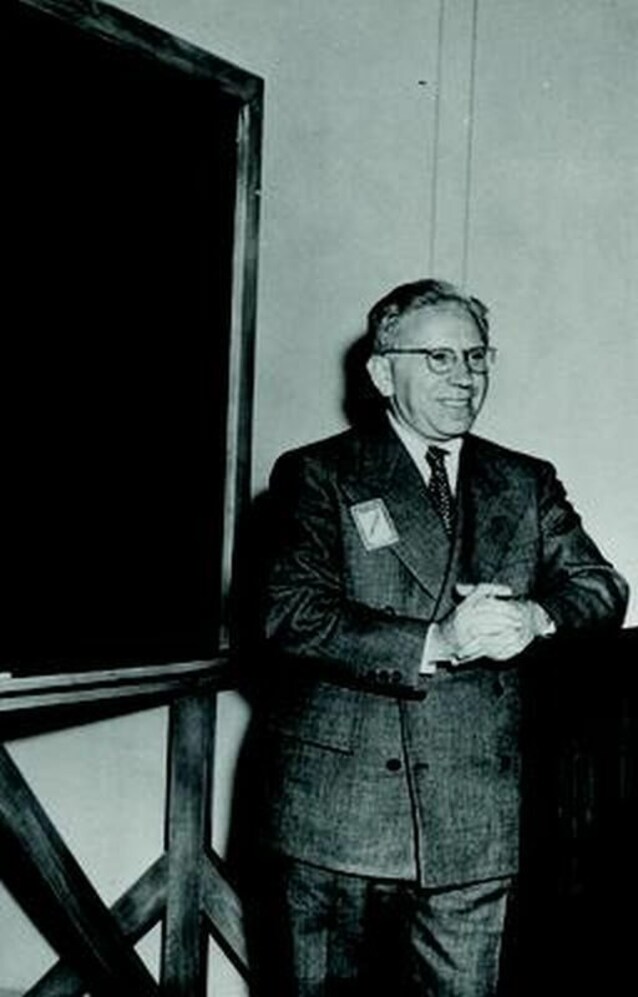
In reality, Wald did not just suggest strengthening areas without holes: this he already knew Also the army. The challenge was to understand how to protect those areas with so little information. Wald developed a rigorous statistical method for estimate the vulnerability of the different sections planes, based exclusively on the data of the surviving planes. He managed to demonstrate, for example, that the 20 mm blows to the engines and those of 7.9 mm to the piloting cabin significantly increased the probability of demolition. His conclusions led to more effective defensive strategies and, above all, anticipated many analysis tools still used to work with incomplete data.
How the bias of survivor influences our life
The bias of the survivor also has consequences on ours daily life And work. We think, for example, how often we hear the stories of characters such as Steve Jobs, Bill Gates or Mark Zuckerberg, all billionaires who have left the college. These stories are often presented as inspiration: if you are quite brilliant and motivated, you don’t need a degree. But the many who made the same choice are never told and failed. In reality, those who end the university earns more, have a more stable career and less financial problems. But the bias of the survivor leads us to make choices by observing only those who “made it”, distorting our perception.

It applies to everything: start-ups, diets, investments, careers. We look at the “winners”, we imitate them, and believe that it is enough to replicate their choices to obtain the same result. But so we risk ignoring just what could teach us something: failures.
