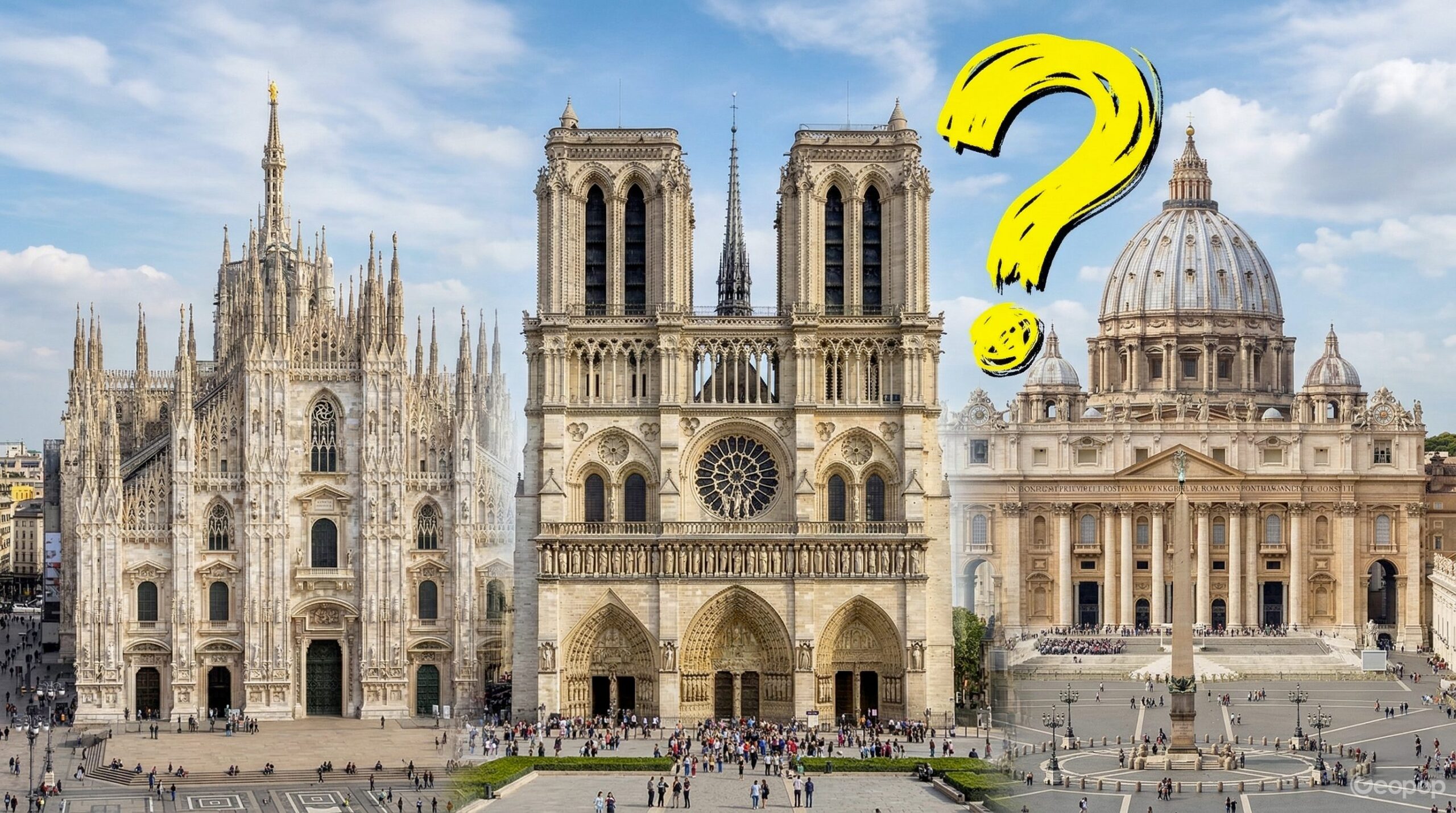
Although they are often used synonymously, cathedral, duomo and basilica are not the same thing at all: but could you explain what the differences are between these three buildings?
According to Treccani, basilica, duomo and cathedral are three examples of churches (from Greek ecclesia“assembly”), or thebuilding in which the functions of the Christian religion and where the faithful go to pray. Basically, then, any place that has been consecrated for the worship of the Catholic religion is a church.
Now, the main differences between these three churches concern the functions el’hierarchical organization within the Catholic Church.
As reported in the ecclesiastical decree Domus Ecclesiae of 1989, among all religious buildings «the first place is the greater dignity belong to the church cathedralin which there is the chair, a sign of the magisterium and power of the Bishop. Then follow the parish churches (…), the sanctuaries and other local churches.”
The difference between cathedral and duomo: there are churches that are both
A cathedral, for example, it is considered as such when it is the seat of a bishop, that is, the spiritual and administrative guide of a city. Its name, in fact, derives from “chair”, the seat reserved for the bishop which is generally located at the end of the apse (the semicircular structure at the back of a church) and which represents his authority.
Given that each diocese – that is, a territorial jurisdiction of the Catholic Church – has only one bishop, each episcopal city has only one cathedralalthough it is possible that co-cathedrals exist, often for historical reasons or related to the geographical distances of the cathedral.
The definition of cathedralhowever, is linked to tradition and less to canon law in the strict sense: its name, in fact, derives from domus (house, in Latin) and is used to indicate the main and most important church in the city. By the way, if the cathedral is located in an episcopal city, then it is possible that it is also a cathedral.
To be clear, the Milan Cathedral it is a cathedral because it is the main church of the Milanese city, but it is also a cathedral, because it houses the bishop of the diocese of Milan. On the contrary, the Monza Cathedral is not a cathedralsince it is part of the archdiocese of Milan.
The basilicas and the title recognized by the Pope
The last case is that of the basilica which, from an architectural point of view, is a type of church that derives from the large covered halls of the Romans, characterized by a longitudinal plan and division into naves, separated by rows of columns.
In theory, therefore, every large church could be considered a basilica: in reality, the basilica it is only such if it has received a honorific title directly from the Popebased on its spiritual, but also artistic or historical relevance.
More specifically, we must distinguish between minor basilicas and major basilicasas also confirmed by the decree Domus Ecclesiae: if a church has a particular importance for religious life, it can be awarded the title of Minor Basilica by the Pope, which indicates a particular bond with the Church of Rome and with the Pontiff himself. Among the examples of minor basilicas, those of Assisiin Umbria, and San Marco, in Venice.
The major basilicasInstead, I’m alone 4 in the world and they are all located in Rome, being papal basilicas – the highest rank for a church: these are San Pietro in Vaticano, San Paolo Outside the Walls, San Giovanni in Laterano and Santa Maria Maggiore.
