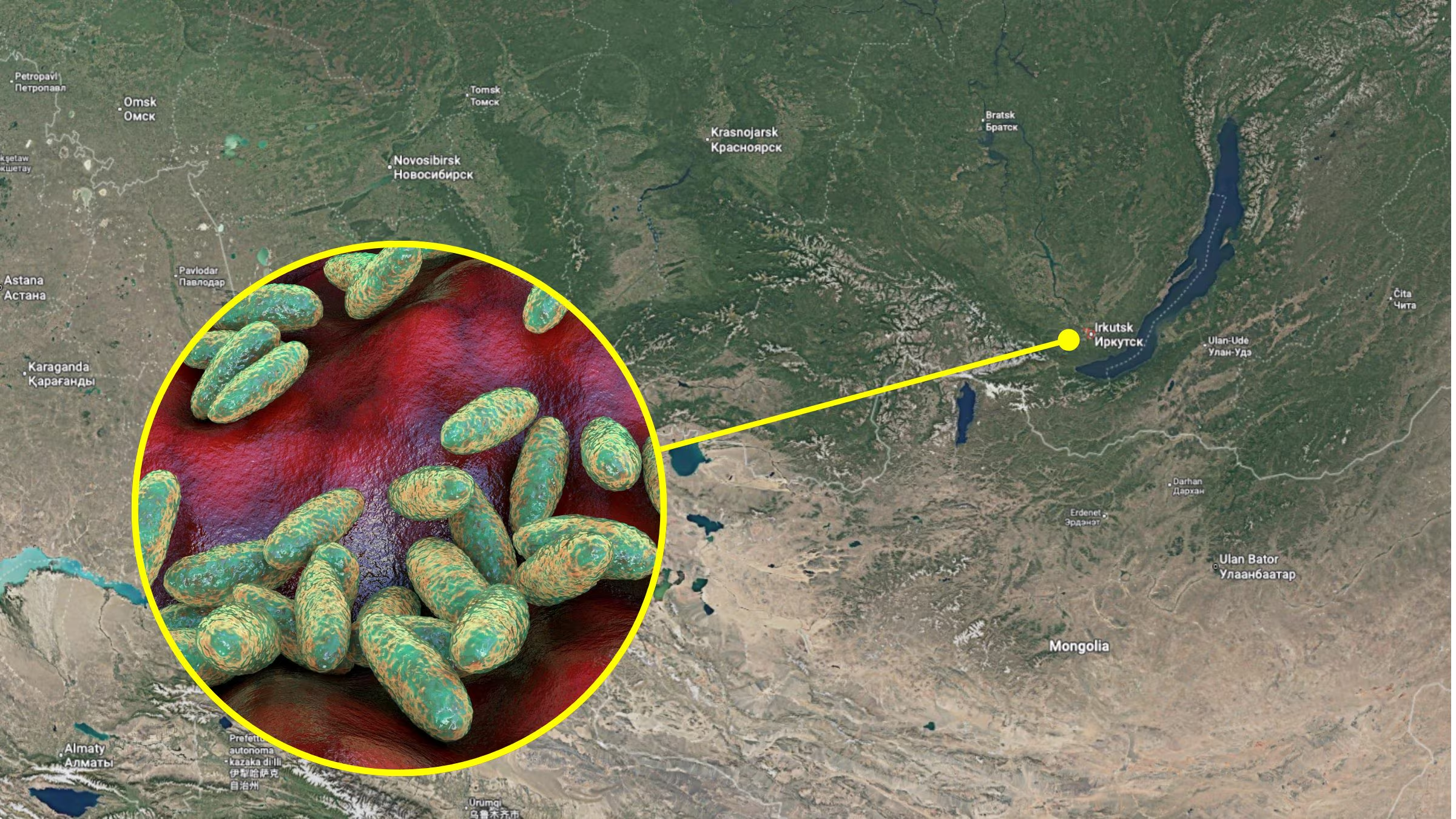
In the first days of October, news arrived from the Siberian region of Irkutsk that quickly went around the world: the sudden death of a laboratory technician (Darya Shipilova, aged 28) and the quarantine of almost two hundred people (189) who had come into contact with her. It is important to clarify that, at the moment, there is no official confirmation that it is the plague. The Russian federal body that protects public health, the Rospotrebnadzorhe limited himself to declaring that the woman died from one pneumonia of unknown causewhile the governor of the Irkutsk region spoke generically of “a suspected case of a particularly dangerous infection“. Initially, some Telegram channels and local Russian-language newspapers hypothesized pneumonic plague, whose reconstructions were then taken up by newspapers such as The Moscow Times.
According to these unofficial sources, the infection derives from aprofessional exposurewith several hypotheses including a laboratory accident and a environmental contagion. Both versions remain, however not verified, and Rospotrebnadzor himself denied the test tube hypothesis.
In Italy and Europe no cases have been recorded. However, plague is a known disease, present in other areas of the world and treatable with common antibiotics if caught in time. Furthermore, timely isolation of all contacts is the most suitable measure for containing infections. While waiting for official diagnoses, let’s clarify scientifically what pneumonic plague is, how it differs from other forms and how it is treated today.
The suspected case in Siberia: what could have happened
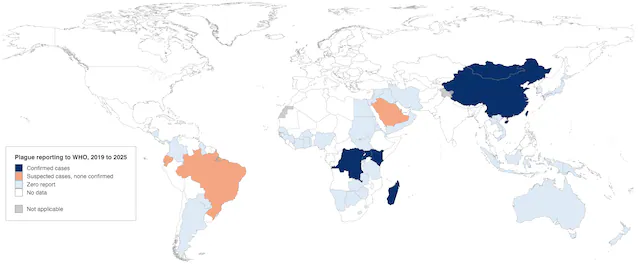
Siberia is one of the areas of the world where the bacterium is historically found endemicthat is, present in nature in a stable way. The ISS reports come on 1000 to 3000 cases of plague every year, distributed mainly between Africa, Asia and South America; in Asia the disease is widespread in the Caucasus, Russia and China. Natural outbreaks persist in Mongolia.
This is why in Irkutsk there is an institute specialized in the study and containment of the plague. The main runway remains that of a laboratory accident: the victim worked in that very institution and may have contracted pneumonic plague due to a broken test tube. The Moscow Times adds a second hypothesis: an exposure during a business trip to Buryatia, in a border area with Mongolia where an outbreak had been recorded.
In both cases, it is hypothesizedprofessional exposure and not an “environmental” contagion spread among the population.
What is pneumonic plague and the difference with bubonic plague
The plague is caused by a bacterium called Yersinia pestis and is named after the scientist Alexandre Yersin, who isolated it in Hong Kong in 1894. It is a “gram-negative” bacterium (a category that refers to how its cell wall is made) whose natural reservoir are rodents, such as rats and marmots, and which is transmitted mainly by fleas that live on them.
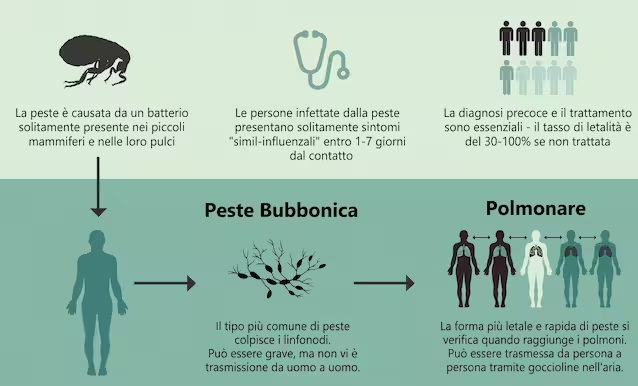
The WHO (World Health Organization) indicates three ways in which humans can become infected: the bite of infected fleas, unprotected contact with infected fluids or materials and inhalation of respiratory particles emitted by a sick person. The Istituto Superiore di Sanità distinguishes three main forms of the disease:
- Bubonic plague: it is the most common. Its typical sign is i buboesthat is, swollen and inflamed lymph nodes. In this form the plague it is not transmitted from person to person.
- Septicemic plague: the bacterium spreads throughout the body, affecting the main vital organs.
- Pneumonic plague: Yersinia pestis colonizes the lungs, hence the bacterium can spread from person to person through the air or aerosols from infected people. It is precisely because of this epidemic potential that it constitutes one of the most feared forms.
The main symptoms and incubation times
Pneumonic plague has a very short incubation: according to the ISS, the primary pneumonic form has an incubation that lasts one to three days and is characterized by acute pneumonia with coughing and spitting up blood. In the pulmonary form, symptoms may also appear in less than 24 hours after infection.
The clinical signs to look out for are high fever, headache and sudden weakness, cough, shortness of breath and chest pain and, in severe cases, bloody sputum. In general, the chances of recovery are high if the disease is detected and treated in time. In the absence of treatment, pneumonic plague is always lethal and death can occur within 18-24 hours of the onset of symptoms, while for bubonic plague the WHO indicates a lethality rate of 30-60% .
Treatments: today the plague is treated with antibiotics
The plague that wiped out a third of Europe in the fourteenth century is today a curable disease antibiotics. The ISS explains that to reduce the chances of death it is essential to treat within the first 24 hours of the onset of symptoms, with streptomycin, gentamicin, tetracyclines or chloramphenicol. WHO confirms that common antibiotics active against gram-negative bacteria are effective if administered on time.
The approach also applies to those who have been in contact with the patient. Both the CDC and WHO recommend a seven-day antibiotic prophylaxis for close contacts of a patient with pneumonic plague: this is the reason why, in suspected cases, observation of contacts is triggered immediately. A vaccine for general use does not exist: the WHO recommends its use only for high-risk groups, such as constantly exposed laboratory personnel and healthcare workers, a detail that in the context of an anti-plague institute takes on particular significance.
The most recent confirmed Russian case dates back to 2016 in Altai, when a 10-year-old boy became infected through the carcass of a marmot and survived thanks to timely treatment.
