Since the dawn of time the military capacity has constituted one of the fundamental attributes of any country system. Today, in an era characterized by the re-explosion of violence wars conventional on a large scale and by a consequent one arms race on a global scale, it is more important than ever to understand what they are the countries that spend the most in this race at the top: predictably, the three superpowers currently “reigning” on the planet (United States, China and Russia) reign supreme.
However, there are some methodological problems that make comparative analysis complicated, first of all the opacity that characterizes official documents or government communications relating to defense budget expenditures. Which countries China, North Korea or Iran they are notoriously reluctant to release information regarding the extent of their defense systems and this forces us to use a whole series of alternative toolssuch as the contracts that defense ministries periodically sign for modernize their arsenals.
The second problem instead has to do with the separation between expenses related to national defense actual and those related to security sector. In fact, there are countries in which the two expenses are confused and, among these, there is also Italy. Our armed forces are made up ofArmyfrom the Marinafrom theAeronautics and also come on Carabinieri, while the Financial Police constitutes an “armed corps” autonomous. Therefore, since the Carabinieri are an official branch of the armed forces, how should we evaluate the budget allocated to them?
The last of the problems concerns the economic evaluation: although in many cases it is used as a unit of measurement for military spending american dollar, Most countries in the world use currencies other than the US dollar oreuro and many of these national currencies are subject to inflation rates significant impacts on real spending capabilities. Let’s see a possible ranking based on the information at our disposal.
The United States of America ranks first in armaments
Predictably, the first country in the world for the consistency of defense appropriations is the United States of Americaofficially credited with the amount of 954 billion dollars for the year 2025but which according to some estimates should be adjusted to 1.025 trillion dollars.
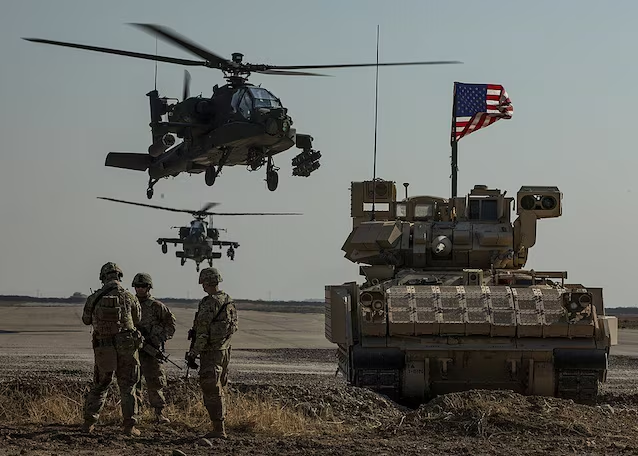
The reasons why US defense spending is so high there are essentially three.
First: As the world’s leading power, the United States has always relied on one overwhelming military force to ensure that no other country could challenge their supremacy and thus undermine the role they the American dollar serves as an instrument of economic-financial leverage towards all other currencies.
Second: to increase the efficiency and foreign intervention capacity of their armed forces, over the decades the Americans have created a logistics network organized around a huge number of bases spread across all continents (except Antarctica); an authentic one “logistics and infrastructure empire” with costs that are almost unsustainable today.
Third: since the 1970s the doctrines of the American armed forces have emphasized the use of increasingly sophisticated armaments but at the same time very expensive and difficult to produce and this, predictably, ends up being reflected in defense spending.
China advancing in military defense
Universally regarded as the strategic rival of the United States, the People’s Republic of China he saw a substantial increase in its spending on the military but, traditionally, the Chinese have always been reluctant to disseminate official figures, therefore the evaluation of their allocations in the matter is of an approximate nature.
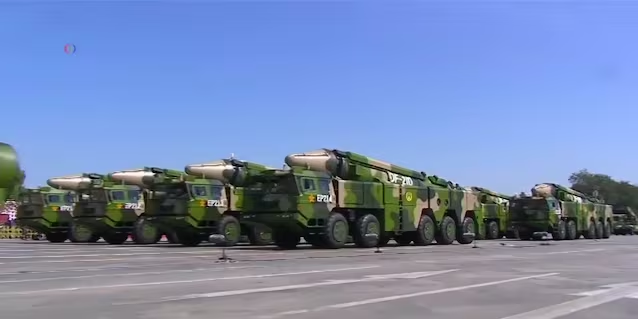
Officially, China’s defense budget amounts to approx 336 billion dollars for the year 2025 but if we consider inflation and the comparison based on purchasing power parity, it rises to over 567 billion dollars thanks be to lower costs both at dimensions mammoth of Chinese military-industrial complex. As the strategic rivalry between Washington and Beijing has only increased in recent years, it is expected that Chinese arms spending will go hand in hand. For these reasons the People’s Republic of China gains a very solid second place.
Russia and the “elephantiasis of war”
After a period of decline linked to the global realignment following the end of the Cold Warthe Russian military instrument was able to enjoy, starting from 1997of a progressive increase in appropriations and a series of reforms which have radically changed its structure.
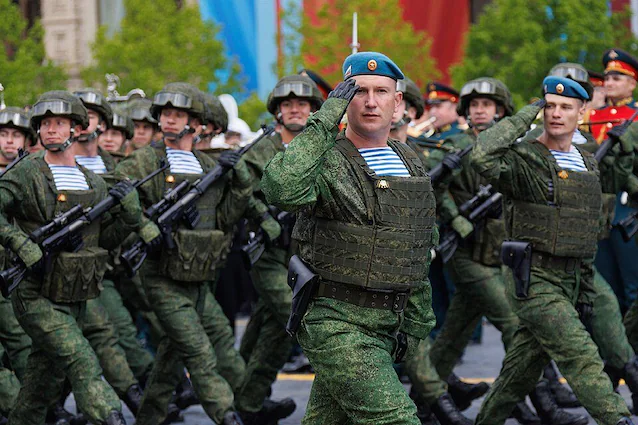
The Russian defense budget then “exploded” after the outbreak Russo-Ukrainian War (February 24, 2022) in response to war needs. It is important to underline the fact that, as in the Chinese case, even when we talk about Russia’s defense allocations we must consider the fact that, net of thedata opacity (it is still an authoritarian regime), the currency used is rublecharacterized by important periodic oscillations, and that the purchasing power parity in Russia is decidedly different from Western reality so much so that, if officially the Russian defense budget for the year 2025 it amounted to 190 billion dollarsthe real figure should actually be around 400 billion dollars and this state of affairs will certainly not change in the near future given that the decision makers of Kremlin they plan to continue increasing war spending in the coming years as well three-year period 2027-2029 with the aim of reaching full equality in the field of conventional armaments with Europe by 2030a prospect not to be underestimated given the current state of relations between Russia and Europe.
The global increase in military spending
As we have seen, the increase in military spending is one trend who is investing most countries of the world, in the light ofincrease in tensions internationally. It is not clear at the moment where this process will lead, but the fact that in the past all the main ones large-scale wars have been preceded by a period of intense and prolonged arms race It constitutes a wake-up call that should not be underestimated and that is also of great interest the European Unionwhich precisely in response to the persistence of international tensions following the outbreak of the Russo-Ukrainian War in turn decided to increase the defense budgets of the member states.
