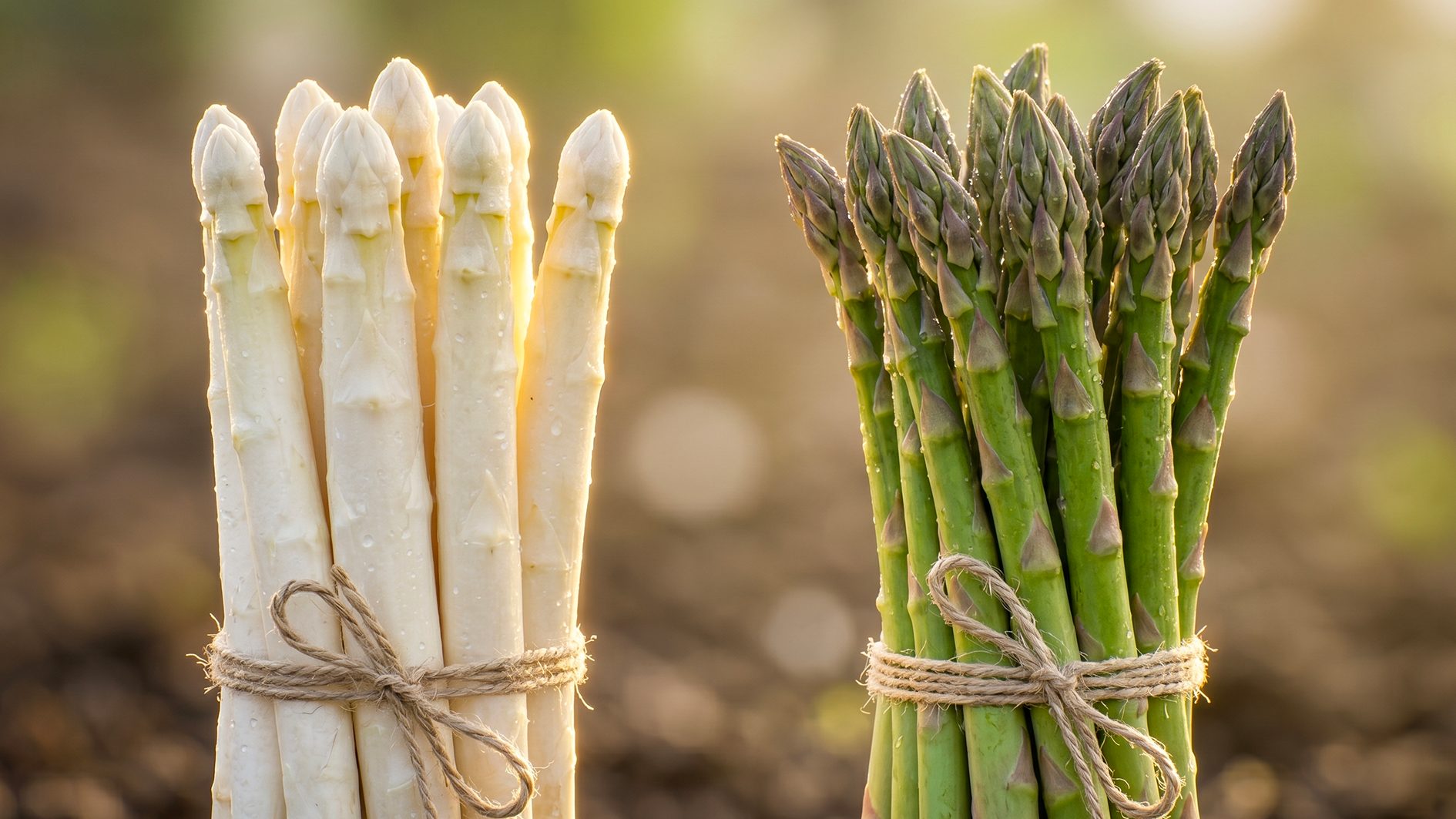
Have you ever noticed that you can find asparagus in the supermarket white, green and sometimes even purpleall apparently similar but with very different flavors and prices? These are not different species: it is the same exact planttheAsparagus officinalis L. (Liliaceae family). The color difference depends, in most cases, on how and where it is grown. White asparagus is in fact grown in land covered with a cloth black plastic that blocks UV rays: it is precisely theexposure to sunlightwhich allows chlorophyll photosynthesis, to determine the color of shoot (the edible part of asparagus). In Italy there are various excellences recognized as PGI or DOP, ranging from Cantello white al Altedo greenup to the rarer pink and purple variants.
What is asparagus and what we eat
Asparagus is a perennial plant in the same family as garlic, leeks and onions, growing from an underground root system called paw (rhizomes)a crown from which edible buds emerge every spring, called shoots. It is precisely these fleshy, elongated parts, with a pointed apex composed of small flake-shaped leaves that end up in our dishes.
The plant takes years before being productive. As the Consortium of White Asparagus of Cimadolmo PGI also explains, the harvest begins from the third year from the planting of the legs, in the first two years the shoots that emerge must remain in the field to strengthen the plant. Once started, an asparagus farm can produce for 10-15 yearsand the collection always takes place by handwith special knives that cut the shoot just below the surface of the soil.
Because one is white, one is green: it’s the same variety
The shoot is always born white. When it emerges from the soil and is exposed to sunlight, the plant activates the photosynthesis and produces chlorophyllthe green pigment.
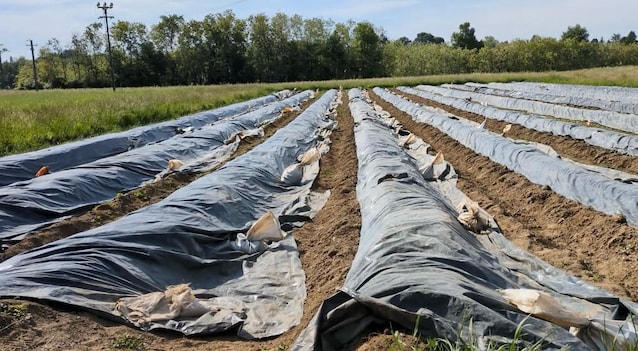
So, to get thewhite asparagusgrowers simply prevent light from reaching the shoot throughout its growth, through techniques bed forming And mulching. The soil around the row is piled up in a raised pile and all covered with a black plastic sheet that blocks UV rays. Without light there is no photosynthesis, without photosynthesis there is no chlorophyll and the shoot remains white.
THE’green asparagus instead it grows in the open air, without covers, coloring naturally.
To make good asparagus, agricultural techniques are not enough but you also need right ground. All the specifications of the Italian white PGIs agree on the same characteristics: basically land sandy, well drained and of alluvial origin. For example, the Cantello specification specifies a pH between 5.3 and 7.5 and that of Badoere requires poorly calcareous soil on the surface with good to medium drainage.
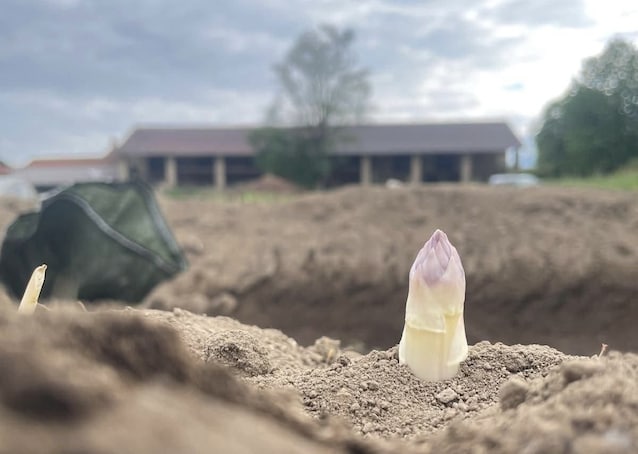
The reason is that loose soil without water stagnation allows the shoot to emerge without encountering mechanical resistance, guaranteeing that poor fibrosis (the almost buttery tenderness) which is the main characteristic of the best Italian white asparagus. Compact or clay soil would produce shoots hard And stringy.
Pink and purple asparagus
There are some rare and valuable chromatic variations, the result of specific techniques or unique genetic characteristics.
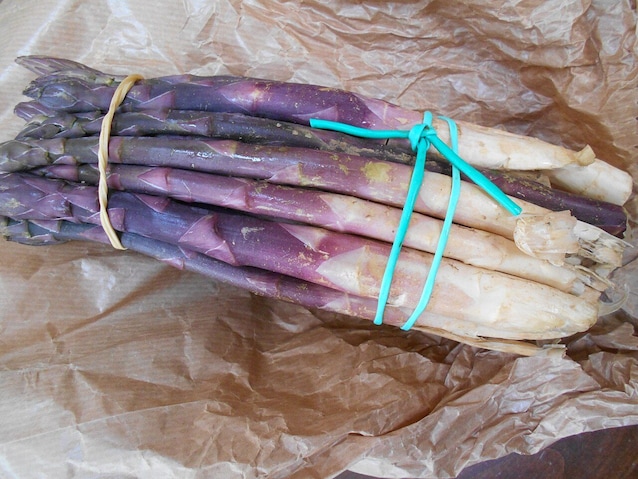
THE’Pink Asparagus from Mezzago (grown in the province of Monza and Brianza, Lombardy) has a white base and a characteristic pink tip. This color is the result of shoots that are grown in the dark, under mulch, and then exposed to sunlight for only a few hours (from dawn until harvest time). Partial exposure causes the plant to produce anthocyaninsthe plant pigments responsible for the pink color.
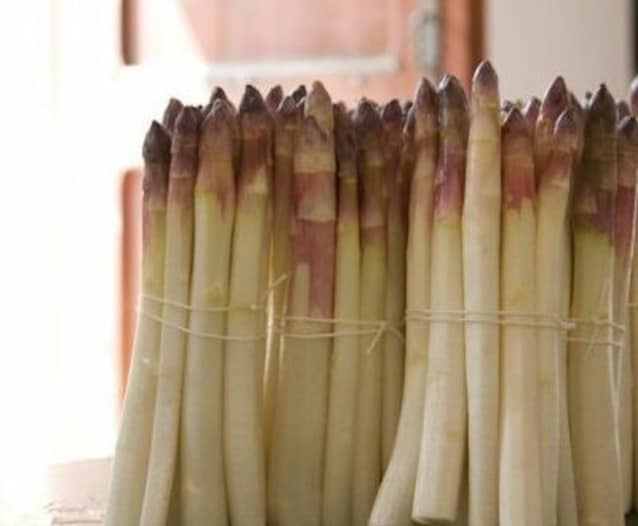
A completely different discussion applies toViolet Asparagus from AlbengaSlow Food Presidium grown in the plain of the same name in Liguria. In this case, the deep purple color is not dictated by the cultivation technique, but is in the Plant DNA. In fact, this variety has 40 chromosomes, double the 20 of theAsparagus officinalis common. This genetic anomaly gives it its characteristic color and preserves its purity, making it incapable of crossing with other varieties (hybrid seeds would be sterile).
Italian PGIs: rules down to the millimetre
In Italy there are several Protected Geographical Indications for asparagus, and their specifications codify every production detail with extreme precision.
- THE’Badoere PGI asparagus: produced between the provinces of Padua, Treviso and Venice, it exists in both white and green. The white (extra category) must have a caliber between 12 and 20 mm, a length between 14 and 22 cm, be straight and with a very tight apex.
- THE’Bassano PDO White Asparagus: produced in the province of Vicenza (including Bassano del Grappa), it is famous for its very low fibrousness and tenderness, characteristics that make it so delicate that it sometimes presents slight natural cracks. It grows on sandy alluvial soils rich in gravel (pH 5.5 – 7-5), influenced by the Brenta river and protected by the Pre-Alps.
- THE’White Asparagus of Cimadolmo PGI: it was the first European asparagus to obtain PGI certification, in 2002. It is produced along the Piave (Treviso). The harvest traditionally takes place early in the morning and the shoots are immediately immersed in cold water to preserve their freshness.
- THE’Asparagus of Cantello PGI: produced in the municipality of the same name in the province of Varese, it is white (or with a slightly pink tip) with a maximum length of 22 cm. The harvest, from March to June, is strictly manual and involves the use of a tool called “gouge“, a sort of chisel with a concave and sharp tip.
- THE’Green Asparagus of Canino PGI: it is grown in the Tuscia area of Viterbo (Lazio) on soils of volcanic origin, rich in iron and magnesium. It is characterized by being an “all-eater”: the shoot has no waste because it is cut above the ground level, discarding the fibrous basal part. The particularity of Canino lies in the microclimate generated by the proximity to the sea and by the exploitation of theenergy geothermal: underground hot water aquifers are channeled to warm the soil, allowing for an early harvest that begins as early as January.
- THE’Green Asparagus of Altedo PGI: it is historically produced in an area between the province of Bologna (along the Via Emilia) and that of Ferrara, up to the Po river. It is cultivated on sandy or sandy-loam soils, in a humid and foggy climate typical of the lower Po Valley.
