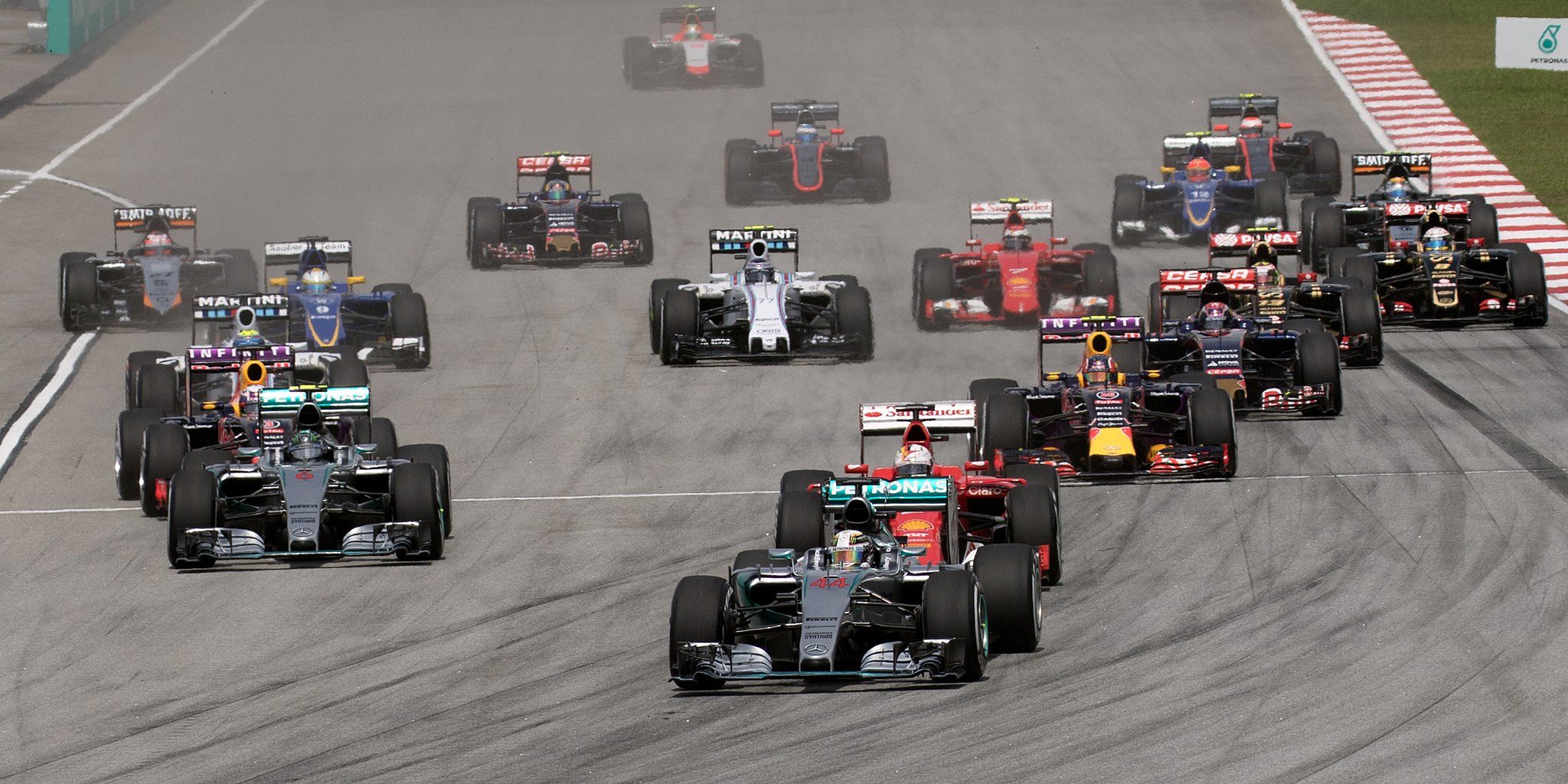
There pole position It is the first box on the starting grid occupied by the Formula 1 driver who recorded the best time in the qualifications session (now structured in Q1, Q2 and Q3). In theory, pole position guarantees a strategic advantage: it means having clean air, dictating its own rhythm right away, avoiding contacts and tension in the first meters of the tender. But be careful because in the reality of a long race, full of variables and twists and turns, things can change. To better understand whether to start in front of everyone in the race actually represents a concrete chance of victory, you have to rely on the data, and these are very significant. In the above 1100 Grand Prix held from 1950 to today, in 470 occasions, “Alone” About 42% of the races were won by the pilot who started in poletherefore on average almost 6 times out of 10 someone wins someone else.
The importance of pole position in Formula 1: statistics
The pole position, that aging first box on the starting grid, has always represented a crucial strategic advantage in Formula 1. There is the advantage of the Clean side of the grillor that of ideal trajectory. This side was “rubberized” by hundreds of passages during tests and qualifications, which guarantees better adherence and more effective departure. But is it really so obvious that whoever leaves in front wins? The 2025 season tells us yes, and with updated numbers up to Hungary Grand Prix On the Hungaroring circuit, it is worth taking a balance sheet.
So far, in the 14 great prizes played, 9 they saw the pilot win from pole win, with a percentage of the 64%. A fact that makes you think, because historically the percentage of those who transform the first position on the grid into victory is around the 42%while in recent years, with more reliable cars and more selective circuits, he got up close to 50%. Figure that rises if you take into account those who win from the second position (66%).
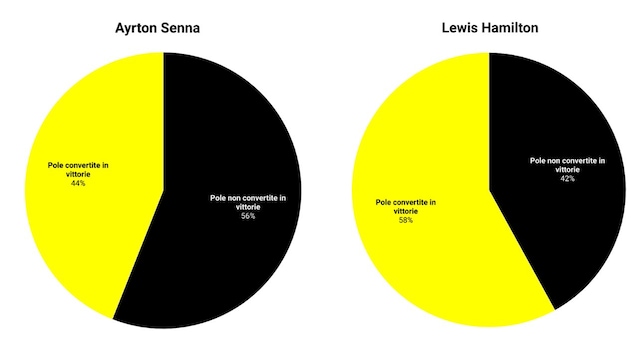
In the past, with Less reliable cars and less safety on the trackstarting on pole does not guarantee the victory at all, because accidents and technical problems were frequent to the point that the pilot who started from the first box sometimes even managed to finish his race. Today, with much more robust cars and with regulations that make overtaking more difficult, those in front of them have many more chances of reaching first at the finish. Let’s take Ayrton Senna: in his career he converted about half of his pole positions in victories (out of 65 pole he converted 29), a very high percentage of the 44%. Lewis Hamilton, on the other hand, boasts an impressive 58% of conversion from pole to triumph (61 out of 104).
Because pole position is not always synonymous with victory: it depends on the type of circuit
The conversion from pole to Vittoria in Formula 1 varies a lot especially based on the circuit. For example, in the city circuits – known for their narrowness and the scarcity of overtaking points – the pole is worth gold. TO Monkfor example, those who leave in mind wins in 75% cases. The case relating to the 2022 season is striking when the Ferrari pilot, Charles Leclerc, who started from pole in a race influenced by the pouring rain on the Monaco circuit, found himself at the end of the race to get fourth due to a wrong strategy in the pits.
On the contrary, in the high -speed circuits with long straights and effective DRS areas, pole loses value. TO Monzathe “cathedral of speed”, only in 35% Cases the poleman crossed the finish line first. Also a Spa-francorchampsthe data is similar: about 39% of conversion from pole to victory, thanks to the very long straight that leads to Les Combes where the overtaking are frequent. To the “Marina Bay Circuit” of Singapore Instead the conversion rate from pole to victory is very similar to that of Munich: here the 66% Of the victories came from the pilot who started in front, as it is a very narrow track and where to overtake is almost impossible.
Be careful though, to start in front of everyone it is not Always synonymous with victory even in the circuits where to overtake is a somewhat arduous challenge. In fact, at the start, there may already be some sliding doors that influence the final result: a wrong start, the entrance to the Safety Car for any accidents, the asphalt and tire temperature, weather conditions and more.
The pilots with the highest rate of victories starting from pole position
Let’s take a look at some of the best drivers with the highest rate of victories starting from pole position in the history of Formula 1:
- Max Verstappen – 75%: The four -time world champion dominates this ranking with 33 wins conquered starting from the first box out of 44 pole positions in total.
- Alberto Ascari – 64.29%: The legendary Ferrari pilot of the 1950s boasts 9 wins from 14 pole. His ability to translate pole into success was one of the keys to his domain in the post-war era.
- Fernando Alonso – 63.64%: With 14 victories of 22 pole, the two -time Spanish world champion in its golden years with Renault has always maximized the opportunities.
- Michael Schumacher – 58.82%: The German, in addition to having won seven worldwide world titles, won 40 times when he started from pole position, which are 68 in total.
- Lewis Hamilton – 58.65%: The British pilot during his career is the one who has conquered the most pole position of all in Formula 1 (104), among them 61 times has turned the first position in qualifying in the victory of the race.
One of the most talented riders of the grid is not included in this ranking, namely Charles Leclerc. The Monegasque pilot, in fact, converted only 5 of his 27 pole position in victory in his career, about the 18%. This is the lowest conversion rate among the pilots in activity with at least 20 poles. To keep him company among the least flattering numbers there are also some illustrious names of the past, as in the case of René Arnoux who has just collected 2 wins out of 18 pole (11%). Then stands out Nelson Piquetthree times world champion, who won only 5 of his 24 pole positionswith a conversion rate equal to 20.83%unusually low for a pilot of its caliber.
