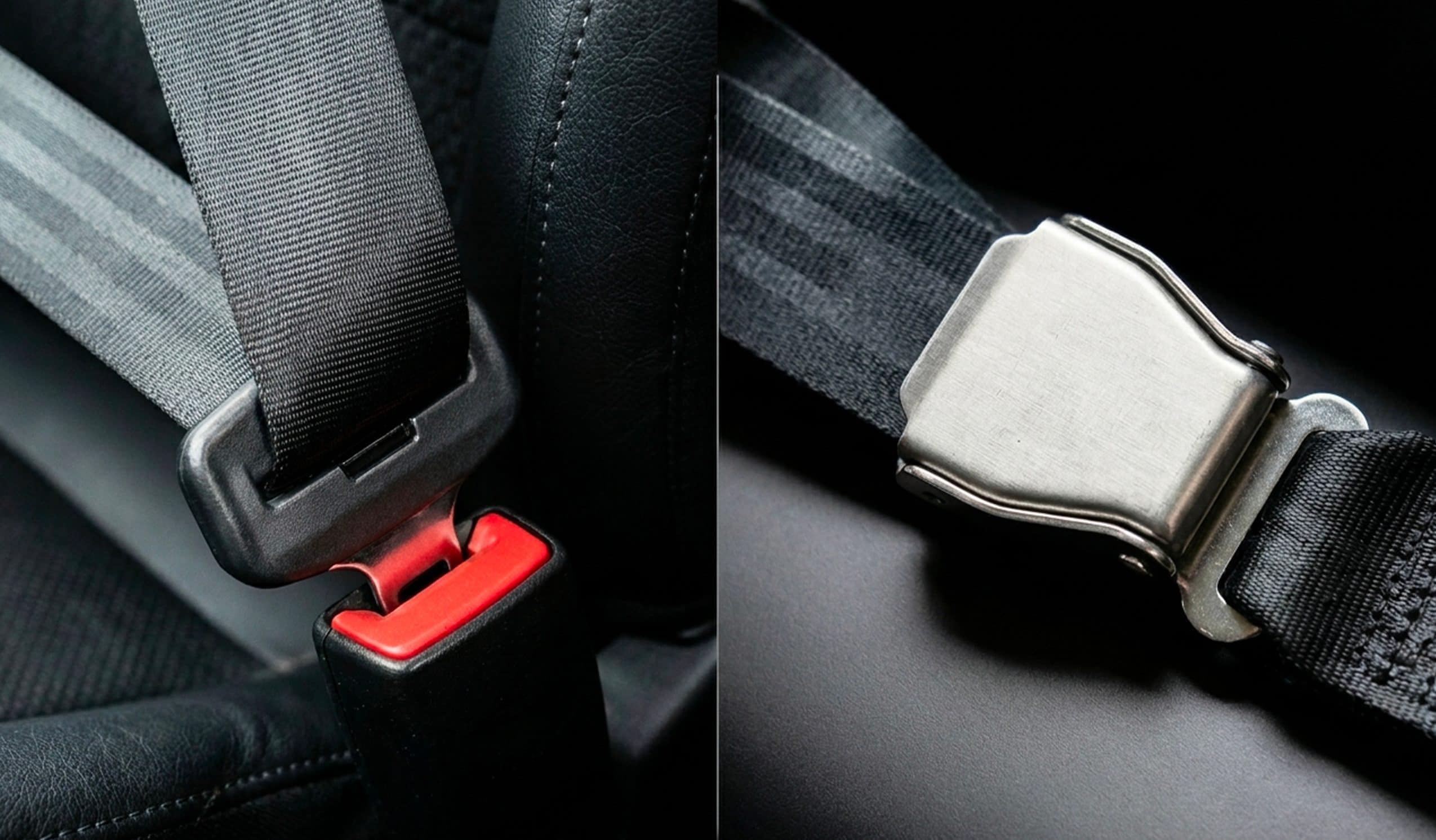
When we get on a plane the first thing we do after sitting down is to fasten your seat beltthe abdominal one with the characteristic buckle flat which makes a loud “clack” when it closes. But why is it not used anyway three-point model which is present, for example, on cars?
It all has to do with the safety and applies mainly to the economy class: in business class they are often similar to those of cars while the pilots even have four or five point seat belts.
How come the seat belt on airplanes is different and what is it for?
On scheduled flights, economy class passengers wear a “two-point” belt: two segments of fabric attached to the sides of the seat that join in the center of the pelvis. The closure is one lever buckleor lift lever bucklea technology that has remained almost identical for decades: to release it, simply lift the upper metal tab.
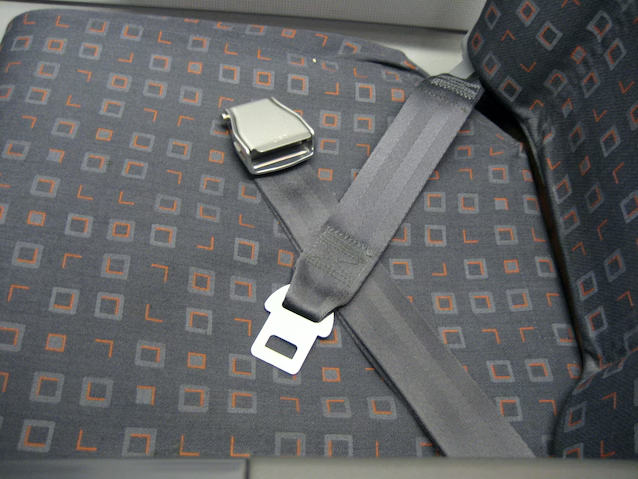
But why don’t we use the same belt as cars? The main reason concerns theseat architecture and the dynamics of bodies in the event of impact. In Economy the belt abdominal allows the bust to lean forward freely during strong deceleration (the classic defined safety position embers), avoiding dangerous stress on the spine and letting the head impact against the padded backrest in front, designed to deform and absorb energy.
Added to this are structural and other reasons evacuation: the lever buckle it opens with a single instinctive gesture even in a panic, and three-point belts would require reinforced and much heavier seatswith a huge impact on fuel consumption.
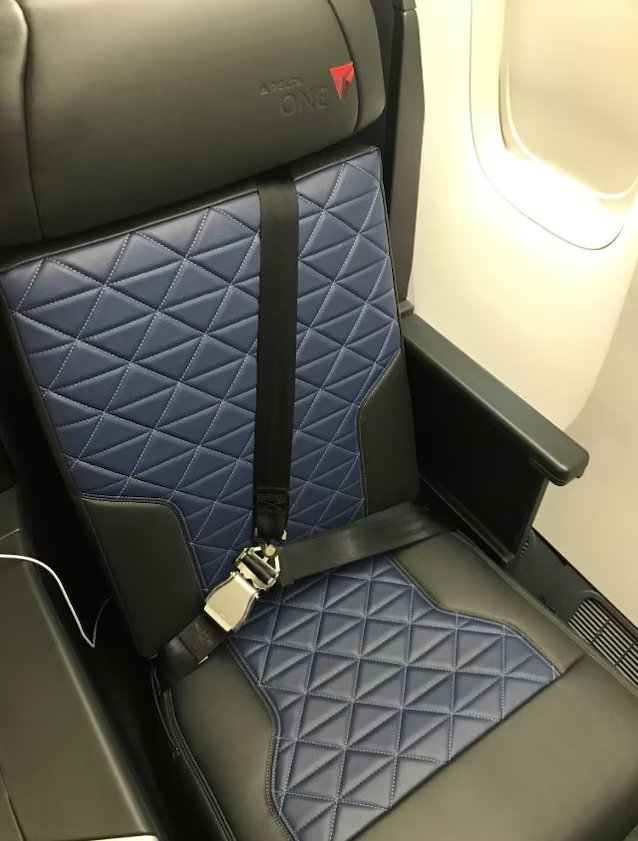
The difference between economy and business class: the seat belts 3 points
In this specific case we must consider one last variable, namely the distance between the seat and the obstacle in front of it. In economy that space And minimumthe seat in front is just a few centimeters from your face: in the event of sudden braking your head doesn’t have time to accelerate enough to seriously hurt yourself against the padded backrest in front. In Business, however, there is space Very greater: without a system that also blocks the torso, the head could reach a dangerous speed before hitting a rigid surface, exceeding the safety limits imposed by the aeronautical authorities. That’s why they are needed there three-point seat belts or integrated airbags: to brake the upper body before impact.
Drivers’ seat belts with 4 or 5 points
If you have the opportunity to peek inside one cockpit you will notice how pilots and co-pilots wear seat belts four or five points. In addition to the abdominal strap, there are two straps that come down from the shoulders and, in many aircraft, also one inguinal band which prevents the body from sliding down during a collision. The reason is character operating. Imagine violent turbulence or a particularly hard landing: if pilots only had their lap belts on, their torsos would jerk upwards or to the side, causing them to lose their grip on the controls or, worse, causing involuntary inputs on the control stick. Diagonal braces hold them literally glued to the seat.
