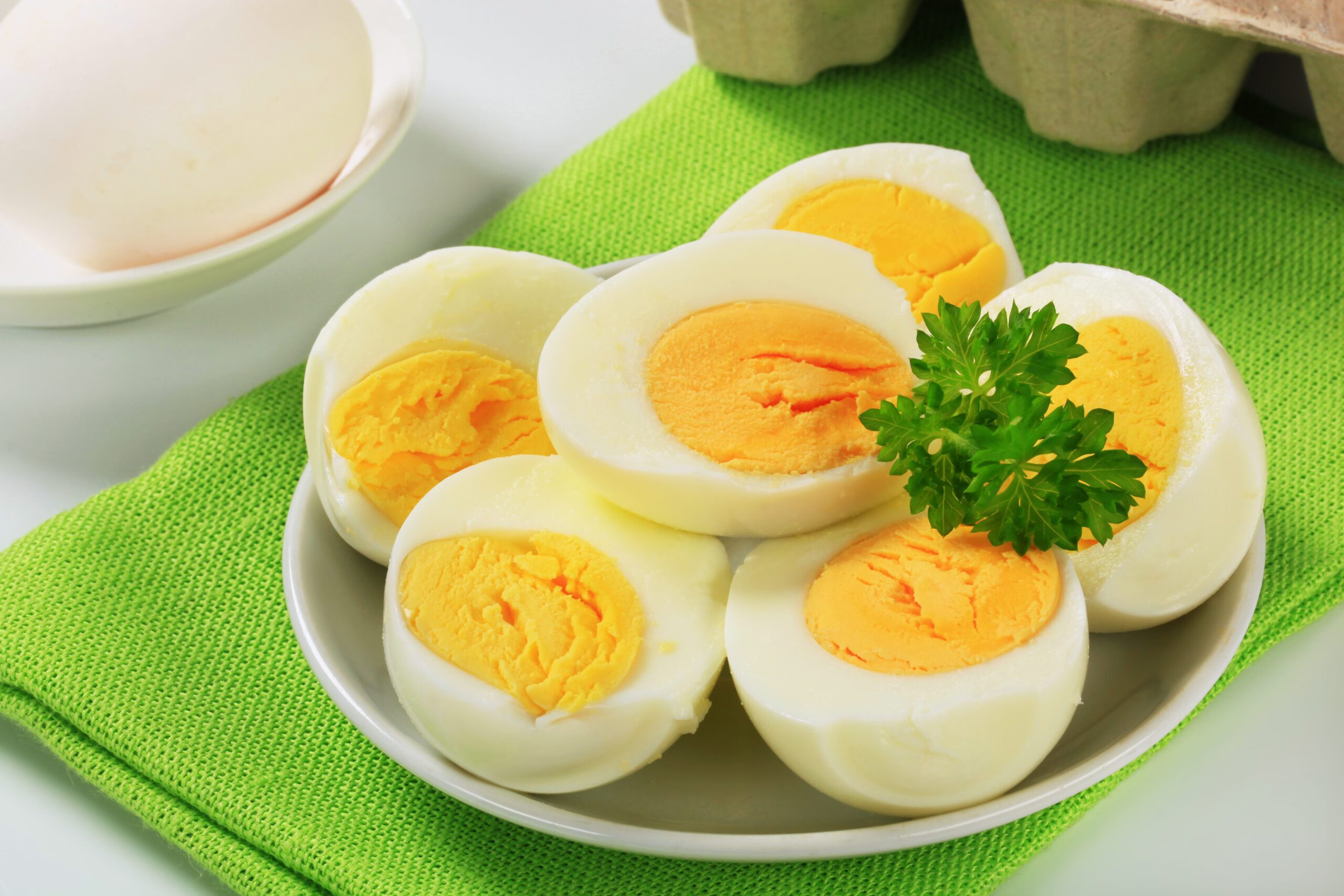
When we cook an egg, for example when we make a hard-boiled egg or an omelette, the egg white, initially transparent and fluid, becomes white and compactWhile the yolk thickens, becoming soft and floury. The protagonist of this change is the heat. In fact, as the temperature increases, the egg proteins they go through a sequence of transformations: first yes they denaturethat is, they lose their characteristic three-dimensional structure, then they aggregatebinding together to form a dense three-dimensional network. This network immobilizes much of the water present in the egg, giving rise to a gel: it is precisely this process, called gelationwhich turns a liquid into a solid food. If but cooking takes too longthe protein network continues to contract and the result changes again: the egg becomes drier, harder and with a typical consistency rubbery.
How heat turns proteins into a solid network
The egg is composed largely of water, but it also contains numerous proteinsenormous macromolecular structures composed of amino acid sequences. We find them in raw eggs fold back (in English “folding”) into one precise three-dimensional structureheld together by chemical interactions of different nature. All the chemical-physical characteristics of the protein start from there: if the structure is modified, the final characteristics also change, such as texture and appearance.
As suggested by numerous scientific reviews, when the egg comes heated, the energy provided by the heat progressively breaks the bonds that hold the protein structures. Then these “open”, losing their three-dimensional conformation: this is the phenomenon of denaturation. It is important to highlight that during this process Peptide bonds are not broken that hold the amino acids of the actual protein together: only the way in which the structure folds in space changes. A bit like “unfolding” an origami: it loses its three-dimensional shape, for example that of a bird, and we find ourselves with the sheet of paper still intact.
First they relax, then they regroup
Once denatured, the proteins they expose regions that were previously hidden and, under the effect of temperature, they begin to bond with each other. A 3D network is thus formed which retains much of the water present in the egg: this process is called gelation and it is the reason why the contents of the egg change from liquid to solid while remaining rich in water. Not only that, with this new organization of proteins it causes loss, the egg white loses its transparency and becomes white and opaque: let’s compare a hard-boiled egg with a freshly cracked one and we will again see a consequence of the new gelled structure.
The formation of the protein network is what makes the egg solid, but if we continue to cook, over time the gel becomes more and more compact. As indicated by a review from 2022 and beyond, its contraction favors synèresisi.e. the expulsion of part of the water previously immobilized in the gel. The consequence? Again, everything changes: the egg loses softness and takes on a more consistent texture dry, hard and elastic.
