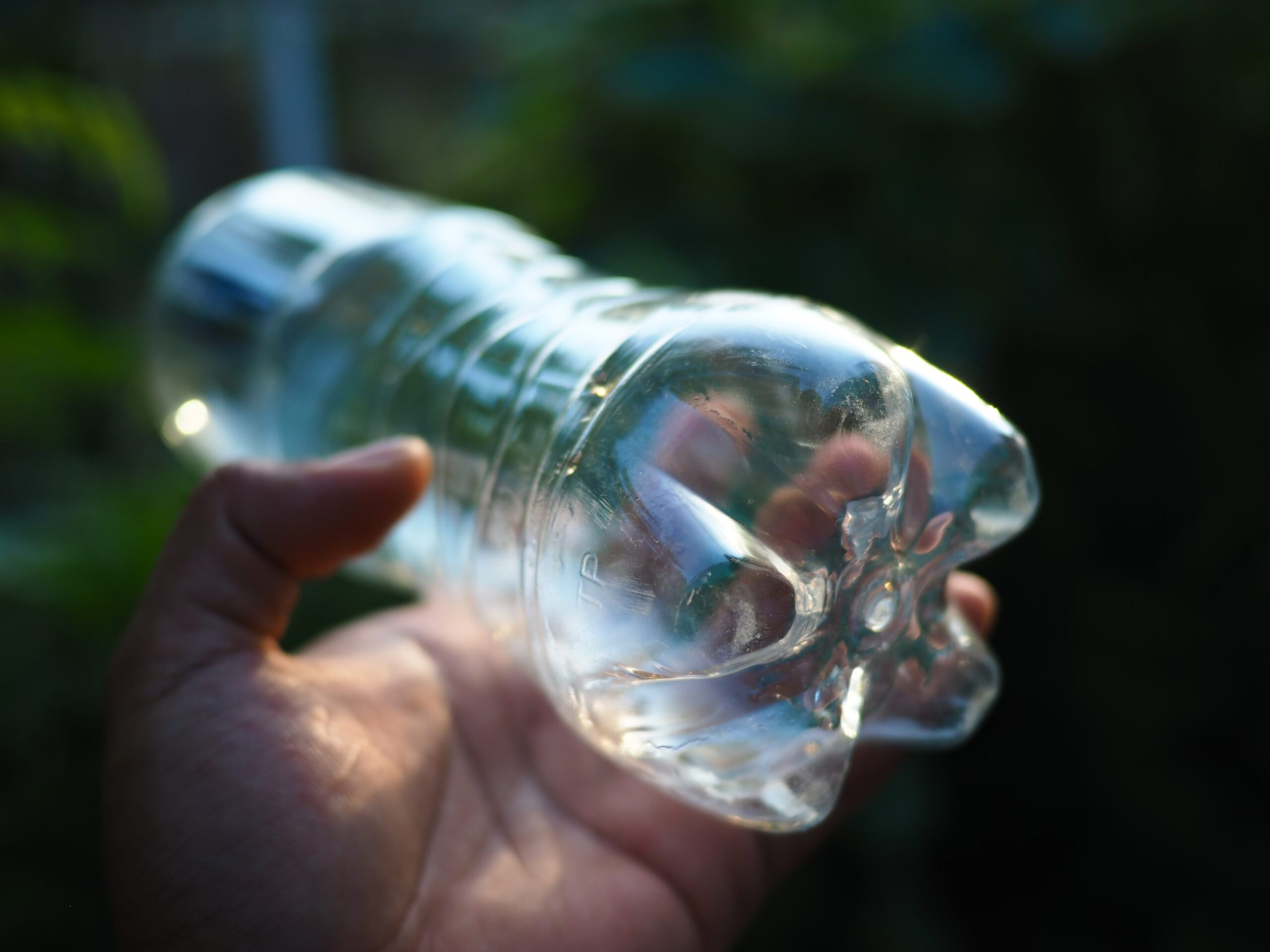
Let’s take a bottle of sparkling water and look at it from underneath. We will see five “petals” protruding downwards, which are missing from the bottoms of natural water bottles. It might seem like a purely aesthetic choice, but in reality it is the result of precise engineering needs. As shown by several scientific studies, including a 2006 review by Hanley and colleagues published in the journal Journal of Applied Polymer Sciencethis geometry is mainly used to better distribute mechanical efforts generated by internal pressure of carbonated drinksmaking the bottle more stable and durable without increasing the amount of plastic used. It also has a specific name: petaloid base (from English petaloid basebecause it resembles the petals of a flower). It is therefore not a design detail, but a solution developed for avoid deformations, cracks and subsidence of the basewhile keeping the bottle balanced when placed on a surface.
The internal pressure for sparkling and carbonated water
Carbonated drinks contain carbon dioxide (CO2) dissolved which, inside a closed container, generates a decidedly considerable internal pressure. The values depend on the type of drink and the external temperature, but to get an idea, a 2008 experimental study published in Journal of Chemical Education measured internal pressure levels up to 4 bars at a temperature of 20 °C. Even if this is a study carried out on cans and not specifically on plastic bottles, it is a fact that cannot be ignored: we go up to quadruple the atmospheric pressure which we are used to every day!
The most vulnerable point of the bottle it’s exactly the bottom: it is the area furthest from the cap, the one that touches the support surface and the one where the material tends to be thinner. If it were completely flat, it would concentrate its efforts in a few places and it could deform easily outward, making the unstable bottle or, in the worst cases, encouraging the formation of cracks. The petaloid shape work around the problem turning that downward push into one series of curved arches.
Like a round vault in architecture, each “petal” converts the compressive force into tensions which travel along the curved walls towards the support feet. The load it is not concentrated in one point: it is sorted and this is the key. According to a 2009 study published in Journal of Applied Polymer Sciencethe point of maximum stress is not found on the tips of the “feet”, but in the valleys between one petal and another, a weak point where the first microcracks can appear, causing the petaloid structure to “fail”, especially at high temperatures.
A further study from the same scientific journal demonstrated that the geometry of the bottom directly influences the distribution of mechanical tensions and which, by modifying shape and size of the “petals”, it also changes resistance of the bottle to internal pressure. In essence, not only the particular shape, but the very arrangement of the “feet” allows you to better distribute the efforts and reduce the risk of breakage.
Why five petals?
And the number of petals? Why five and not three, four or seven? Scientific literature it does not identify the number five as a universal optimum. The patents that contributed to the development of the fund petaloid indicate what a bottle can have at least three supportsbut that thepreferred configuration it is generally that a five petalsdistributed symmetrically around the bottom. According to these design solutions, a odd number of supports improves the stability of the containerwhile five represents a good compromise between mechanical resistance, stability and quantity of material used. In reality, there are also funds with seven petalsalthough rare, used in specific applicationsdemonstrating that there is no “perfect” number valid for all bottles.
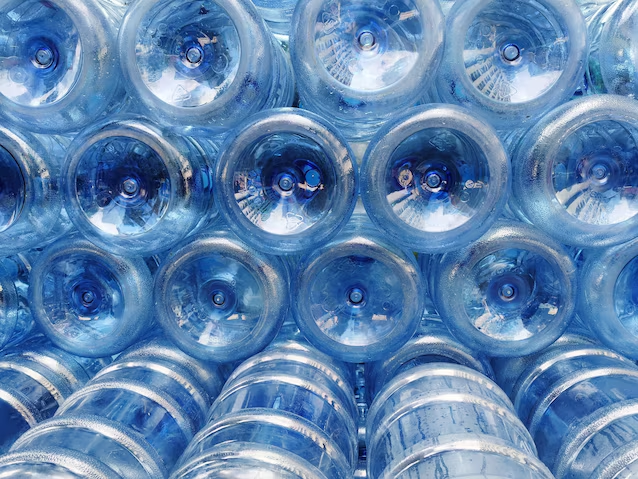
But be careful: all of this it only makes sense with carbonated drinks. Still water bottles, fruit juice bottles or milk bottles often have the flat bottom with a simple central dome, just because they do not have to resist significant internal pressures. Simply put, the optimal shape of the fund depends completely on the content: pressure is the variable that determines everything else.
