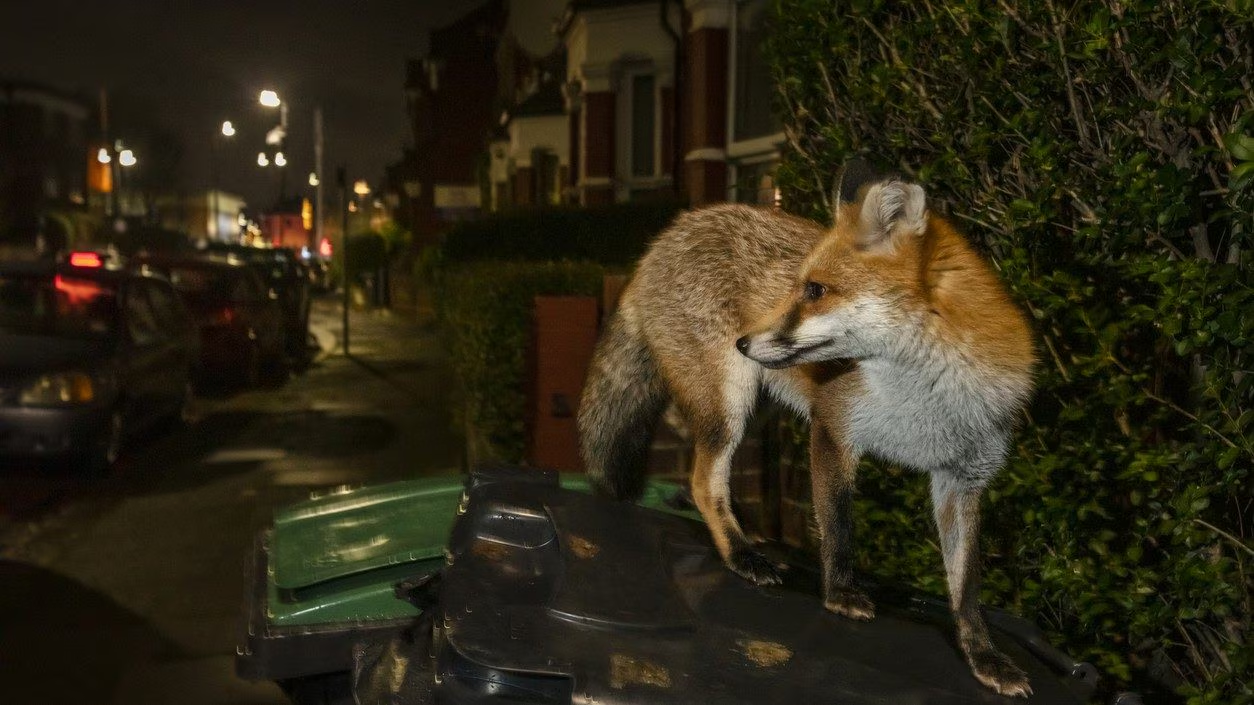
The suburbs of large Italian cities are always frequented by urbanized foxes, adapted to consuming waste and more accustomed to human presence. Their domestication could lead to changes that are reminiscent, at least in part, of dogs.
A reddish flash illuminated by the car headlights, a fleeting apparition behind a dumpster or among the trees in the park: the suburbs of large Italian cities are increasingly frequented by foxes. In some European metropolises, such as London, suburban foxes have been widespread for many years, but they are also becoming increasingly common in Italian cities such as Rome, Milan, Florence and recently also Naples. The environment of city parks and urban suburbs is well suited to hosting these animals thanks to a combination of few disturbing elements compared to the city center and a greater presence of food compared to wooded areas. The dynamics of this phenomenon are reminiscent of the same ones that, thousands of years ago, led to the domestication of the wolf and making foxes always more tolerant to human presence.
Urban red foxes in Italy: country specimens living in the city
In Italy there is only one species of fox, the red fox (Vulpes vulpes), divided into subspecies European red fox (Vulpes vulpes crucigera) and the smallest Sardinian red fox (Vulpes vulpes ichnusae), present only on the island. The fox is aomnivorous opportunist and, despite its relatively small size, one of the main predatory animals of our fauna. It is mainly active at dusk or at night, which is why it is easier to spot it, even in the city, after dark. Despite being widespread throughout the national territory, there is no single census that quantifies the number of foxes in Italy: not even the Higher Institute for Environmental Protection and Research (ISPRA), which monitors wildlife, is able to provide a total estimate of the specimens. Their presence is therefore recorded through local monitoring networks, usually with the aid of camera traps in places of transit in wooded areas or urban parks, or by counting the number of killings that have occurred through hunting. In 2025, the Ur.Bio.Ecos Biodiversity and Urban Ecosystems project of the Federico II University of Naples documented for the first time the presence of foxes in the Metropolitan Park of the Hills of Naples. An analysis of the protected areas of the Municipality of Rome instead defines the population of urban foxes as “widely widespread”, with sightings coming from 67% of the areas within the Grande Raccordo Anulare. While a study being published on Mammalian Biology reports a total of 3000 sightings of foxes over 8759 days of observation in the urban areas of Milan, Rome, Florence and Campobasso.
Because some Vulpes vulpes prefer urban environments
The urban periphery environment presents numerous advantages for foxes: among all, the large quantity and easy access to food. Foxes have a generalist diet, and do not disdain also feeding on waste in our bins, which they can access more easily in less frequented areas during the night. Furthermore, where there is human presence they are also found pest rodents such as mice and rats, which foxes are able to hunt skillfully. The milder climate than the forest one and the absence of other natural predators of the fox, such as wolves, make the colonization of urban suburbs and city parks, where foxes find refuge, even more advantageous. The fox is therefore an example of synanthropic speciesthat is, able to live in proximity and benefit from human presence, thanks to its generalist diet and its adaptability. Another possible reason for the increase in foxes in urban environments is the eradication of rabies in wildlife, now extremely limited on the European continent thanks to vaccination campaigns. This would have reversed the population declines the foxes were experiencing.
A possible domestication: how the city variant is differentiating itself from the rural one
Despite increasingly tolerating coexistence with humans, the fox remains shy, difficult to train and for this reason not suitable as a pet. But it is possible that this too is gradually changing: a study by the University of Glasgow has shown how urban foxes in the London suburbs are becoming differentiating from rural onesnot only on a behavioral but also morphological level. They have a smaller skull and a shorter snout, which helps them get food in the city, and there is also less sexual dimorphism between males and females. These changes mirror, in part, those the dog went through during the domestication process starting from the wolf (which is estimated to have occurred between 17 thousand and 40 thousand years ago). The less aggressive and more enterprising wolves, approaching human camps in search of food scraps, would have become accustomed to our presence and would have been consequently bred to become hunting, guard and companion animals.
The ever-increasing interaction between humans and foxes could therefore lead to gradual domestication, even over a relatively short period of time. As the Russian researcher Ljudmila Trut testifies in her book How to tame a fox, Starting from the 1960s, the Soviet Union carried out experiments on the domestication of wild foxes, in an attempt to increase fur production. By crossing the tamer specimens together, within a few generations the researchers obtained “sweeter” animals, well accustomed to human presence, and with dog-like behavior.
