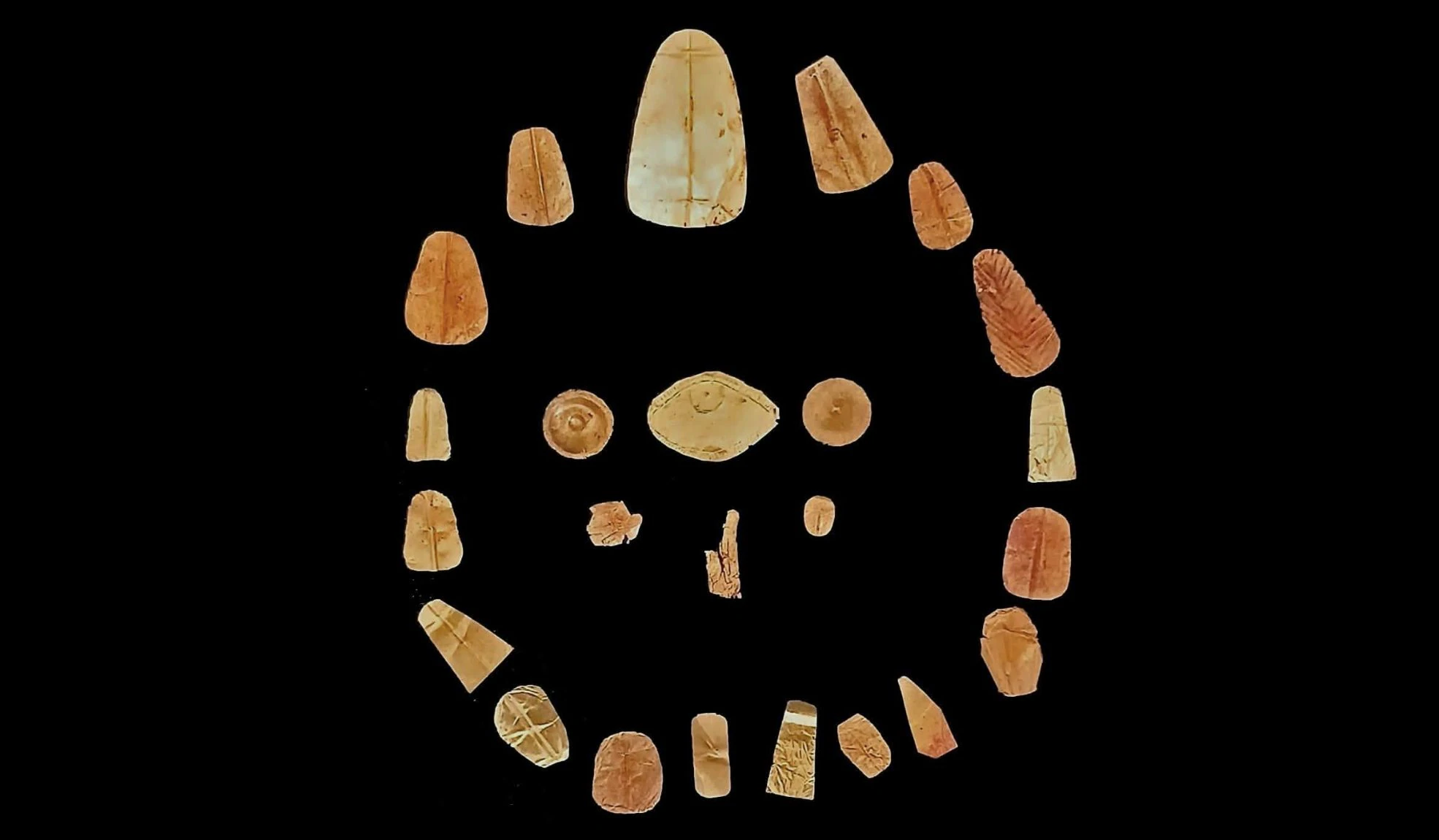
TO Marina El-Alameinon Egypt’s northwestern Mediterranean coast, about 300 kilometers from Cairo, archaeologists have unearthed 18 graves dating back to the Ptolemaic and Roman periods, dating back to 4th century BC and 4th AD, containing gold funerary objects, including golden tongues. The discovery, announced on July 5, 2026 by Ministry of Tourism and Antiquities Egyptian, leads to 44 the total number of known burials at the site since excavations began in 1986. Marina El-Alamein corresponds to the ancient one LeukaspisGreco-Roman port city mentioned by the geographer Straboabout 300 kilometers northwest of Cairo.
The discovery: 18 tombs and a 2.5 meter sarcophagus
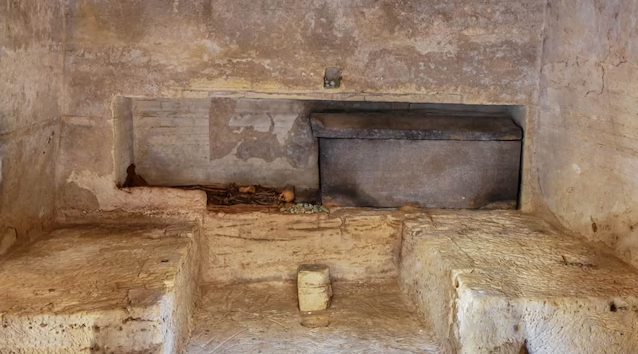
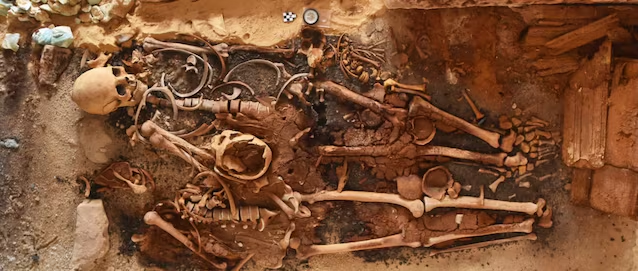
The 18 tombs reflect a complex social stratification. There are eleven of them hypogea carved into the rock, underground structures with an average depth of 8 meters; one is obtained from the adaptation of a pre-existing water well. The other seven are monuments made of limestone blocks. Some were still sealed at the time of discovery, a very rare circumstance in Egypt.
Among the most significant finds stands out a tomb with a large, long granite sarcophagus 2.5 metersstill closed and containing the skeletal remains of the deceased. This had been buried accompanied by a faience sphinx, obtained from the processing of quartz crystals. Among others accompanying items include a marble statue of Aphrodite and a funerary stele with a male figure sitting with a bird and other artefacts, including amphorae, perfectly preserved ceramic vases, lamps, basins and small stone altars.
The ritual of the golden tongue
As in many burials of the Greco-Roman era in Egypt, here too the deceased were equipped with gold plates placed on the tongue: the so-called practice of “golden tongue” it is a magical-religious custom that was very widespread in the Hellenistic and Roman ages, intended to allow the dead to communicate with the deities of the afterlife. Overall they were recovered 24 gold funerary objects. A golden amulet reproducing the Eye of Horus was also found, which testifies to the strong persistence of traditional Egyptian faith.
Marina El-Alamein is today one of the coastal settlements of the classical era best preserved in Egypt. Its strategic position on the northwestern coast made it an excellent trade hub between Egypt and the rest of the Mediterranean.
Sources
Egyptian Ministry of Antiquities and Tourism
