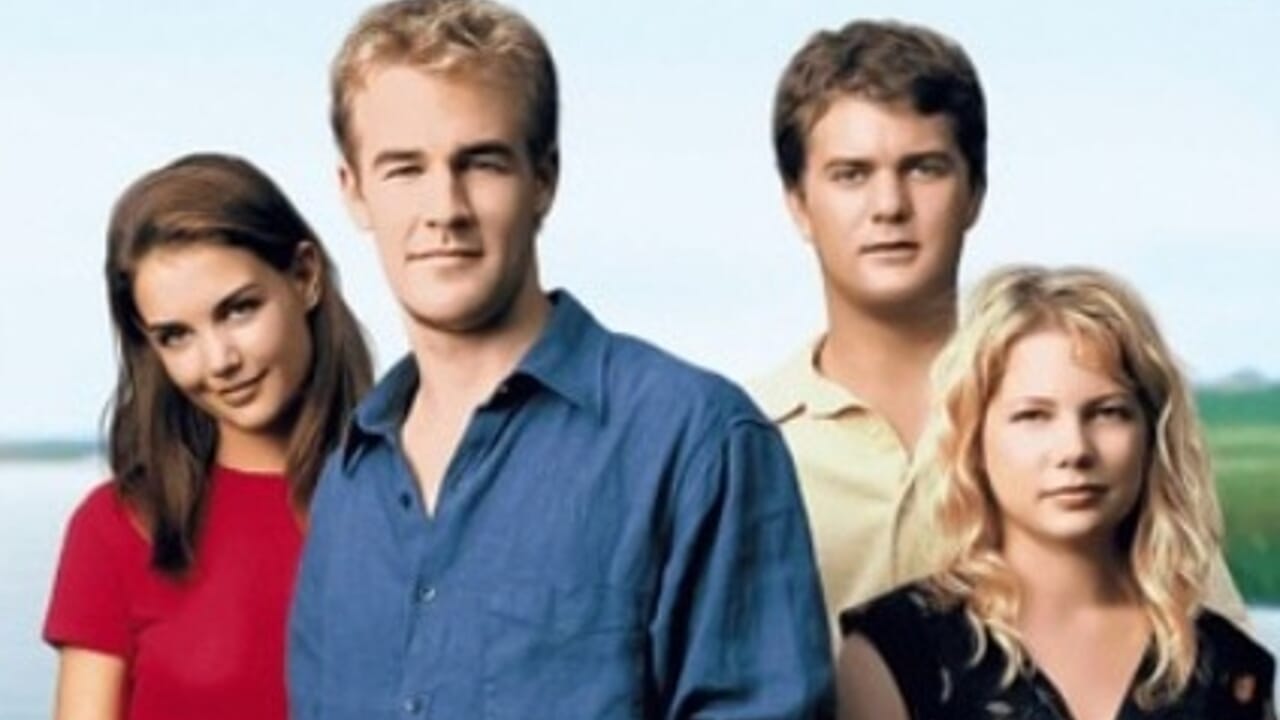
Dawson’s Creek was our sexual-affective education
It was the beginning of 2000 when the first episode of Dawson’s Creek aired on Italia 1, at 9pm on a Thursday. A TV series – as we teenagers still called it, unaware that one day they would define us as ‘millennials’ – which would be part of our daily lives from then on to the next three years, marking an entire generation, but above all acting as a training ship on a series of issues that struggled to shake off the dust of taboo.
There were no smartphones, you could only surf the internet from your PC thanks to the 56k modem and its unforgettable metallic noise – keeping the telephone line busy – and the only shadow of social media was MSN with its chirps. Adolescence was still a happy island, made up of crises and rebellion, yes, but more or less manageable by the adult world. Not only did the news hardly see us as protagonists, but it walked at a safe distance, without polluting us. There were no public debates, let alone political ones, on how to educate children sentimentally; families passed on their often clumsy know-how to their children, while schools were careful not to take steps forward that no one had asked for.
In this ‘do it yourself’ context, Dawson’s Creek has sunk its roots, becoming an oak tree for millions of Italian teenagers, who not only dreamed with the stories of its protagonists, but also compared and learned. And the points of reference were healthy fifteen-year-olds, albeit characters from a TV series, told with a depth never seen before in a teen drama. Dawson Leery, romantic and dreamer, the anti-macho man par excellence, in love with his best friend, Joey Potter, who after a beautiful love story will break his heart, choosing Pacey Witter, their rebellious and undisciplined friend, turning the balance of the group upside down. Also unforgettable is Jen Lindley, the girl who arrived from New York in the small town of Capeside – where the series is set -, with a turbulent past, full of drugs and precocious sexuality, but also her brothers Andie and Jack McPhee, she a model student in constant struggle with her fragility linked to mental health, he who faces a complicated path of acceptance of his homosexuality. In between the stories of their respective families, including missing parents, conflicting relationships, betrayals and separations.
What Dawson’s Creek taught us
Dawson’s Creek had the ability, but also the courage, to deal delicately and with great honesty with issues that were not yet central in the society of twenty years ago. He took on the responsibility that many people today are faced with, and he did it in the simplest way, telling stories, through carefully crafted dialogues and important narrative choices that spared the young audience nothing, not even the heartbreaking death of Jen at the end of the season, who in the meantime had become a mother. It taught friendship, love, rejection, but also sex – the importance of Joey’s ‘first time’, with Pacey, borders on the sublimity but without falling into the dull, let alone the pathetic – it opened our eyes to mental health, normalizing it and thus trying to eliminate a heavy stigma, it lightened – or at least tried – the boulder that a teenager can feel falling upon him when he discovers his homosexuality, explaining the need to embrace it.
That show on Italia 1 was our sexual-affective education when no one yet thought it was necessary. It wasn’t just a TV series, but a generational manifesto. This is why the premature death, at just 48 years of age, of James Van Der Beek, the protagonist from whom he takes his name, is a punch in the stomach, as if a friend we grew up with and had lost sight of had disappeared. Dawson, with his kindness and his good soul, not at all self-centered, eternally in love – “subtone”, as many are currently writing with annoying indifference – was the first and last romantic hero of the new millennium, icon of a generation raised on bread and feelings, when the word ‘malaise’ was simply the synonym of illness. And today that he is no longer here, he reminds us that we weren’t bad at all.
