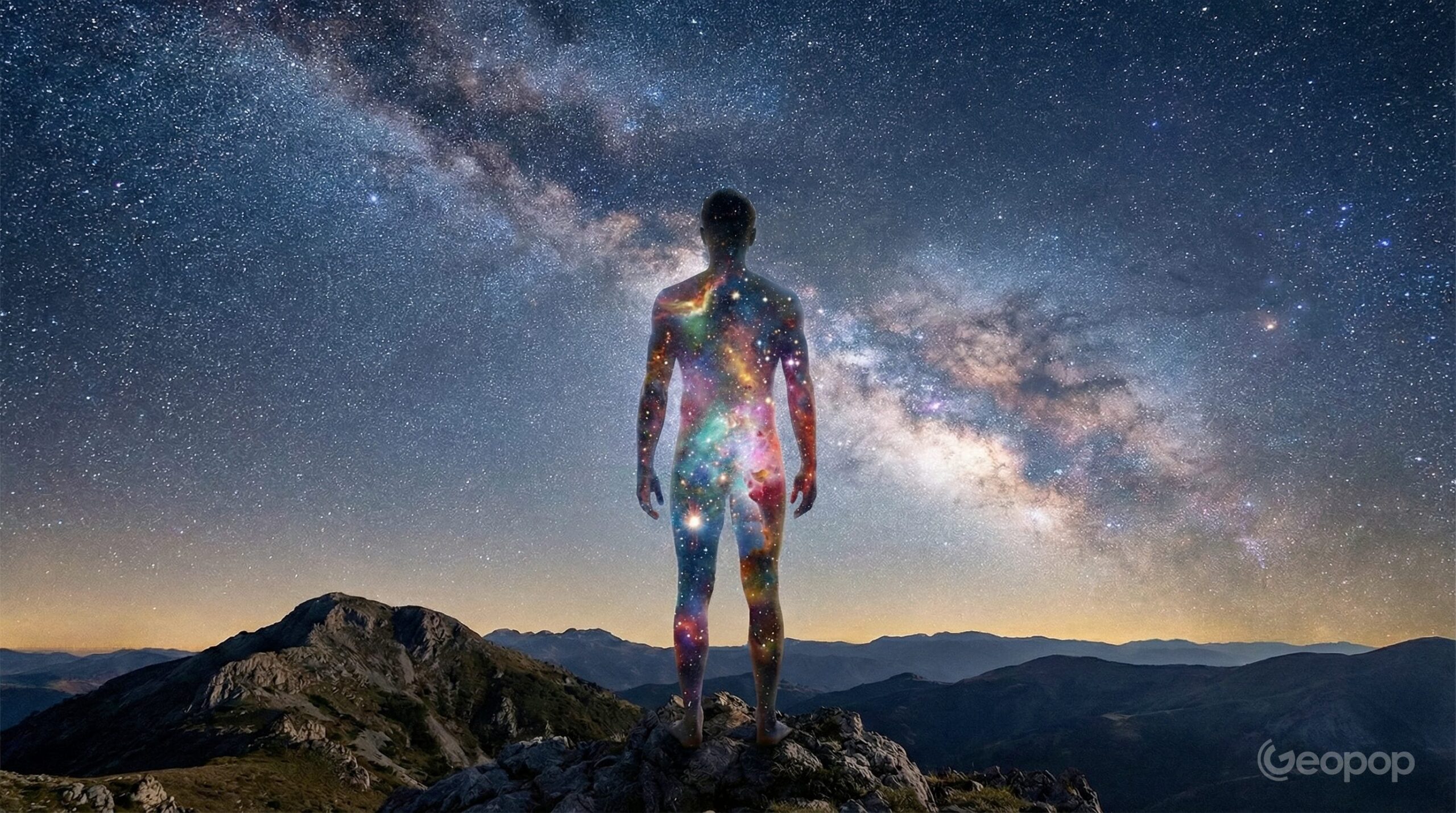
The astrophysicist and popularizer Carl Sagan he is known, among other things, for a phrase that has become famous: «We are made of the same stuff as the stars». It means that a good part of the atoms we are made of, but also everything we deal with, were produced right in the warm heart of very ancient stars. It’s not just a poetic phrase, it’s a proven scientific fact.
There are many chemical elements inside us, but the 99% of our atoms is composed of only 4 elements: carbon (12%), hydrogen (62%), oxygen (24%) And nitrogen (1%). If we think in terms of mass instead of numbers, these elements alone are responsible for the 95% of the number that appears on the scale (oxygen: 65%; carbon: 18.5%; hydrogen: 9.5%; nitrogen: 2.5%).
The hydrogen atoms in our body – the 9.5% of our mass – formed about 380,000 years after the Big Bang, 13.8 billion years ago: in short, they are as old as the universe. The rest, the other 90.5% of our mass (calcium, phosphorus, potassium, sulphur, sodium, chlorine, magnesium etc.) was produced by the stars. If there were no stars, there would only be hydrogen, helium and lithium in the universe, and we could not exist.
Stars are balls of plasma within which reactions take place nuclear fusion. “Fusion” means creating heavier atomic nuclei from lighter nuclei. Nuclear reactions in the hot belly of stars, especially the most massive ones, produce starting only from hydrogen and helium carbon, oxygen, neon, sodium, magnesium, silicon, phosphorus, sulfur, argon, soccer, titanium, chrome, iron And nickel. All elements that are needed to bring together not only us human beings, but also the planet we are on, the Earth.
These atoms are then dispersed into the surrounding environment when the stars die. Intermediate-mass stars, such as the Sun, end their lives as planetary nebulae and enrich the environment mainly with carbon And nitrogen. Many of the atoms of these elements in our body – and on Earth – were produced billions of years ago by stars similar to the Sun. Other stars instead die as supernovae: these very violent explosions release oxygen, sodium, phosphorus, magnesium And potassiumbut also heavier elements. Then there are the mergers of neutron stars (corpses of very massive stars): thegoldfor example, and other metals such as silver, platinum And iridium they were born precisely from these cosmic cataclysms. Apart from hydrogen and helium, all the elements of the periodic table have a stellar origin!
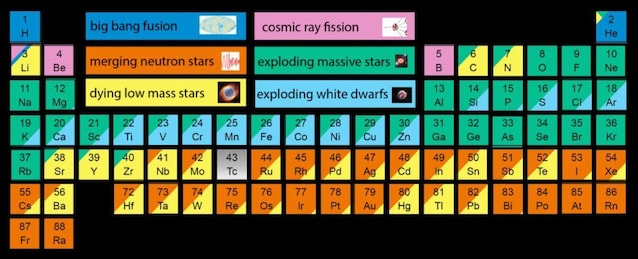
In short, some of our atoms come from the Big Bang, others were forged by the stars. Do you want proof? The four elements that make up 95% of our mass – carbon, hydrogen, oxygen and nitrogen – are also the most abundant chemical elements in the universe (that are not noble gases). This is not a coincidence, on the contrary, it means something very specific: we are made of what was around.
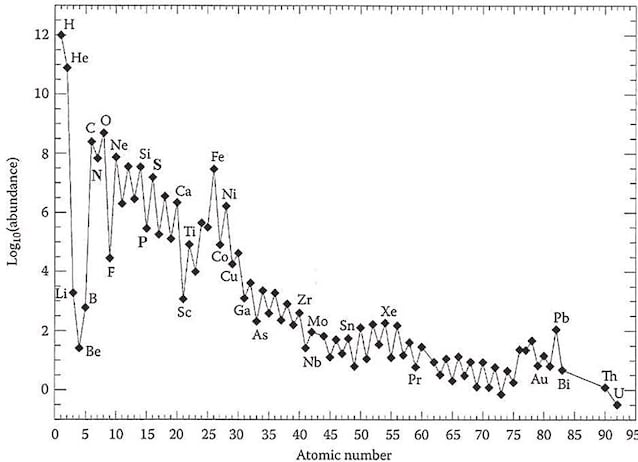
Our hydrogen comes from the Big Bang, our oxygen (and what we breathe) comes from ancient supernovae, carbon and nitrogen come mostly from Sun-like stars that died long before the Sun was born. All those atoms have been spinning around for 4.5 billion years in the Solar System before becoming part of us. So yes, that’s really true “we are children of the stars”!
