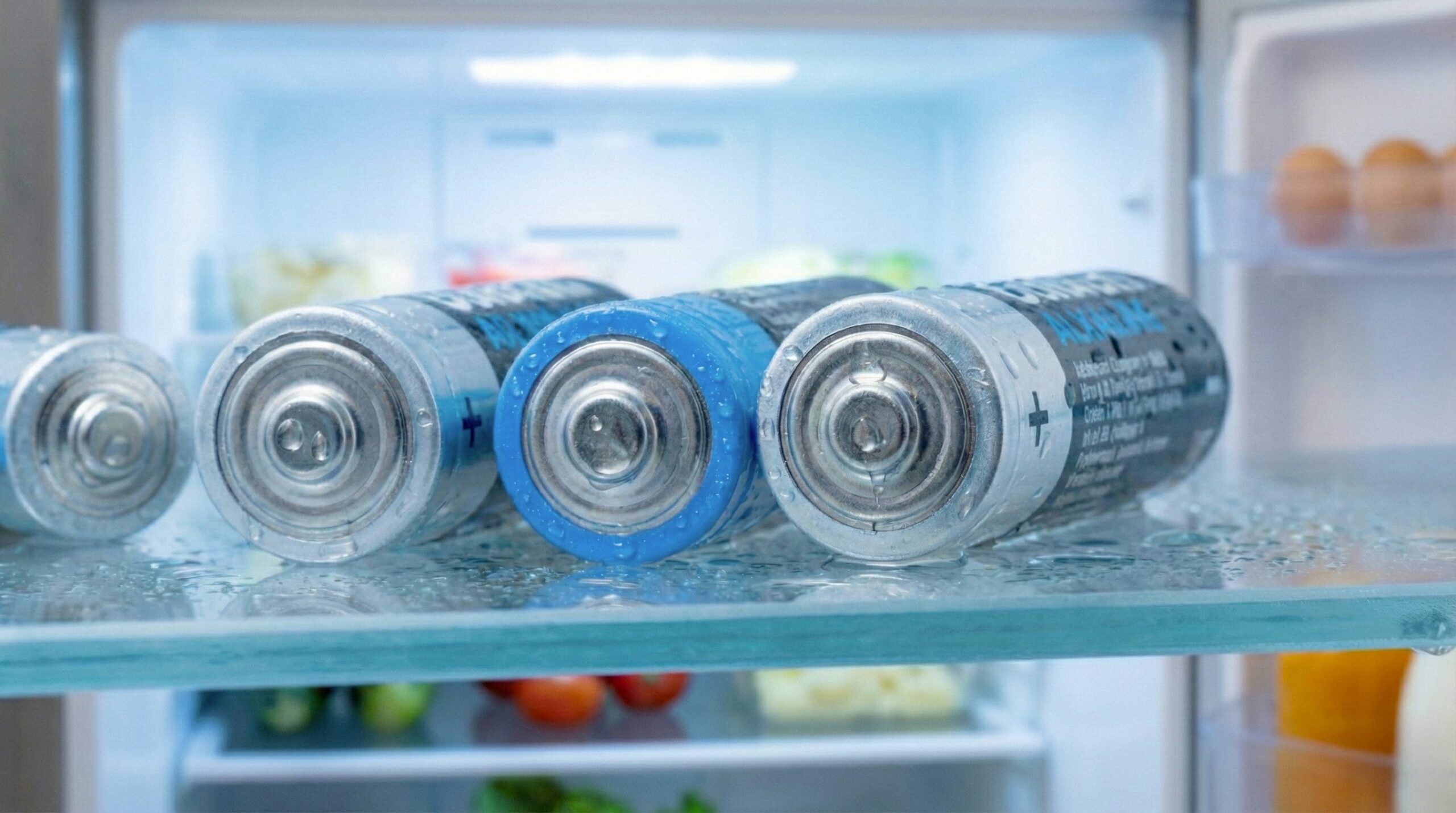
Even today many people think that preserving stacks in the refrigerator help to prolong it durationbased on the advice handed down by grandparents over the years. But is it really like that? Not really, though grain of truth there really is a “trick” behind this.
As in the case of aluminum foil to improve the performance of the freezer, the fastest and most immediate answer to this question is given directly by the manufacturing companies of stacks, most of which specify in their FAQs that:
It is neither necessary nor advisable to refrigerate batteries
The risk, in these cases, is precisely that of ruin the batteries themselves: The thermal changes el’humidity present inside the refrigerator could in fact damage the electrical contacts or compromise the seals. Modern batteries, in fact, are designed to be stored in a dry place and at room temperature, between 20 and 25 °C.
So what is the bottom of truth What lies behind this “trick”? The popular belief that storing batteries in the refrigerator makes them last longer is actually based on one of the most important principles of chemistry: heat speeds up reactions, while cold slows them down.
Until the 1980s, the most common batteries were zinc-carbon ones, which had a self-discharge rate (the gradual loss of charge in a battery even when not in use) quite high. To be clear, the chemical reactions inside the battery continued to occur slowly, even when the battery was not inserted into any device. This is why, by keeping them in the refrigerator, it was possible to increase their shelf life, with the cold which slowed down the chemical reaction which led to self-discharge.
This principle could potentially still work today, but the “game is not worth the risk”: le modern alkaline batteries (like lithium ones) are already designed to have a very low self-discharge rate (about 2-3% per year): given the risks of damaging the batteries, the trick immediately loses its usefulness.
In short, the ideal place to store batteries is inside in their original packaging, placed in a dry place and at room temperature: both cold and heat, in fact, can reduce battery performance.
