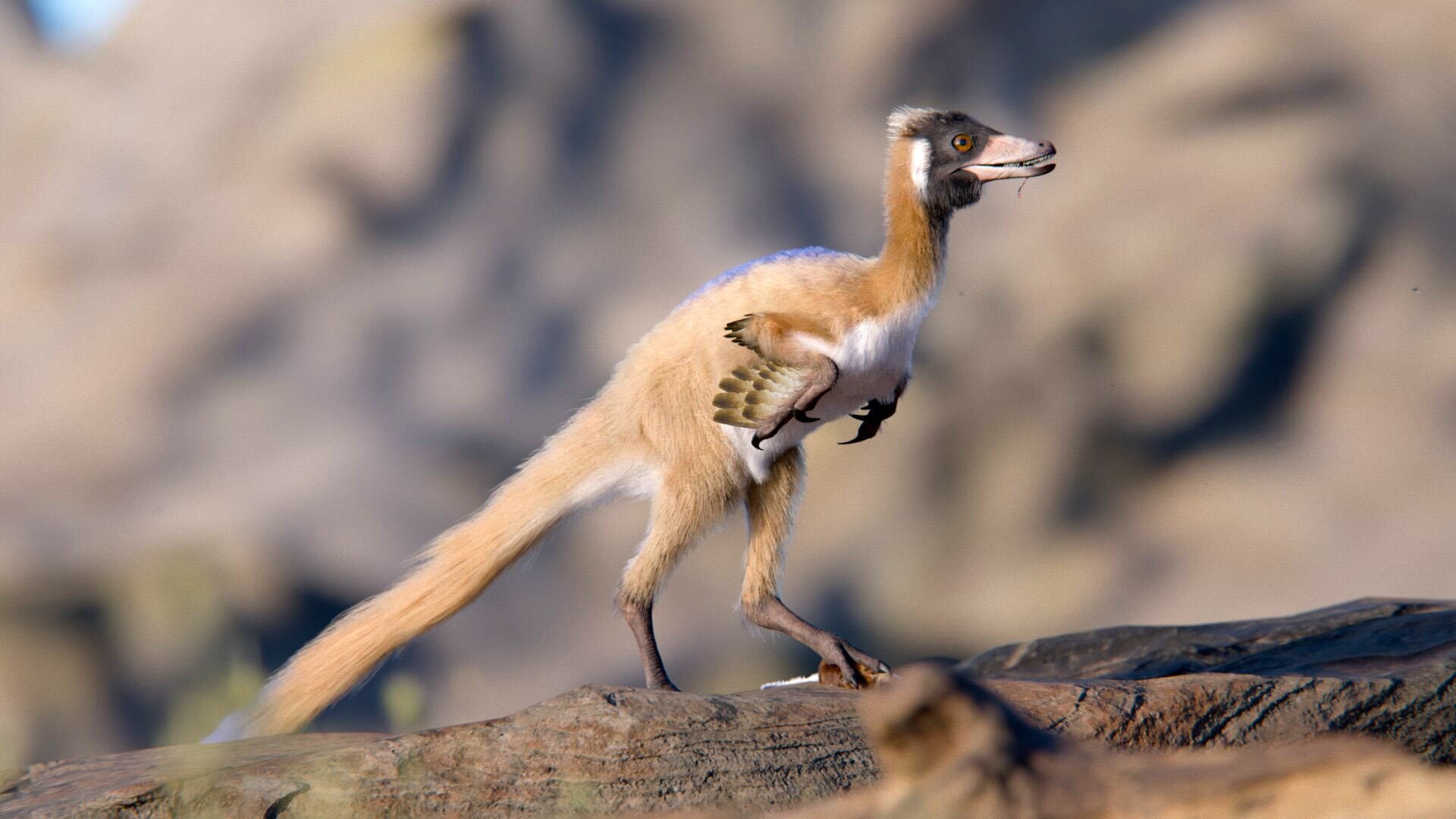
A small dinosaur no bigger than a chickenwhich brings to light new details on the evolution of theropod dinosaurs, carnivores with an upright posture from which today’s birds descend. This is what emerged from a new study published in Nature from Peter Makovicky from the University of Minnesota and Sebastian Apesteguia from the National University of Río Negro in Argentina. The animal was called Alnashetri cerropoliciensis and it is among the smallest dinosaurs ever discovered so far in South America: the specimen described by the study, discovered 12 years ago in Patagoniadates back 90 million years ago and is in an excellent state of conservation. The new analyzes have also revealed how the enigmatic group to which it belonged, the Alvarezsauroidea, originated much earlier than previously thought: according to the new theory, it would have been present already during the period of Pangea.
What was it Alnashetri cerropoliciensisone of the smallest dinosaurs ever discovered
The species was only known from fragments of its hind legs found in Northern Patagonia in 2005, until an almost complete skeletonin an excellent state of conservation, was found in 2014 inside sandstone in the paleontological site of La Buitrera: it took 12 years of meticulous preparation before publishing the study. The specimen, named Alna by the researchers, was a specimen adult four years old of very small dimensions. The conditions of the fossil, which dates back to 90 million years ago, are due to the fact that its body was covered by a sand dune shortly after death: an extremely rare fortuitous circumstance in paleontology which leads to a excellent fossilization processespecially for an animal with such a thin skeleton.
Alna is in fact among the smallest dinosaurs ever found: it was just 70 cm large, most of which was made up of the long tail, and weighed less than 1 kg. Its posture resembled that of modern birds, such as a rooster or a crow. It had curved front legs with terminal claws, most likely used for digging for food in thesandy ecosystem in which he lived, and relatively strong teeth for his small size.
Why discovery is so important
In addition to being a fossil in an exceptional state of preservation, Alnashetri cerropoliciensis also calls into question previous theories on the evolution of the group to which he belongs, the Alvarezsauroideawhich has long represented a sort of headache for paleontologists. These are small dinosaurs specialized in eating ants and termites: their forelegs curved, equipped with a single terminal clawwere adapted to digging in anthills and in the superficial bark of trees. They had an elongated snout with very small, close-set teeth.
It has long been believed that the small size of the body, teeth and legs of the Alvarezsauroidea were precisely due to their specialized dietwhich did not require a large body or strong dentition.
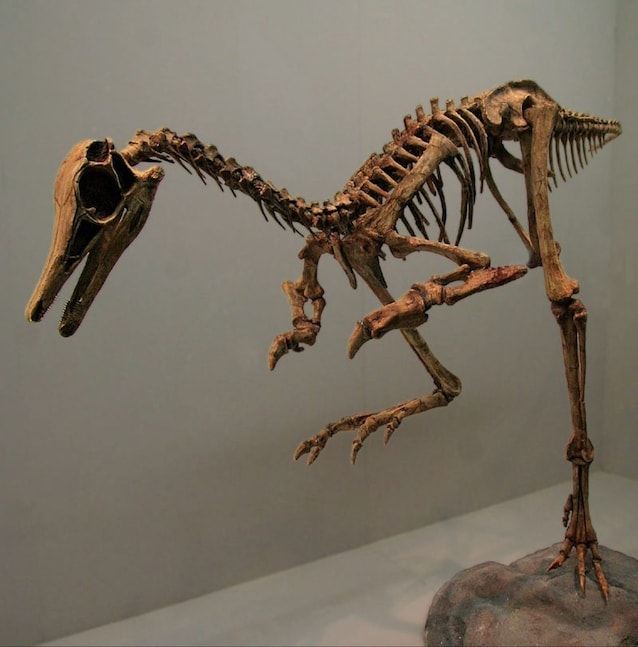
However, theAlnashetri found in Patagonia it had longer legs, more robust teeth and at the same time a smaller body than the other Alvarezsauroidea, demonstrating that the trend towards smaller dimensions evolved earlier dietary adjustments. In an interview with the Independent, Sebastián Apesteguía, one of the authors of the study, pointed out how Alnashetri gives us a more complete and correct image of the dinosaur era: “We are used to imagining landscapes populated only by giants, but these ecosystems were full of small and medium sized animals (…) a time of immense biodiversity”.
Furthermore, the analyzes of the study on other specimens of Alvarezsauroidea kept in museum collections seem to suggest their previous origin than previously thought. Hypotheses on the geographical distribution of Alvarezsauroidea suggested that they originated in South America or Asia, and then spread to other continents. The new theory instead proposes that they already exist at the time of Pangeawhen the continents were joined together. Rather than migrating to other continents from a single starting point, the Alvarezsauroidea would have diversified in Pangea and then been transported to the rest of the world with the arrival of continental drift.
