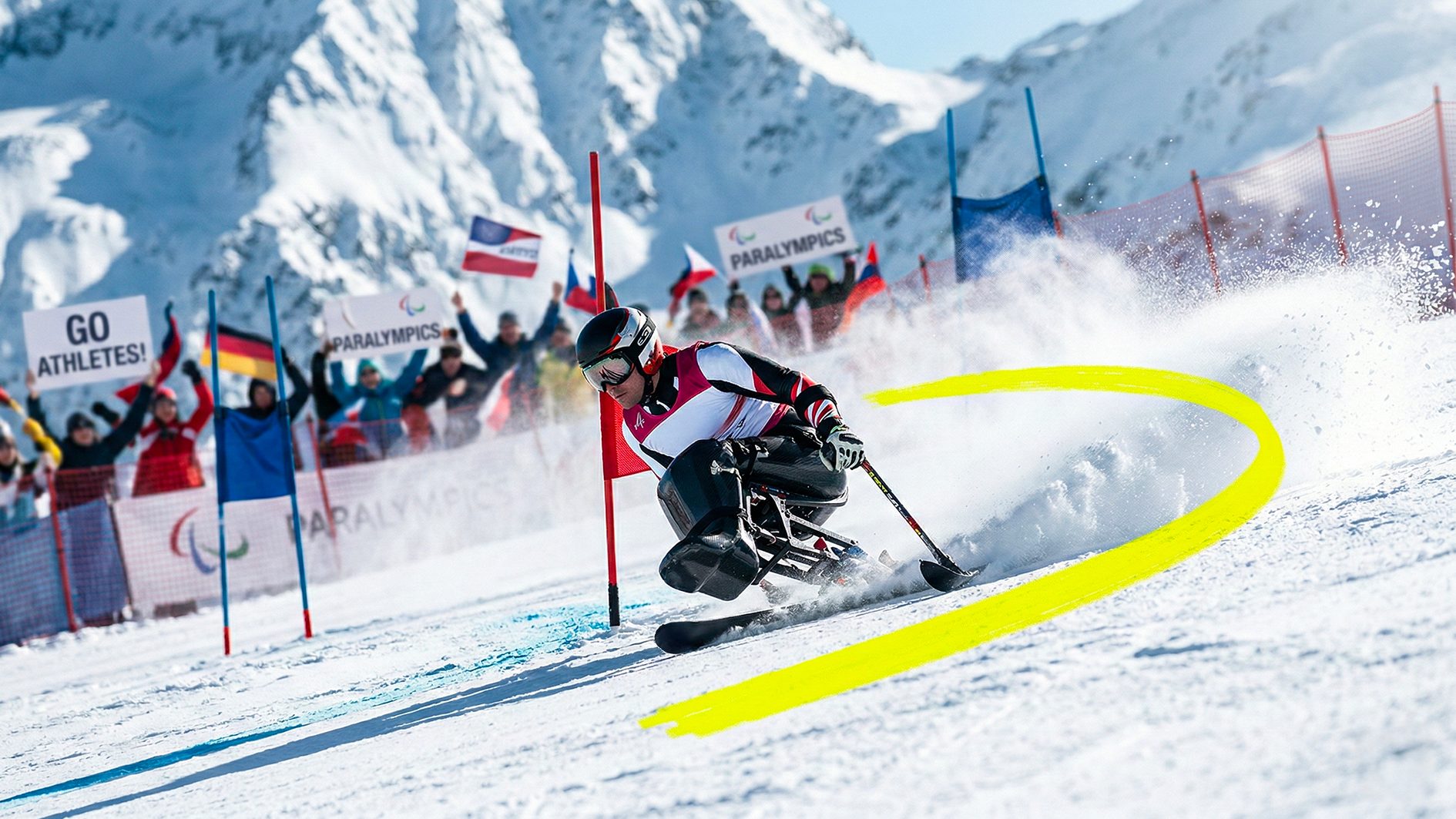
Once the Winter Olympics are over, Milan-Cortina is preparing for Paralympics which will be held from 6 to 15 March and will be inaugurated by the Opening Ceremony in the Verona Arena. The 2026 edition, the XIV, marks two fundamental stages for the Paralympic movement: 50 years since the first Paralympic Winter Games in history (Örnsköldsvik 1976) and 20 years since the debut of Wheelchair Curling at the Games, which took place in Italy in Turin 2006. Between the ice of Milan and the snow of Cortina and Predazzo, they are expected until 665 athletes coming from approx 50 National Paralympic Committees And 79 gold medals will be awarded (39 male, 35 female and 5 mixed). Let’s find out more about the history of the Winter Paralympic Games together.
Origin of the Winter Paralympics: the first edition
As already anticipated, the first Winter Paralympics officially recognized by the IOC (International Olympic Committee) were held in Örnsköldsvik, Sweden, from 21 to 28 February 1976sixteen years after the first edition of the Summer Paralympics in Rome 1960. The creator of the latter was Ludwig Guttmann, a German neurologist who, having taken refuge in Great Britain to escape Nazi persecution, thought of introducing sport into the rehabilitation of soldiers rendered paraplegic by the war. In 1960, thanks to his friend and colleague Antonio Maglio, Guttman brought sports competitions to Italy during the Roman Olympics.
The man responsible for introducing the Winter Paralympics, however, is Sepp ZwicknaglAustrian skier with both limbs amputated who was the first to experiment with skiing with a prosthesis. An idea from which the first three-track ski course was born in February 1948, with 17 participants from all over Austria. Subsequently, in the Seventies, the first cross-country skiing races were organized and in 1974 the first world championship in Grand Bornard (France), characterized by Alpine and Nordic races played by athletes with amputations and visual disabilities. The main edition of the Winter Paralympics in 1976 saw the participation of 198 athletes (161 men and 37 women) from 16 countries, who won a total of 53 medals in just two disciplines: Alpine and Nordic skiing. Until 1992 the Winter Paralympics were held in the same year as the summer ones, in other venues than the Winter Olympics. Since 1994, with the Lillehammer Games (Norway), the winter games have been held two years after the summer Paralympics, following the cycle of the Olympics, in the same location.
The evolution of the Winter Paralympics
As can be seen from the table The Paralympic movement has grown exponentially over the last 50 yearstripling the countries involved, participating athletes and sports, with the latter going from two to six, including in addition to skiing (alpine and Nordic), biathlon (since 1988), ice hockey (since 1994), wheelchair curling (since 2006) and snowboarding (since 2014). Luge entered and exited the Paralympic program twice before the year 2000.
The logo of the Paralympics
The symbol of the Paralympics differs in color and style from that of the Olympics, it is known as “Agitos” and was created by London designer Sheridan DG Davies in 1994. The word Agitos comes from the Latin “acted“, “I move“, and contains the idea of change, action and push towards the future, underlining sport as a driver of personal and collective transformation. It is composed not of the five classic circles, but of three curved shapesone blue, one red and one green. The colors were chosen because they are the most used by world flags while the logo represents the body, mind and spirit of athletes with disabilities.
Three symbolic athletes of the Winter Paralympics and their records
The most medaled winter Paralympic athlete ever is a legend of Para Cross Country Skiing, namely the Norwegian Ragnhild Myklebust who won 27 medals, including 22 gold. Oksana Masters he is another icon thanks to his successes with the stars and stripes in multiple sports both in the Summer Paralympics (canoeing and cycling, where he won five medals, four of which were gold) and in the Winter Paralympics: the haul in winter reads five golds, seven silvers and two bronzes won between cross-country skiing and biathlon in the last three editions. The visually impaired Ukrainian Vitaliy Lukyanenkoanother symbol of Milan-Cortina, was able to win at least one gold in every edition from Turin 2006 to Beijing 2022, for a total of eight, in the visually impaired category.
