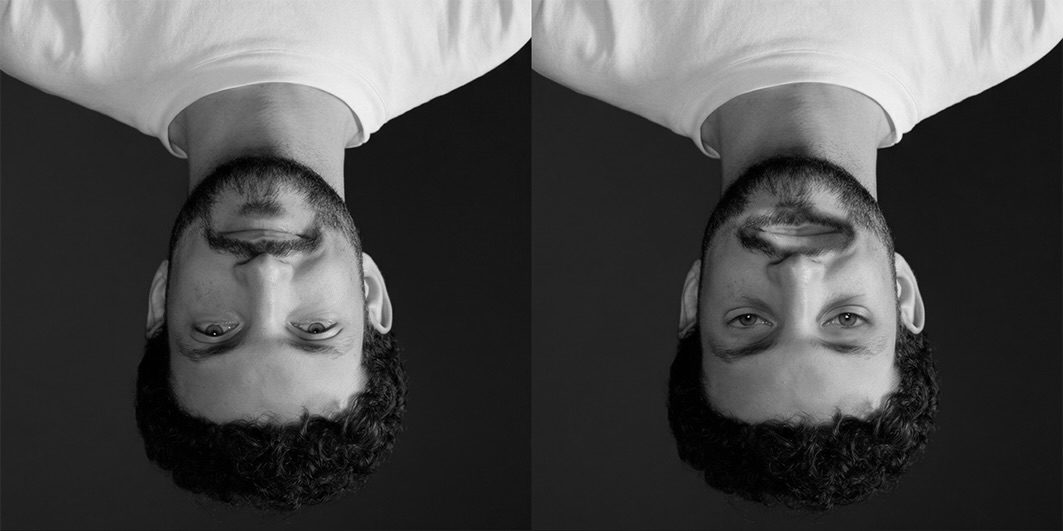
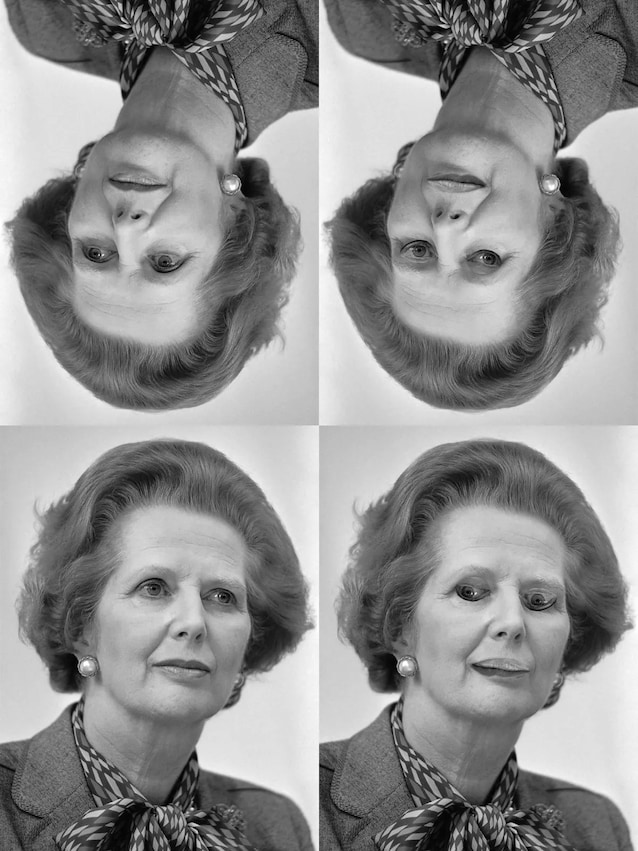
Are the two photos on the cover identical at first glance? It would seem so, but the reality is different. If we flip the images we clearly see that the faces are not the same and that one of the two presents changes: the eyes and the mouth are reversed. The phenomenon that puts our brain into crisis is known as Thatcher effect or Thatcher Illusion. It was first shown in 1980 by York University professor and psychologist Peter Thompsonwhich had taken the then British Prime Minister as a “guinea pig”. Margaret Thatcher. The experiment with Thatcherized images serves to understand how our brain processes faces and expressions by activating specific areas of competence.
How the Thatcher Effect works and why it happens
This is how the optical illusion works. Two photos of an upside down face are shown. Both seem normal at first glance. However, in one of the two photos the eyes and mouth are rotated 180° compared to the rest of the face. As long as the image is upside down, the brain hardly notices anything strange – except for a few small differences. But if you rotate the photo and look at it straight on, the “Thatcherized” face appears grotesque and deformed.
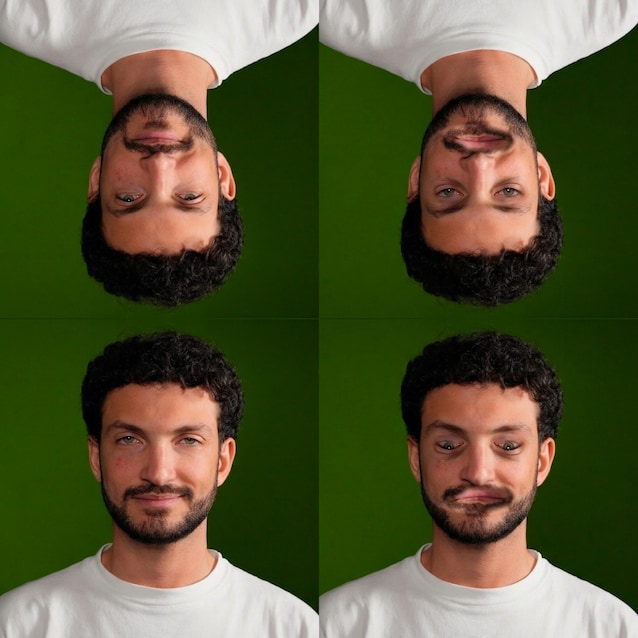
The Thatcher effect demonstrates how the brain evolved to process human faces. Normally, the brain does not look at a face by analyzing the nose, mouth and eyes separately but processes the face as a whole with a “holistic” approach, as a whole – not reducible to the sum of its parts. When a face is turned upside down, however, this overall recognition system stops working. The brain begins to elaborate “by detail” analyzing the individual pieces in isolation. In this process you simply “check” that the eyes, mouth and nose are there, not how they are oriented or arranged.
The areas of the brain involved: the study
A study involving Professor Thompson published on Psychological Science he investigated via functional magnetic resonance imaging (fMRI) what happens on a neurological level when you view these images. The participants underwent both behavioral tests and training techniques imagingthey could easily distinguish a normal face from a Thatcherized one when the images were upright, but this ability diminished when the images were presented upside down. The test used images of well-known faces from entertainment such as Britney Spears, Natalie Portman, Angelina Jolie, Claudia Schiffer, Jessica Simpson and Cheryl Cole.
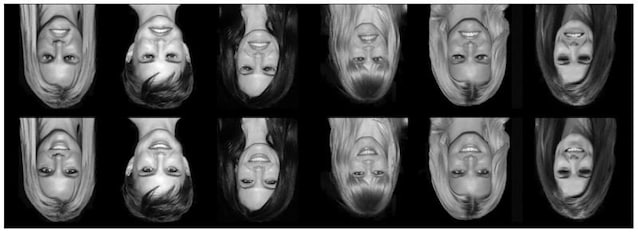
The results showed different activations of specific areas of the brain depending on the image displayed by the tester. In particular, they recorded increased activity when shown the transition from a normal to a Thatcherized face superior temporal sulcus (STS) – an area of the brain known for processing facial expressions and social dynamics.
Straight faces are processed byfusiform facial area (FFA), a specialized area for face and detail recognition. However, when a face is upside down, the FFA does not activate and passes the recognition to other brain areas capable of general object recognition. Since they are not specialized in identifying faces, they cannot perceive that the eyes and mouth are upside down.
