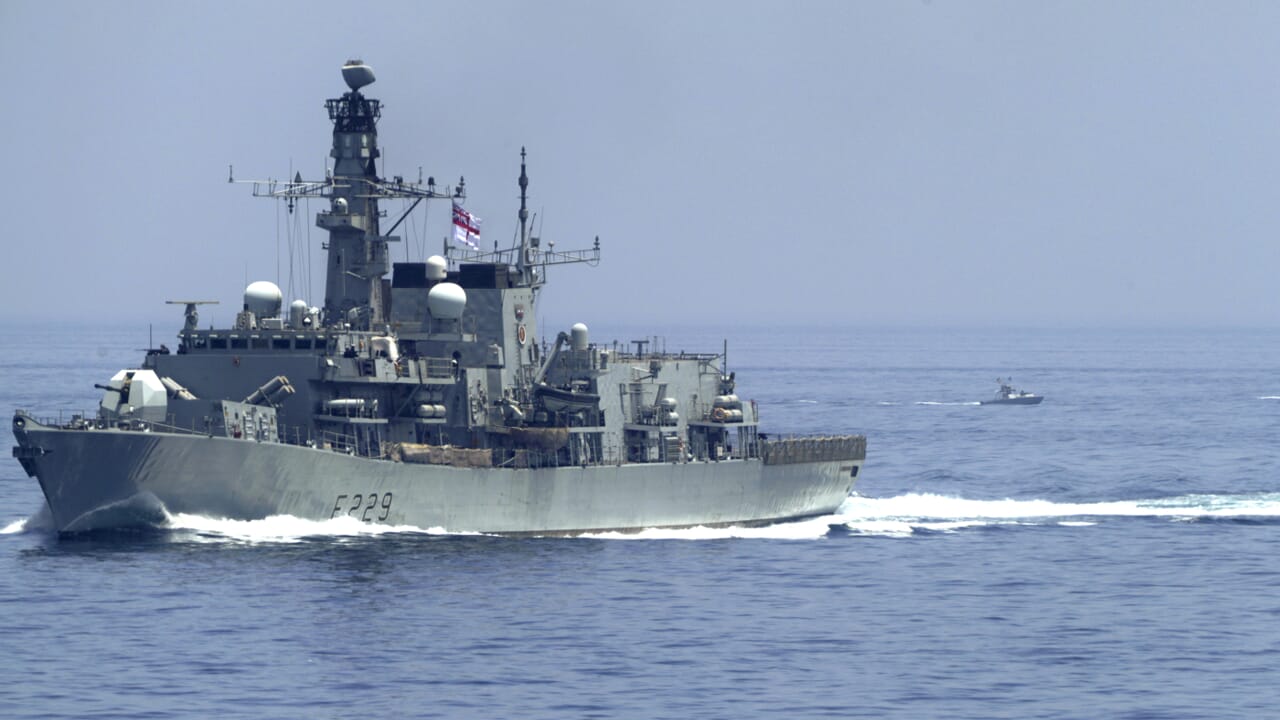
A request for help that sounds like a threat and the allies taking their time because if on the one hand there is the cumbersome figure of Trump, on the other there is the risk of crossing what looks like a point of no return. The American president asks that NATO countries intervene to guarantee the opening of the Strait of Hormuz, London has withdrawn, Japan too, the EU is considering. Foreign ministers could discuss strengthening the Aspides mission, under Italian command. We understand what is happening.
Decisive pass
Let’s start from the base. Everything revolves around the Strait of Hormuz: a passage between Iran and Oman that is crucial for global oil traffic. Since the US and Israel opened hostilities, Iran has effectively closed the Strait: the biggest interruption ever. It is also unclear whether Iran has planted mines, making the passage off limits.
Demands and threats
Donald Trump has appealed to allies to help the US on Hormuz. Then, in an interview with the Financial Times he issued a warning to NATO, threatening a “very negative” future if US allies do not help ensure the opening of the Strait. “It is absolutely appropriate that those who benefit from the Strait help ensure that nothing bad happens there,” Trump said, arguing that Europe and China depend heavily on oil from the Gulf, unlike the United States. “If there is no response, or if the response is negative, I believe this will be very damaging for the future of NATO,” he added.
“We have an organization called Nato. We have been very generous. We were not supposed to help them with the Ukraine issue. Ukraine is thousands of kilometers away from us, yet we helped them. Now we will see if they will help us. Because I have long maintained that we will be there for them, but they will not be there for us. And I am not at all sure that, given the facts, they will be there”, added the tycoon. Asked what kind of help he needed, Trump replied: “Whatever it takes.” He added that the allies should send minesweepers, ships of which Europe has far more than the United States.
The answers
British Prime Minister Keir Starmer declined the invitation. “The United Kingdom could be considered the number one ally, the one with the longest history and so on: yet, when I asked them to intervene, they refused” Trump said after speaking with Starmer without hiding his irritation. And as soon as “we basically eliminated Iran’s threat capability, they said, ‘Well, then we’ll send two ships.’ And I said, ‘We need these ships before we win, not after we win,'” Trump told the Financial Times.
Japan said “No”: it does not plan to send naval vessels. Same position on Australia’s part. South Korea took its time: “We will discuss directly with the United States.”
The EU and Aspides
And the EU? The EU foreign ministers meet today. Among the hypotheses being examined is that of intervening on the Aspides mission, established in 2024 to protect ships from attacks by the Yemeni Houthi rebel group in the Red Sea. There is no consensus on a possible extension to Hormuz; Germany has already said no.
Operation Aspides (“Shields” in Greek) was established by the EU in 2024 to ensure freedom of navigation, protecting merchant ships, in particular during transit off the coast of Yemen, from attacks from the mainland. “The objective of the operation – we read on the Ministry of Defense website – is to contribute to the safeguarding of free navigation and the protection of merchant shipping in transit in an area of operations that includes the Red Sea, the Gulf of Aden and the Persian Gulf, with eminently defensive tasks, extended to the defense of merchant shipping in the Southern Red Sea and Western Gulf of Aden area only”.
The use of force is “envisaged and authorized” not only for self-defense but also for the defense of merchant shipping of EU and national interest in the high threat area facing Yemen in the southern Red Sea and the western Gulf of Aden”. In the remaining portion of the area non-executive tasks can be exercised and therefore the use of force is not authorised.
Revising Aspides’ mandate to allow it to also operate in Hormuz would require specific authorization. The movement of part of the ships appears more plausible once the ceasefire has taken place. Before then, the viable formula could be represented by an international mission – potentially under the aegis of the UN – called to guarantee the free transit of ships.
The EU high representative, Kaja Kallas, arriving at the foreign affairs council, explained that she had spoken with the UN secretary general Antonio Guterres “to understand if it is possible to have an initiative in Hormuz like the one on the Black Sea for Ukrainian wheat”.
