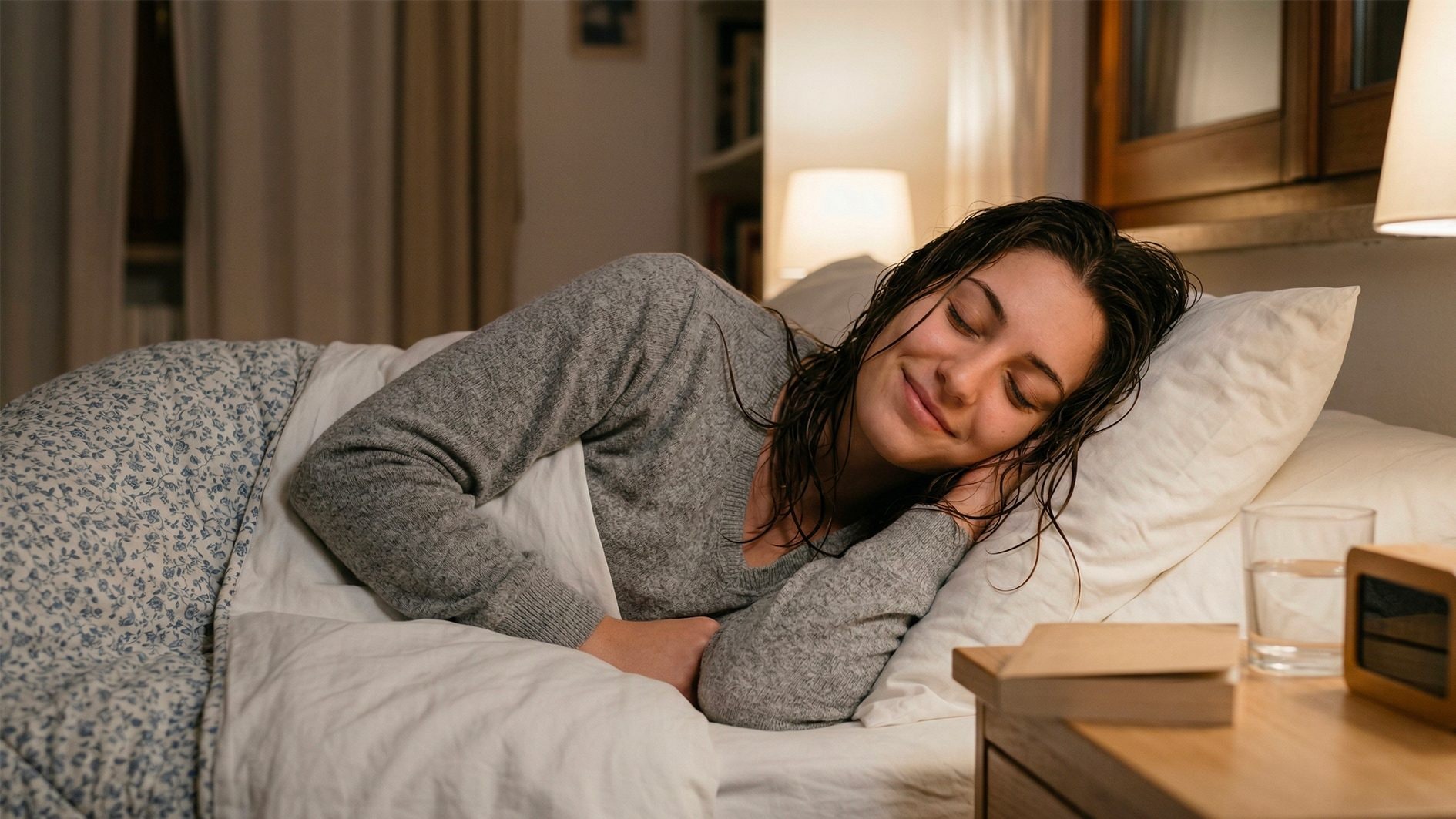
Wet hair they are not recognized among the direct causes of neck pain. However, many people report experiencing neck pain after going to sleep with damp hair. The cooling of the skin, due toevaporation of watercan generate a sensation of cold localized in the neck and nape area. Some studies, notably a 2022 study published in Ergonomics, suggest that cold exposure is associated with a greater likelihood of musculoskeletal pain, but they do not demonstrate a direct relationship: the cold could in fact influence the physiological response of the muscles, temporarily increasing muscle tension. Although the cold is often seen as responsible for the disorder, it is actually a factor that can aggravate pre-existing conditions, such as contractures or incorrect postures.
Wet hair does not directly cause ISS neck pain
There cervicalgiathat is, pain in the part of the spine that supports the head and neck – known as cervical area – is a very common disorder which, according to what reported by ANSA, afflicts around fifteen million Italians.
According to the Istituto Superiore di Sanità (ISS), the causes of this pathology can be different. Among the most common we certainly have one bad posture: staying for hours in an incorrect position, such as in front of the computer or in bed with the head reclined without a suitable pillow, can contribute to soreness and stiffness in the neck muscles. It too stress can be involved, generating tension in the muscles at the cervical level. Among other causes, we also find osteoarthritis, herniated disc And trauma like the infamous “witch’s stroke“, very common in rear-end car collisions.
As you can see, the ISS does not mention going to sleep with wet hair as a cause of neck pain. Yet many people make this association, not just from hearsay, but because they claim to have experienced it firsthand. How can this perception be explained?
Does the cold cause neck pain? The study on Ergonomics
If after a shower we don’t dry our hair and go to sleep or leave the house, the water deposited on the neck and neck will slowly begin to evaporate. During this process, water passes from the liquid state to the gaseous state, absorbing heat from the surface on which it is found, that is, our skin. In other words, to effect the transition of state the water takes heat away from our body and this can cause a sensation of localized cooling.
Scientific literature suggests that exposure to cold may be associated with musculoskeletal pain: in a study published in 2022 in the scientific journal Ergonomics, for example, over 12,000 people in Sweden were analyzed, concluding that high exposure to cold in the workplace (such as outdoors or in cold storage) is associated with a increased chance of neck and back pain. However, this does not mean that the cold is the direct cause of the problem: the study talks about astatistical associationnot a cause-effect relationship. And, above all, it is right to point out that we are talking about prolonged and intense exposures, such as those that can occur in work environments. However, these findings help to understand why cold is often perceived as a factor it can worsen existing pain.
In short: if every now and then you go to bed with damp hair you are not automatically risking an attack of neck pain. However, if you already suffer from muscle contractures or, for example, have spent the night in less than ergonomic positions, the humidity in your head and the consequent cold could amplify muscle tension already present. In practice, the cold can be the “drop that breaks the camel’s back”: it is not the direct cause of cervicalgia, given that it is not he who creates the pain from scratch, but it is one external stimulus That it can accentuate an already existing conditionworsening muscle tension and bringing out pain.
Muscles contract in response to cold according to scientific studies
One of the main reasons is that exposure to cold can increase muscle toneas we find written in an article in the scientific journal Frontiers.
This physiological reaction is part of the mechanisms of thermoregulation to combat drops in temperature: when it senses the cold, our body activates various automatic responses to conserve and produce heat. Among these there is also a slight increase in muscle tensionthat is, an involuntary contraction of the muscles that can precede shivering and contribute to the production of heat. Precisely for this reason, the neck and shoulders may be perceived as more stiff and tired, above all if they were already contracted or under stress.
