
Imagine that raise your thumb to say “ok” during a trip abroad and discover, to your surprise, that you have just offended your interlocutor. It may seem paradoxical, but many gestures that we consider intuitive or universal are not at all. According to studies on nonverbal communication, gestures work as if they were real cultural codes: they are learned within a society and their meaning can change radically from one context to another.
The thumbs up is an emblematic example of this cultural variability. Widespread today in much of the world as a positive sign or emoji of approval or agreement, this gesture has had different and sometimes opposite meanings over time. His story shows how even the simplest movement of the hand can reflect profound cultural transformations, oscillating between approval, challenge and even social threat.
The meaning of the thumbs up gesture and its origins
Many believe that the thumbs up derives directly fromancient Romewhere he would have indicated the grace for a gladiator defeated inArena. However, historians do not agree on this interpretation.
The Latin expression “thumbs down” or “thumb pointing” appears frequently in accounts of gladiatorial combat, but the Precise meaning remains uncertain. Some interpretations suggest that the thumbs up could indicate the death sentencewhile the fist closed with the hidden thumb it was a sign of mercy.
This would completely reverse the modern meaning of approval: what we see and interpret as “okay” today may have been, in ancient times, a deadly gesture.
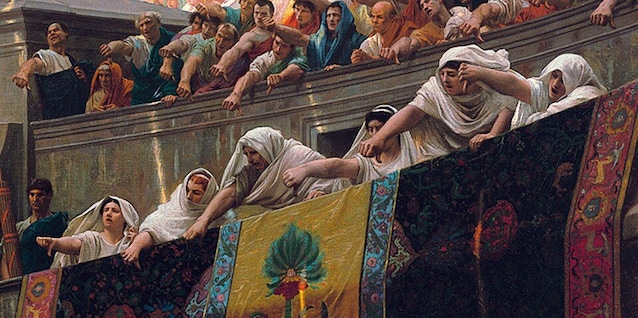
The association with the modern positive meaning in fact it develops much later, especially in Anglo-Saxon world between the 19th and 20th centuries.
During the Second World Warfor example, US soldiers began using the thumbs up to point and communicate remotely that everything was under control or that a mission was successful without injuries. From there the gesture progressively spread as a symbol of approval, up to the present day with the arrival of “like”.
Comparing cultures: the thumbs up symbol in various countries
Cross-culturally, thumbs up it is anything but universal. Studies of sociology and non-verbal communication between different cultures demonstrate in fact how the thumb has been historically associated with threats or aggressive gestures in many cultures around the world.
In some ancient oriental sourcesIn fact, the erect thumb indicated a meaning similar to the modern one middle fingercommunicating challenge And hostility. Surprisingly, even today, the thumbs up can result offensive in different areas of the world.
In Iran, Iraq and in some regions of Middle Eastand, the gesture is still traditionally considered a insult. Even in some areas of West Africa and Sub-Saharan, the gesture can be perceived as provocative or one vulgarity.
In other contexts, geographically and culturally closer to us, however, the gesture has nothing to do with approval, but with its functionality. In this sense, in Finland or in Sweden the thumb up is very often used as a simple number one or, in the language of professional divers and in other sports, it means the ascent to the surface or other direction indications.
Emojis and the role of social media
In recent decades, however, globalization and social media are progressively standardizing the positive meaning of the thumb upeven if in more traditional communities the risk of misunderstanding remains high.
With the arrival of smartphones and social platforms, gestures such as the thumbs up have become standardized icons in the form of emoji.
The thumbs up symbol, used to indicate “I like”is now shared billions of times every day around the world. This process is contributing to standardize the meaning of some gesturesespecially among the younger generations, who learn them first on the screen than in everyday life.
In a certain sense, the emoji they are creating a new form of “digital body language”: gestures that no longer pass through physical movement, but through graphic symbols.
Sources
Desmond M. (1979). “Gestures: Their origins and distribution”
Roger EA (1998). “Gestures: The do’s and taboos of body language around the world”
Gretchen M. (2019). “Because Internet: Understanding the New rules of Language”
