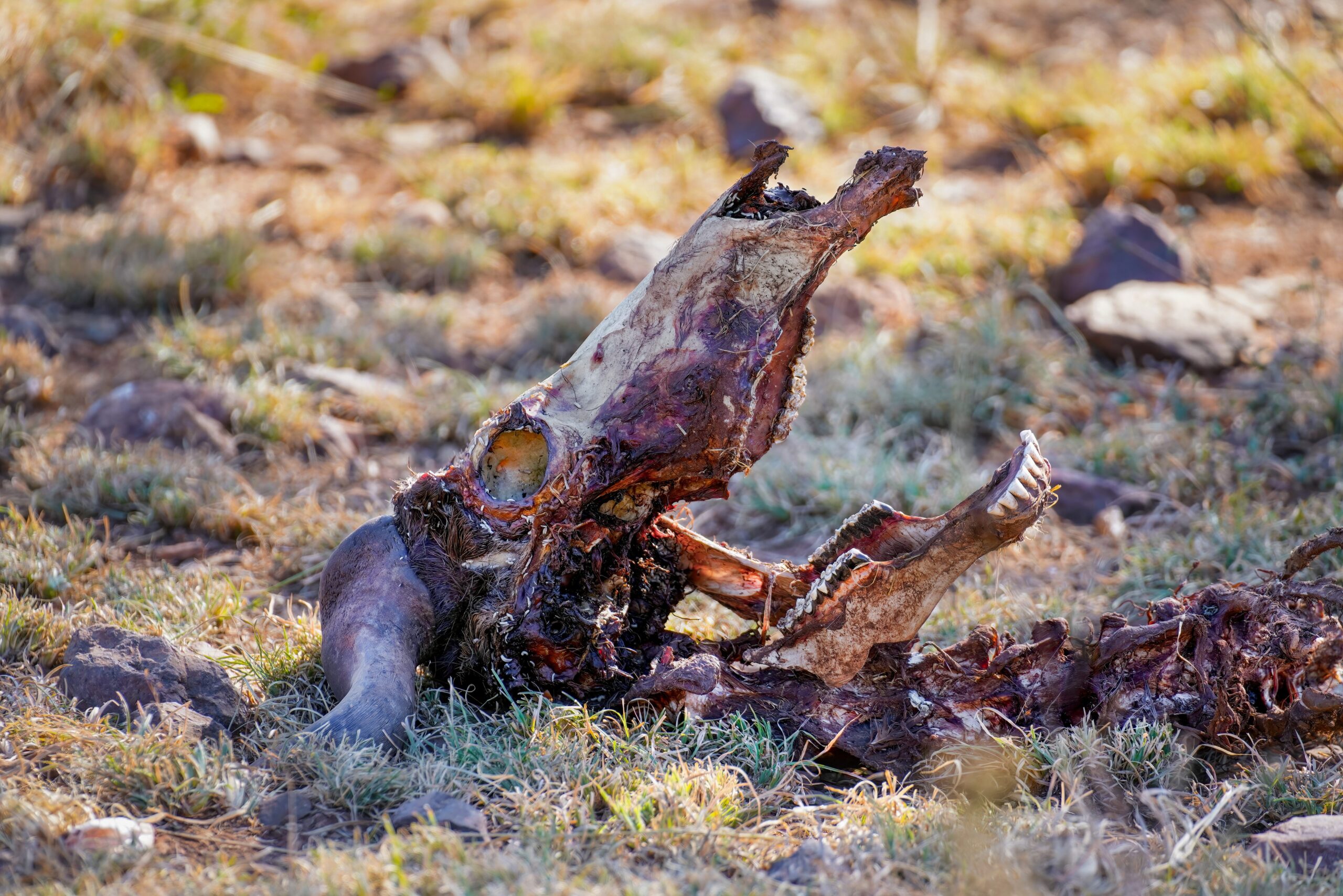
Crime and horror lovers: have you ever wondered what happens when an investigator finds a putrefied body? How did he get like this? There putrefaction it is one of the fundamental processes of decomposition of organic material after the death of an organism. The bacteria anaerobes (which do not need oxygen to live) guests of the organism literally begin to digest the body in which they have lived up to that point, breaking down its molecular structures. During this process, they produce gases, such as hydrogen sulfide and methane, and organic molecules such as cadaverine And putrescine which contribute to giving that typical “putrefying” smell. As the process progresses, with a speed that depends on several factors, i gases bloat the bodythe tissues literally collapse or liquefy, eventually leading to the complete disintegration of the body.
The bacteria that disassemble the body after death
Already shortly after death, cells produce enzymes that degrade the surrounding environment: a sort of signal that the time has come to “dismantle” the stage. But the real protagonists of putrefaction are the bacteria that populate our intestines, above all Clostridium welchii, C. perfrigens, C. butyric And C. tetaniiaided by the possible presence of infectious bacteria or bacteria coming from outside. They are already active an hour after death of the organism and reach peak activity approximately after 24 hours.
These are mainly anaerobic bacteria with the task of breaking down complex molecular structures simpler moleculesespecially proteins by breaking them down into amino acids.
From the intestine to the rest of the body
Piece by piece, they begin to digest the intestine, reach the blood and spread through the tissues, gorging on everything they find. The question is legitimate: how do they move to other tissues if there is no longer a heart to pump blood? It’s the fault of the “flatulence” of the bacteria.
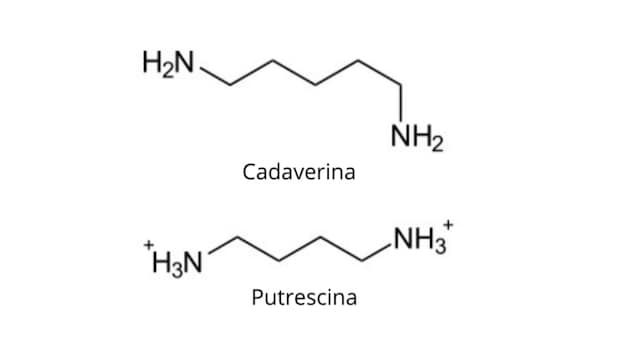
In fact, while they “eat”, they release gas, like hydrogen sulfide (H2S) with the classic smell of rotten eggs, methane (CH4) and other volatile molecules, such as putrescine and cadaverine, whose names already say it all. The gases accumulate in the tissues, swelling the body and causing the blood to move passively, a phenomenon called “passive post-mortem circulation”.
Hydrogen sulfide reacts with hemoglobin to form sulfhemoglobinresponsible for the greenish color that appears on the body; similarly, the degradation of erythrocytes in the more superficial capillaries leads to the formation of visible bluish-green streaks which give the skin a marbled.
The 4 phases of putrefaction
Different phases can be distinguished in this painstaking work of the bacteria:
- Chromatic stage: approximately 18-36 hours after death, a greenish stain appears (caused by hydrogen sulphide) on the skin of the iliac area, where there is the cecum which is rich in bacteria that begin their activity. It’s the first sign of ongoing putrefaction;
- Emphysematous stage: the gases begin to inflate the tissues, the body “enlarges” and the blood moves under the effect of their pressure. It appears approximately 3-6 days after death;
- Colliquative stage: the microorganisms reach the skin, which begins to peel off, the body “deflates” and begins to turn from greenish brownas the organs begin to liquefy;
- Skeletal reduction: About 3-5 years after death, all soft tissue has disappeared, leaving only bones.
The factors that influence its speed
Depending on where the body was left, the temperature, humidity and many other factors, putrefaction occurs at different times.
For example, the higher the temperature, the faster the putrefaction: if we consider an optimal temperature between 25 and 38 °C, once this threshold is exceeded, for every 10 degrees increase, the activity of the bacteria doubles. In fact, in summer the speed of putrefaction is approximately double compared to winter. Arid environments slow down the entire process, while more humid ones speed it up.
But it is also important how the carcass or body is left: left in the open air, external bacteria and insects can access it easily and speed up the process. In water or underground, however, the process occurs more slowly. For the same reason, clothing or coverings slow down rotting.
Investigators must also consider the body itself. For example, a higher percentage of fat means faster putrefaction, as well as with respect to sudden deaths due to trauma or accidents, the presence of infectious pathologies speed up putrefaction: the saprophytic bacteria are added to those responsible for the disease. Not to mention the presence of any woundswhich can act as portals for other microorganisms.
