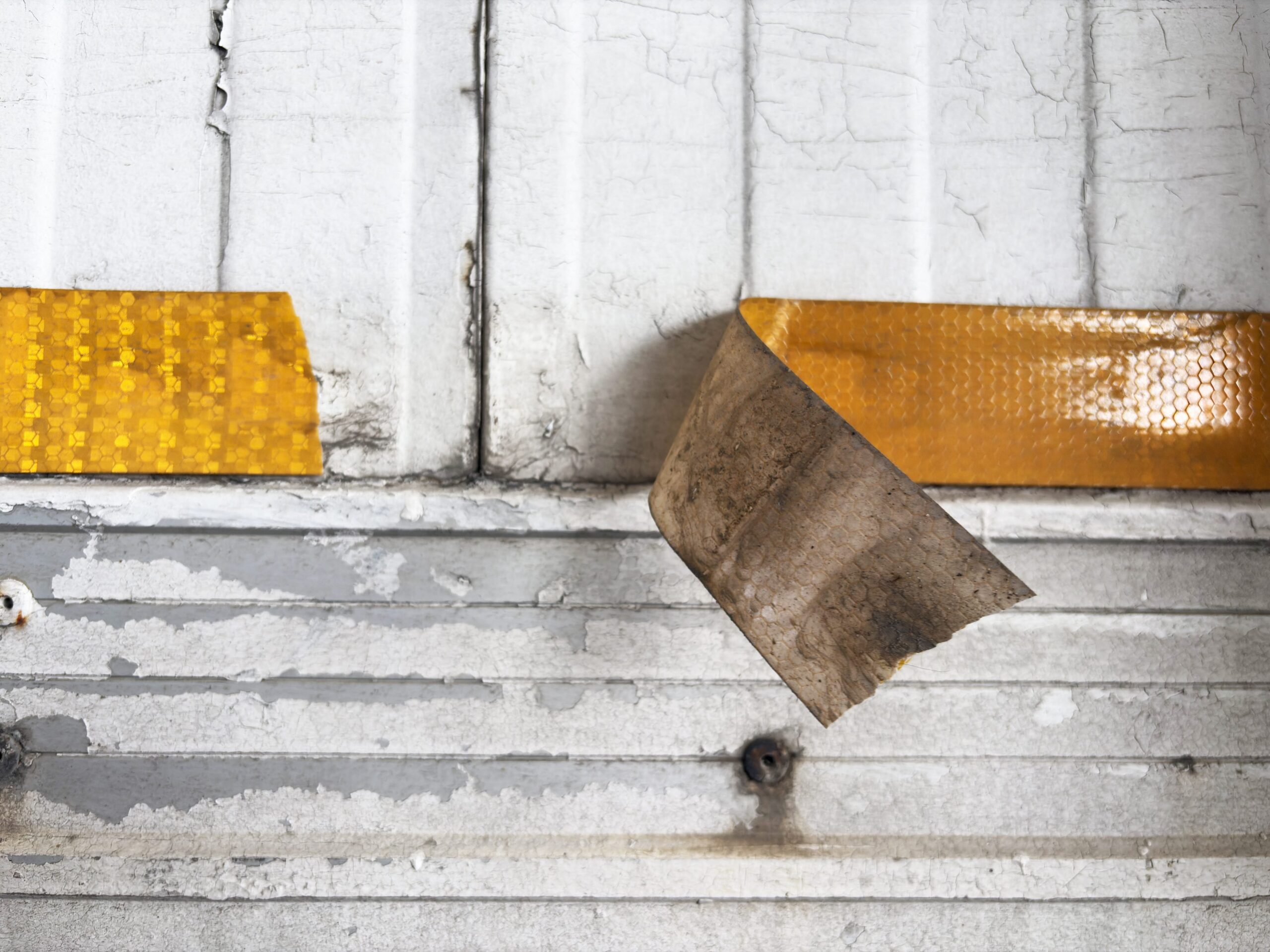
We use them almost every day: posters, stickers, double-sided tapes. When we apply them to a surface, they adhere thanks to the viscoelastic properties of the adhesive material and the quality of contact between adhesive and surface. However, since no real chemical bonds are formed, themembership is not permanent and as time passes it tends to reduce, to the point where, sooner or later, the poster comes off. The cause, as usual, is scientific and must be sought in the nature of the “glue”, which can fail to perform its function due to a series of factors: from the degradation of the polymer (in practice, its structure “breaks”), to fatigue under repeated loads. Age also contributes to influencing the longevity of our adhesive (contact aging) and environmental conditions, especially temperature and humidity which can accelerate the loss of adhesion.
How adhesives adhere: the chemistry of PSAs
Adhesives used in double-sided tapes or posters are called “Pressure-Sensitive Adhesives (PSA)”materials that adhere to a surface not through a chemical reaction, but thanks to weaker interactions activated by one light pressure. To be clear, membership is “activated” when we press with our finger the post-it that we want to hang on the wall: if we placed it without pressing, it would fall. PSAs are made of polymers with viscoelastic properties: they are solid, but they move – flowing between them – a bit as if they were liquid. This feature allows PSAs to expand (just like a drink spilled on the table would do) on the surface where we apply them and of adapt “elastically” even to a surface that is not perfectly smooth, such as the wall at home. The bond is due to weak attractive forces between adhesive and surface that come amplified precisely by the pressure we apply. In essence, the adhesion of PSAs does not depend on a “chemical bonding” with strong bonds, but on the combination between viscoelasticity of the material and close physical contact with the surface.
Why PSAs lose their adhesiveness over time: the causes
Even if they allow you to get a excellent adhesive power without particular chemical reactions or superhuman efforts (after all, a light pressure with the finger is enough), they are not eternal. You may have seen your favorite poster hanging in your bedroom come off when you were little: unfortunately, it is nothing more than an inevitable consequence due both to the chemistry of the PSAs and to the environment of our room.
PSA degradation
Let’s start from the chemistry of the adhesives themselves: over time the adhesive material itself it can change, slowly degrading. PSAs are polymers and, like other materials of a polymeric nature, over time they tend to lose part of the properties that characterize them and which allow them to exhibit adhesive properties. In science, we talk about “aging” (aging, just like living beings) of polymers, mainly due to a modification of the polymer structure over time.
Contact aging
A related but distinct phenomenon is the so-called “contact aging” (contact aging); not only the structure of the PSA, but also the interface between the adhesive and the surface changes over time. By holding the adhesive in contact with a surface for very long periods, the polymer chains can reorganize at the interface with the surface, gradually changing the quality of the contact. For prolonged adhesions, some polymer chains can move to different areasaffecting surface contact, leading to a different adhesion quality from the initial one.
Stress fatigue
Even when there are no major changes (such as tears or knocks), an adhesive can gradually weaken as it is subjected to small repeated stresses. This is a phenomenon called “fatigue” or fatigue: micro-vibrations, small movements of the surface… can lead to progressive breakdowns of the weak interactions between the adhesive and the surface, with the propagation of micro-cracks at the interface. Each cycle of “stress” produces minimal degradation, but as it accumulates it leads to a slow and progressive failure.
Environmental factors: humidity, temperature
Last, but not least, the surrounding environment must be considered. In particular, temperature and humidity they can accelerate the weakening of an adhesive, even if it does not undergo significant stress or excessive wear over time. Several studies show how two environmental factors gradually influence the properties of polymeric materials:
- there temperature can lead to changes in the viscoelasticity of the polymer, making the adhesive softer or brittle depending on the conditions;
- thehumidity can be absorbed in the adhesive material, altering theand deformation and adhesion properties and promoting the chemical degradation of PSA.
Considered together, the humidity-temperature combination is among the more incisive causes due to the loss of mechanical resistance of the adhesive and its adhesive power, accelerating the degradation, aging and fatigue processes described above. So be careful how we store our posters, if we don’t want unpleasant surprises!
