Royal Cornerthe newsletter that every two weeks tells you the most important news on the European Union’s regional and cohesion policy
The discussion on the future budget of the European Union comes to life. On the second day of work of the informal European Council in Cyprus, the Heads of State and Government discussed (and clashed) over their visions of the “Multiannual Financial Framework” (MFF), defining their priorities.
The MFF 2028-2034
The next seven-year financial cycle, which runs from 2028 to 2034, will have allocations equal to approximately 1,800 billion euros intended to finance the chapters of the common economic policy. Compared to the previous period, in which the allocation stood at 1,200 billion, there was an increase of 367.2 billion euros which will go towards the competitiveness, prosperity and security chapters. Another novelty of the next MFF concerns its structure, which recalls that used for the PNRR funds, with a simplification of the expenditure chapters to four headings instead of seven.
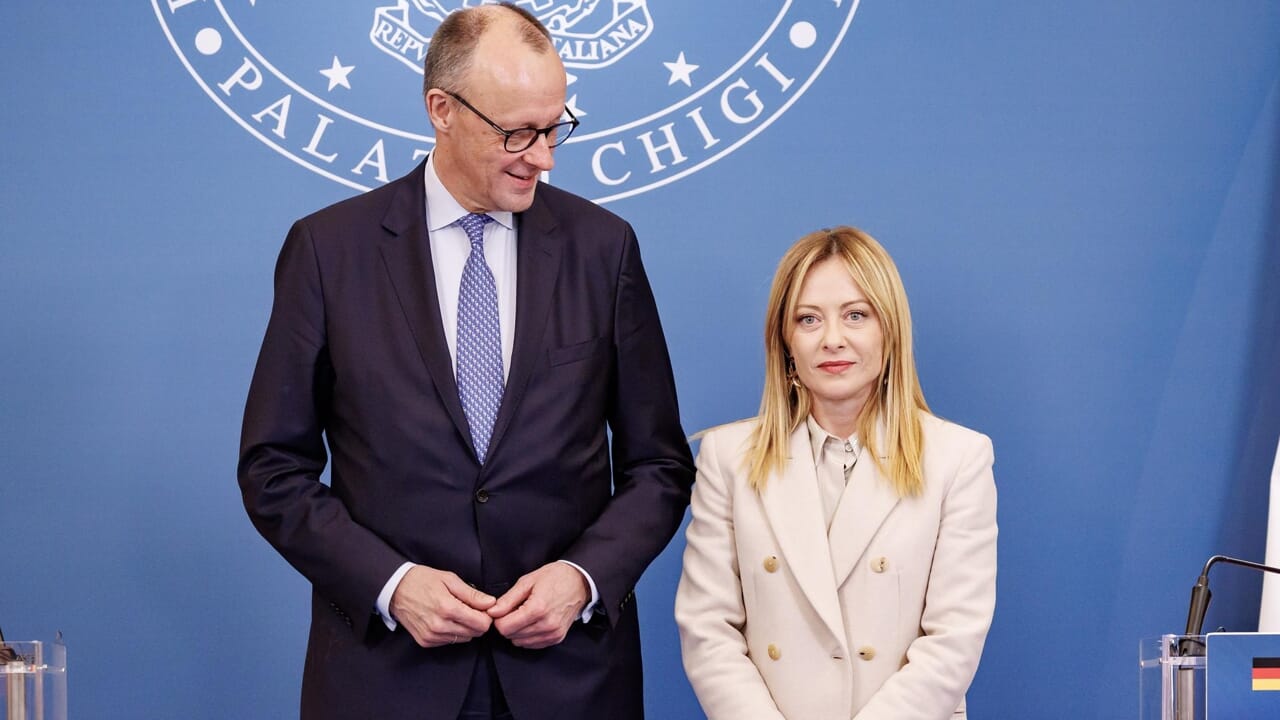
In detail, the first heading includes economic, social and territorial cohesion, agriculture and rural affairs, maritime affairs, prosperity and security, with a budget of 946.4 billion euros equal to 53.7% of the MFF. And this is precisely the center of one of the most heated confrontations, with Italy which wants to defend the old budget approach and agricultural and cohesion policies, and Germany which instead focuses on the rigidity of the accounts and asks for cuts precisely in these areas to finance what it believes to be Europe’s new priorities.
Melons: “Red lines” on cohesion and agriculture
The one on the multiannual financial framework “is a very difficult negotiation”, said Giorgia Meloni at the end of the meeting. “The positions between them start in very different ways, but here too I reiterate the slight red lines that Italy has. One of these obviously concerns the cohesion funds and the common agricultural policy funds”, explained the prime minister. “It is useless for us to take care of our security if we do not then take care of food safety, and it is useless for us to try to build competitiveness if we do not understand that cohesion, that is, putting all territories in a position to compete on equal terms, is the precondition for any form of competitiveness”, he added.
Merz: cuts to cohesion, no to debt
German Chancellor Friedrich Merz argued that Germany’s position on the EU’s Multiannual Financial Framework is that “new priorities” must be financed by cutting other spending chapters, such as cohesion and the CAP, although he did not explicitly state them to the press. “I have already told my colleagues that we will have to establish new priorities. This means that we will also have to reduce spending in the European budget in other sectors. From the German point of view, an increase in debt is out of the question,” he ruled in Nicosia.
Macron Optimistic
Optimism was instead shown by Emmanuel Macron. In Europe, the French president underlined, “every time we start from very different positions and we always manage to achieve our objectives”, he explained, indicating the need to “keep” European “historic policies” such as the CAP and Cohesion intact and invest in the new challenges on “defence and security, the technological transition with AI and quantum computing, and green technologies”.
The other main news of the week on EU cohesion and regional policy
Dense in Ireland for cohesion
On Thursday 23rd, the vice-president of the EU Commission responsible for Cohesion, Raffaele Fitto, concluded a tour of institutional meetings in Ireland. On Wednesday he visited Trinity College Dublin; met with Minister Jack Chambers on Thursday. “We talked about European resources, with particular attention to cohesion policy, current programming and the future budget”, he wrote on The visit takes place at a key moment: from 1 July Dublin will assume the presidency of the EU Council and lead the negotiations on the next multiannual financial framework 2028-2034.
Internal areas, the “right to remain”
On 6 May Fitto will bring together all the Cohesion ministers in Brussels for a discussion defined as “high level” on the right to remain in the territories. This was announced on Wednesday 22nd by Tommaso Foti, Italian minister for European Affairs, the Pnrr and cohesion policies, at the conference “Connected territories. Living communities” in Castelnuovo Garfagnana (Lucca), dedicated to the future of internal areas. “That is not a national issue, but a European one, like the birth rate decline”, said Foti, who also touched on the demographic issue: the nations that invested to reverse the trend saw, after a few years, “the curve begin to bend again”, a phenomenon with not only social but also cultural roots.
Cohesion in the “Accelerate EU”
Cohesion funds are among the resources mobilized by the “Accelerate Eu” plan, adopted by the European Commission to deal with the energy crisis. Vice President Fitto underlined this on Wednesday 22nd, commenting on the package on his social channels. The plan, he wrote, “combines immediate measures and long-term structural interventions to reduce dependence on volatile fossil markets”, focusing on already available resources such as Next Generation Eu and cohesion funds “to guarantee rapid and effective interventions”. “Accelerating the transition to clean energy is both an economic and a security imperative”, concluded Fitto, announcing that the Commission will accompany the Member States “at every stage of this journey”.
Fitto meets ultra-peripheral companies
Fitto chaired a dialogue on Tuesday 21st in Brussels with the business representatives of the nine ultraperipheral regions of the EU, the areas geographically distant from the European continent but legally part of the Union: Azores, Madeira, Canary Islands, Guadeloupe, Martinique, French Guiana, Réunion, Mayotte and Saint-Martin. The meeting was aimed at preparing the future strategy for these territories, which Fitto has defined on several occasions as “outposts of the EU in the world”, expected for the end of May. The plan should be accompanied by a regulatory simplification initiative to eliminate the legislative obstacles that slow down the socio-economic development and competitiveness of these regions.
Bilbao hosts the Cities Forum
The Basque city of Bilbao, in Spain, has been chosen as the venue for the next edition of the Cities Forum, the European event that brings together political leaders, urban planners and sector operators to discuss the challenges of urban development. Bilbao prevailed over 26 other candidate cities thanks to its track record in the field of sustainable urban development. The 2027 edition includes high-level sessions and interactive workshops. Further details on dates, speakers, program and registration will be communicated in the coming months. The Cities Forum is one of the reference events in the context of European cohesion policy, which allocates significant resources to cities to support the green transition and urban regeneration.
Alto Adige, Fesr on track
The ERDF (European Regional Development Fund) Monitoring Committee met on Thursday 23rd in Bolzano, at Eurac, to take stock of the 2021-2027 program, endowed with approximately 250 million euros for Alto Adige. The balance is positive: 22 notices published, over 175 projects selected and 90 percent of the funds already allocated. The president of the Province, Arno Kompatscher, however, issued a warning: “At European level there is talk of the possibility that cohesion funds be managed at state level as happens with the Pnrr. For us it is not a positive prospect, because we cannot put all the regions of Italy in the same cauldron”. Representatives of the national authorities and the European Commission were present at the meeting.
Regions: risk of greenwashing in the EU budget
The Environment commission of the European Committee of the Regions (Enve) adopted its position on the next EU multiannual budget 2028-2034 on Wednesday 22nd, warning that the proposed structure risks encouraging greenwashing and widening territorial disparities. The opinion is led by the mayor of Warsaw Rafał Trzaskowski (Polish). Members criticize the lack of tools dedicated to territorial potential and warn that the objectives of 43 percent of spending on climate and environment will remain on paper without a clear division of responsibility between levels of government. The future of the Life program is also worrying: absorbing it into a larger fund without guaranteed allocations would penalize local actions for biodiversity and climate.
Funds directed to the territories
“Direct funding stimulates innovation and strengthens democracy, because the money goes to the local authorities closest to the citizens and most resistant to populism”: thus the mayor of Warsaw Rafał Trzaskowski (popular), on Wednesday 22nd in Brussels, in the debate between the Environment commission of the European Committee of the Regions and that of the European Parliament. Italian MEP Pierfrancesco Maran of the Democratic Party, president of the Environment Commission of the European Parliament, agreed on the need to protect the target of 35 percent spending on climate and environment, calling for “dedicated, continuous and predictable funding” for nature and biodiversity under the Life programme, which in his opinion is essential for restoring damaged European ecosystems.
Regions: equity and turnover are needed on the CAP
The Natural Resources (Nat) commission of the European Committee of the Regions met on Monday 20th and Tuesday 21st to discuss the future common agricultural policy 2028-2034. The opinion is led by Piotr Całbecki (People’s Party), president of the Kujawsko-Pomorskie region, Poland, and calls for degressive income support to reduce inequalities between farms, together with territorial impact assessments. The members propose to lower the national co-financing quota for agri-climate actions to 20 percent, so as not to penalize less wealthy countries. A second opinion, led by the Spanish socialist Emiliano García-Page Sánchez, president of Castile-La Mancha, calls for binding measures for generational change, overcoming obstacles to access to land and financing for young farmers.
US duties, 7 billion hit for EU agri-food
US tariffs could cost European agri-food around 7 billion euros a year, with a drop in exports to the US estimated at 23.5 percent. This is what emerges from a study by the Natural Resources Commission (Nat) of the European Committee of the Regions, presented between Monday 20th and Tuesday 21st. The impact is uneven: the heaviest losses are concentrated on specific regions and high-value sectors such as wine, olive oil and processed products. Small and medium-sized enterprises and cooperatives are particularly exposed, with reduced margins and little ability to diversify markets. The report comes at an already difficult time, marked by high energy costs and damage from climate events.
