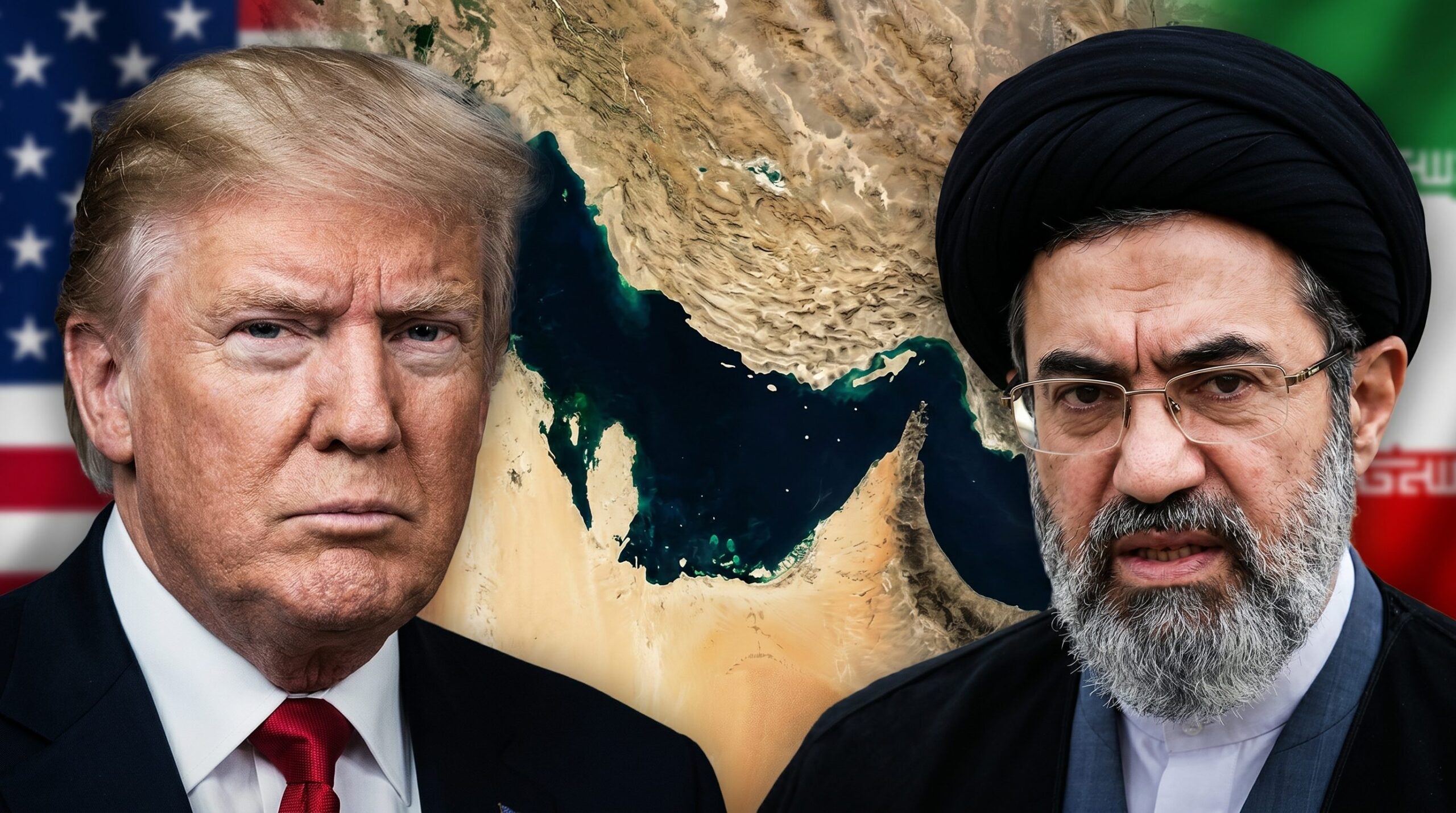
Since the beginning of the war with Israel and the United States, Iran has been using the Strait of Hormuz as a tool of strength to put pressure on opponents. Since March 4, this arm of the sea, just 33 km wide at its narrowest point, has seen this ship transit drops by 90%.. The economic consequences are very serious: over a fifth of oil and a quarter of natural gas of the world pass through here.
At the moment, thebalance in the area is extremely precarious: although Donald Trump has confirmed that the cease-fire is still in force, during the night the United Arab Emirates said they had intercepted Iranian drones towards their territory. Meanwhile, theUS Army instead he declared that he had targeted some Iranian military installations, in response to an attack conducted by Tehran against three US ships, which were trying to cross the Strait of Hormuz by bypassing the Iranian blockade. Iran, however, has not yet responded to the peace proposal submitted by the United States on May 6.
If the situation does not resolve itself soon, the effects will extend to many other sectors. And it’s not just a question of paying more for the car. The production of other resources depends on the availability of these precious raw materials. From fertilizers, useful for increasing food production, to the gas that allows us to cook.
Is the Strait of Hormuz closed or open?
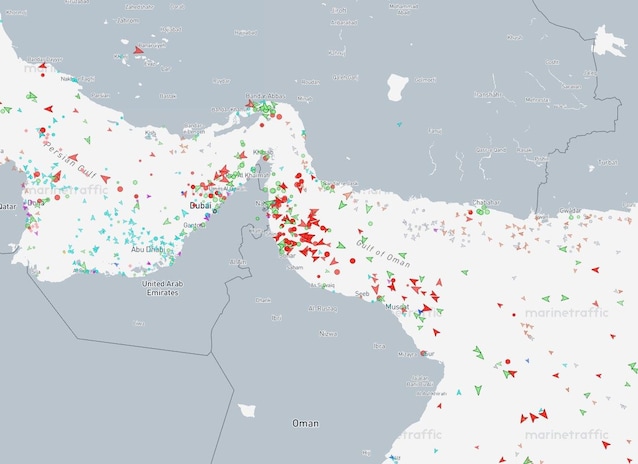
To date, the scenario in the Strait of Hormuz has crystallized: the vital passage is essentially closed to navigation for almost two months. Despite from April 8th a is in force fragile ceasefire (violated several times, although both parties have just confirmed its validity), the transit of boats is still ongoing hindered. From the April 13among other things, a law is in force on this maritime hub doubleasymmetric, mechanism block.
This crisis highlights a profound strategic disparity between the US and Iran:
- United States: they deployed a large force military composed of dozens of warships and approximately 15,000 men.
- Iran: he responded with the constant threat of drones and minescheap and unpredictable weapons that keep American technology in check.
The passage was denied by both sides, with opposite logic: l‘Iran selectively allows transit only to ships considered “friendly” (such as Chinese ones); gthe United Statesfrom April 13th, they started a real naval counter-blockade. The objective is to seal the strait to boats coming from Iranian ports.
This block is not impenetrable. In fact, several boats managed to get through unscathed, but many others were damaged or boarded in a desperate attempt to bypass controls or threats. The result is one logistical paralysis of dramatic proportions. As pointed out by the US Air Force general, Dan Cainethe current situation is unsustainable and «They currently remain trapped in the Gulf for longer 1,500 boats and about 22,500 sailors.” These numbers, more than any analysis, describe an area that has transformed from an artery of world trade into a high-risk water trap for anyone attempting to navigate.
From the raid to the US naval blockade: the chronology of the escalation
In the meantime, let’s try to understand how we arrived at this nightmare scenario and how the situation is evolving.
May 4th
| Date | Key Event | Geopolitical implications |
|---|---|---|
| February 28th | Start of hostility | Israel and the United States attack Iran, which responds with military attacks against strategic targets in the Gulf countries. |
| March 4th | Strait of Hormuz closure | Iran seals passage; only ships of friendly nations are authorized. |
| March 9th | Insurance shock | Rewards for naval transit increase 4-6 times. |
| April 8 | Start of truce | Temporary suspension of arms to begin negotiations. |
| April 11th | Mine clearance announcement | Trump starts mine clearance; Tehran denies knowledge of their location. |
| April 12th | First round of negotiations failed | Official breakdown of Islamabad talks. |
| April 13th | Start Counter-blockade | The United States announces a symmetric naval blockade against Iran. |
| 17 – 18 April | Instability of the gap | Iran declares the opening and closing of the strait in less than 24 hours. |
| April 22 | Failure of the second round of negotiations | The second attempt at negotiations for a peace agreement fails. USA and Iran extend ceasefire. |
| May 4th | Project Freedom | Launch of the US operation for the forced escort of merchant ships, interrupted after less than 48 hours at Pakistan’s request. |
| May 8th | Precarious balance | Tension remains high: the USA has presented a peace proposalto which Iran has not yet responded. Meanwhile, Donald Trump confirmed that the ceasefire is still in forcedespite the United Arab Emirates having intercepted Iranian drones. The army American has instead hit from the installations military Iranian in response to an attack conducted against three US ships, which were trying to cross the Strait of Hormuz. |
Who passes and who doesn’t
If in the first phase of the conflict the passage was an almost exclusive privilege of Iranian ships and their strategic allies (such as the China), over time Tehran began to negotiate bilateral agreements with individual countries, including theIndia. However, the balance changed drastically shortly before the truce attempt in April: evidence emerged of a real black market in passages, with transits “bought” at a high price through the payment of illegal tolls to the regime.
The introduction of US counter-blockade further exasperated the situation. According to data from CENTCOMthey are approximately 45 vessels intercepted and blocked by coalition forces during patrol operations aimed at interrupting Iranian economic flows.
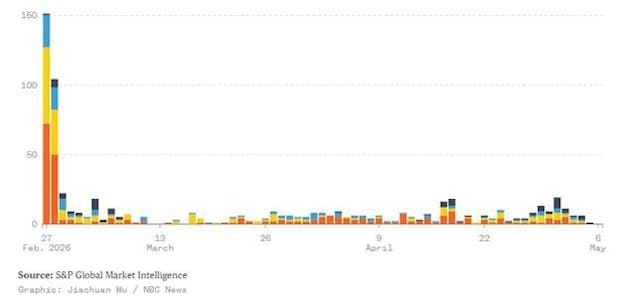
The impact of the crisis is visible in the graph above by analyzing the type of ships that historically ply these waters:
- Red: Tanker (Oil and Natural Gas).
- Yellow: Bulk Carrier (Grain and bulk cargoes such as bauxite and wheat).
- Sky blue: Container carrier.
- Blue: Other types of vessels.
As highlighted by the data, before the outbreak of hostilities the beating heart of trafficking was represented by Tankers carrying energy resources (about 40%). The operational collapse was vertical: if before February 28th the average was approximately 138 transits dailytoday the flow is so small that it rarely exceeds 15 steps per day.
The price of this tug-of-war is also paid in terms of concrete damage: the official estimates at least certify this 22 boats hit directly from Iranian attacks or mines. This is a partial number, updated as of April 12, inevitably destined to rise as the reports from the field are verified.
Because the Strait of Hormuz is closed
The current closure of the Strait of Hormuz, it should be clarified, it does not benefit any of the contenders. We are faced with a classic “war of attrition” in the medium to long term: a test of strength where the objective is not territorial conquest, but the ability to resist one more day than the opponent. Whoever lets go first loses.
The United States, despite having obtained a clear tactical victory (with the almost total destruction of the Iranian navy and air force), they find themselves in a political dead end and have to deal with:
- Internal consensus: Even though the US is an energy exporter, the price of fuel at American gas stations has skyrocketed to record levels, eroding public support for the conflict.
- Electoral promises: Trump must manage the paradox of having promised an end to military interventions in the Middle East, only to find himself involved in the largest naval blockade of the decade.
- The fact that tactical victory is not the same as strategic victory: to win a war, at a strategic level, you need to achieve the desired results. Objective currently missed.
- The cost of the war in Iran: it has already reached 25 billion dollars, as declared by the Pentagon.
On the other sidethe Iranian regime of the Ayatollahs is playing an existential game:
- Economic collapse: Without the proceeds from the sale of hydrocarbons, the Iranian economy is in free fall. Iran lost about $4.8 billion in lost revenues in just a few weeks.
- Ideological resistance: for Iran, control of Hormuz is the last card to play to maintain regional relevance. Giving in now would mean accepting a defeat that could put the very stability of the regime at risk.
The “Ad War”: between propaganda and reality
In a conflict where uncertainty reigns supreme, communication has become a weapon as powerful as missiles. What we witness in the Strait of Hormuz is a real one war of opposing narrativeswhere every naval movement is confirmed or denied depending on party interests.
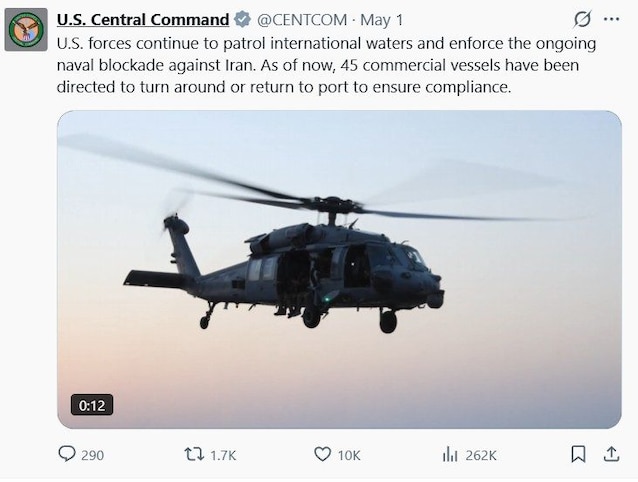
Monday afternoon, the Centcom (the US Central Command) declared the partial success of Operation Project Freedom, announcing the safe transit of two US-flagged merchant ships. The company Maersk partially confirmed this version, reporting that one of its units managed to exit the Gulf under military escort. However, Tehran’s response was not long in coming: i Pasdaran (Revolutionary Guards) categorically denied that any ship succeeded in breaking the blockade.
As analyzed byISPIthe strait lives in a precarious balance defined as “a peace that does not exist”. If on the one hand the United Arab Emirates denounces drone attacks against its oil tankers (such as that of the state company Adnoc), on the other hand diplomacy attempts desperate backlashes. The latest act in this war of nerves is the recent announcement of Trumpwhich decided to pause the escort operation “Project Freedom” at the request of Pakistan, the current mediator. Tehran, however, remains firm: any ship that does not follow the routes approved by the regime will suffer “decisive action”.
