
There human communication it is a complex interweaving between words and the gestures of body. Much of what we transmit, in fact, does not pass through the voice, but through postures, head movementsfrom the hands and of body entire.
However, what it may seem spontaneous and universal in a culture it can be interpreted completely different in another. In general, nodding (moving the head from up to down) means “yes” or assent. But in some cultures, as in Bulgaria, Albania, Greece and parts of Türkiyenodding can mean “no”. In these places, shaking your head sideways is often interpreted as “yes.”
So, you nod thinking of saying “Yes” but you may have communicated a rejection.
Even today i reasons of this difference are not clear. According to some popular legends, the origin dates back to the times of the Ottoman Empire, with the inversion of the gesture being used to confuse the Turkish occupiers.
This phenomenon is proof that the body, more than the word itself, tells the story complexity of social contexts and the differences and misunderstandings that can arise between cultures.
When nodding means “no”
The nodding gesture it is perhaps the most emblematic case of opposing interpretations in different cultures. In the western world and in most European cultures, moving the head from top to bottom means “Yes”while shaking it sideways generally indicates “no.” However, in countries like Bulgaria, Albania and the Türkiye the traditional meaning seems to be reversed: the vertical movement of the head can indicate “No“, while that side he confirms a statement.
Even today it is not clear how this method of non-verbal communication came about evolved differently in these countries compared to other parts of the world. According to some regional popular legends, the origin of the gesture dates back to the era ofOttoman Empire: the opposite meaning of the head movement would have arisen for confuse the Turkish occupiersso that “yes” seemed like “no” and vice versa.
In Greeceinstead, the rejection informal may be signaled by a slight backward movement of the head, often accompanied by a sound of the tongue.
These examples illustrate how physical actions themselves can convey opposite messages, requiring careful observation of the social context to avoid misunderstandings.
How important is it to know how to use non-verbal communication?
Ray Birdwhistellpioneer anthropologist in the study of kinesicsa science that deals with the body and its language, has demonstrated that i body movements constitute a real communication systemoften more incisive than words.
According to Birdwhistell, the body transmits information, emotions and intentions through “motor schemes” which are learned in social context: posture, direction of gaze, rhythm of head or hand movements all have culturally codified meanings.

Despite some scholars, such as Charles Darwinhave suggested that some emotional expressions they can have universal biological rootssymbolic social gestures, such as nodding, raising the thumb or the peace sign, are the result of learning and cultural transmissionin which there is nothing innate.
For example, according to Darwin the gesture of shaking the head left and right would arise during thebreastfeeding: the newborn, when full, shakes his head left and right to refuse the breast or the spoon. This primordial movement of “food refusal” would, over the millennia, become the universal symbol of logical refusal.
How to make our communication inter-cultural
Understanding the variability of gestures is fundamental in a globalized world.
Some intercultural communication experts and other travel experts recommend communication-based approaches.careful observation, prudence and verbal confirmation: don’t just rely on gestures that you take for granted, but observe how others move in the space, adapting to local norms and asking for clarification when necessary.
This approach reflects the so-called intercultural competencethe ability to read other people’s behaviors in the context of their culture, avoiding misunderstandings and promoting more effective and respectful relationships.
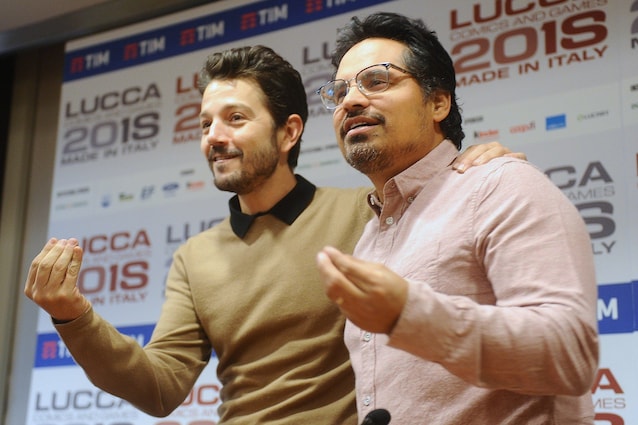
In the case of Italynon-verbal communication has very marked and historically rooted developments. The intense use of gestures, facial expressions and postures derives from a combination of cultural, social and historical factors.
This marked Italian non-verbality However, it leads to a particular phenomenon in intercultural contexts: many Italians take it for granted that their gestures and internalized expressions are universal, risking misunderstandings when interacting with people from less expressive cultures or with different gestural systems.
Sources
Mehrabian A. (2007). “Nonverbal Communication”
Abrams ZI (2020). “Intercultural Communication: Teaching Nonverbal Communication”
Ekman P. & Friesen W. (1975). “Unmasking the Face: A Guide to Recognizing Emotions from Facial Expressions”
