Next, the newsletter of Europa Today which every Monday morning tells you what will happen in the European week
Top of the agenda
Fragile balances – Despite the prospect of a possible end to hostilities between the United States and Iran – as faint as it is unstable – the 27 EU governments do not trust a rapid exit from the crisis, both in terms of security and energy. It is true that these almost three months of war have shown that the EU has no levers to influence the crisis in the Middle East, but at the same time its greatest (internal) strength remains coordination. And on this the efforts in Brussels have never failed, albeit with suggestions for recipes for exiting the crisis that are different among the member states.
Guess who’s coming to lunch – We begin on Monday 11 May with the Foreign Affairs Council, in which the 27 ministers will be led by High Representative Kaja Kallas in the discussion on the impact of the situation in the Middle East on the Union, in particular in light of the latest developments in the war in Iran and its repercussions throughout the Gulf region. Of particular interest is the participation during the working lunch of my Canadian colleague, Anita Anand, for an informal discussion between Brussels and Ottawa at a time when the aggressive policy of the United States – both on a commercial and military level – is worrying both of Washington’s historical partners.
Defense and security – The discussion between the Twenty-Seven will continue the following day, Tuesday 12 May, when the EU Defense ministers will discuss the implications of the crisis in the Middle East on the security and defense level of the Union. To facilitate discussions, the conclusions of the summit of EU leaders held on 19 March for the implementation of the Defense package to 2030, while the president of the European Aerospace, Security and Defense Industries Association, Micael Johansson, will update ministers during an informal meeting on the general readiness level.
The real issue: the energy crisis – It has been known to everyone for months. The biggest repercussion of the United States’ war against Iran is the one that has been unleashed on the energy level, due to the interruption of the flow of fossil fuels from the Gulf region through the Strait of Hormuz. Governments have been discussing it for weeks, European airlines and airports do not know how long there will be enough fuel to not interrupt flights, the Commission has presented a plan of measures in the short and medium term, Italy contests the failure to suspend the rules of the Stability Pact, a front of countries led by Spain is calling for a greater push on renewables (and many also on nuclear) to definitively free themselves from dependence on hydrocarbons. We are not in chaos, but the worst is certainly not over.
How to get out of the crisis – Between Tuesday 12 and Wednesday 13 May, the EU ministers responsible for Energy will meet in Nicosia for an informal meeting of the Energy Council convened by the rotating Cypriot presidency. The objective is to continue to discuss so as not to lose the unity that – albeit with difficulty – has been maintained up to this point. The informality of the meeting will allow a more open exchange to explore new (or old, but once again current) solutions to emerge from the crisis or at least respond in an effective and coordinated way, also with colleagues from Ukraine and Moldova. The work of the task force will be central, which is focusing on the actions outlined in the “AccelerateEU” communication, i.e. the Commission’s plan presented on 22 April to reduce the Union’s dependence on imported fossil fuels and accelerate the transition towards clean and internally produced energy.
ECB and Fed leave rates unchanged, but the energy shock threatens the recovery. Lagarde admits: “We considered an increase”
Other hot topics
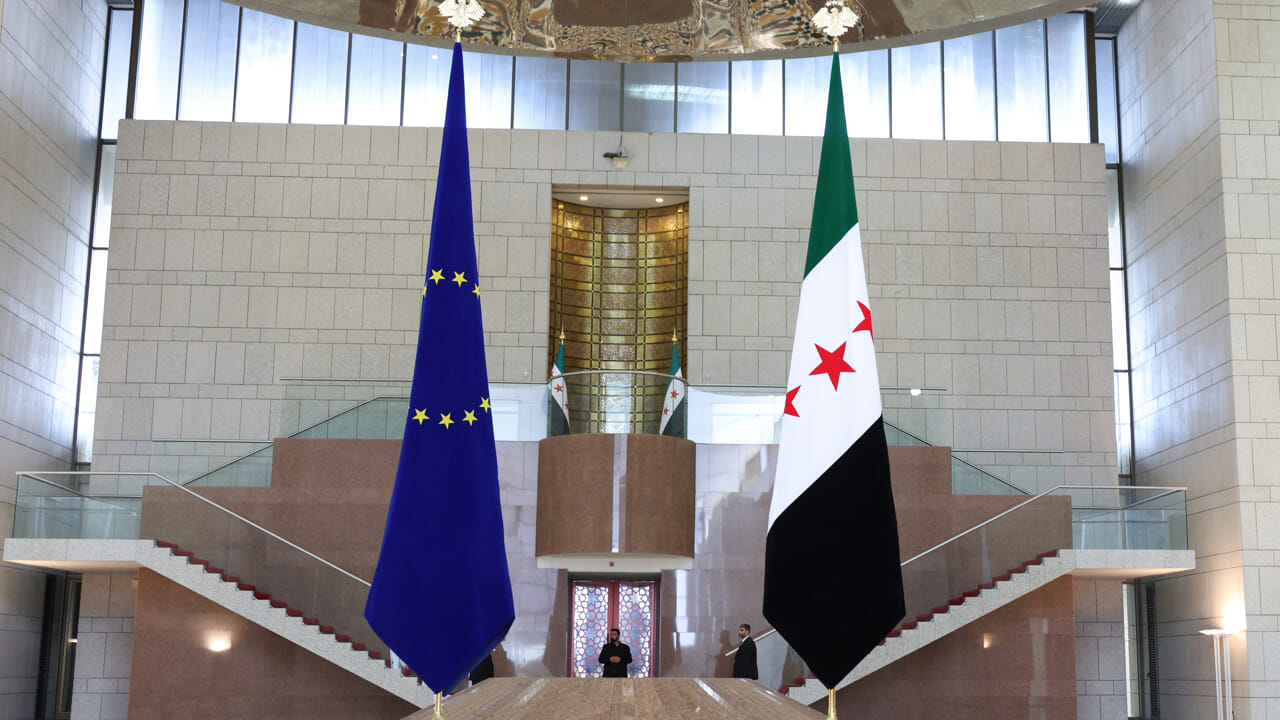
The first dialogue with the new Syria – The first high-level political dialogue between the European Union and the new post-Assad Syria is scheduled for Monday 11 May in Brussels, which marks a formal restoration of relations between the EU and Damascus under the transition government led by interim president Ahmad al-Sharaa. After the fall of Bashar al-Assad’s regime on December 8, 2024, Syria began a five-year transition phase.
Who will be there – The meeting will be co-chaired by the EU High Representative Kallas and the Minister of Foreign Affairs and Expatriates of the Syrian transition government, Asaad Hassan al-Shaibani. The European Commission will be represented by the Commissioner for the Mediterranean, Dubravka Šuica, and by the Commissioner for Crisis Management, Hadja Lahbib. The meeting will serve to make progress towards the normalization of relations between the two sides and to take stock of the various lines of work relating to Brussels’ support for the efforts of the Syrian transition authorities for stabilisation, socio-economic recovery and inclusive political transition in the country tormented by over ten years of civil war.
The return of Ukrainian children – On the same day, Monday 11 May, at the end of the meeting of the Foreign Affairs Council, the high-level meeting of the International Coalition for the return of Ukrainian children kidnapped by the Russian army during the invasion of the country which began on 24 February 2022 will be chaired by High Representative Kallas together with the Commissioner for Enlargement, Marta Kos, the Ukrainian Foreign Minister, Andrii Sybiha, and the Canadian Foreign Minister, Anita Anand.
Hungary and Slovakia’s veto falls: EU approves 90 billion loan to Ukraine
Post-2027 culture – Between Monday 11 and Tuesday 12 May the Education, Youth, Culture and Sport Council will be asked to approve the Council’s negotiating position on two Commission proposals for the post-2027 EU multiannual budget. In the ‘Education and Youth’ format, the 27 ministers will vote on Monday 11th on the partial mandate relating to the Erasmus+ Regulation for the period 2028-2034. In the ‘Culture and sport’ format, the mandate on the Regulation establishing the new AgoraEU program for culture, the media and civil society will be voted on on Tuesday 12th.
Global health – The European Commission will present its (non-legislative) Global Health Resilience initiative on Wednesday 13 May. This is a proposal to strengthen health systems and improve pandemic preparedness, focusing on improving crisis responses, fighting misinformation, supporting local production of health products and promoting equitable access to healthcare. The EU initiative comes as a hantavirus outbreak recently identified on board the cruise ship MV Hondius has reignited concerns about the risks of a new pandemic a few years after Covid-19.
Passenger rights – The EU executive is also scheduled to publish the Package on Passenger Rights, made up of three pillars, on the same day, Wednesday 13 May. A proposal to facilitate multimodal digital mobility services, such as route planners and ticket sales systems that allow you to compare different travel options. A proposal on the purchase of a single direct ticket for multimodal and cross-border travel across the Union on a single digital platform, to put an end to the fragmentation of the ticketing system between countries and transport systems. And finally a revision of the 2007 Regulation on the rights and obligations of rail passengers, to strengthen protection against delays, missed connections and accessibility: the main innovations should include the obligation of direct tickets for connecting journeys, greater rights for people with disabilities and better information in the event of disruptions.
Stop price increases, Europe locks down airline tickets: the new rules for cancellations, refunds and compensation (up to 600 euros)
From the European Parliament
Charlemagne Prize – The three European winners of the 2026 Charlemagne Youth Prize will be announced on Tuesday 12 May during a ceremony in Aachen. The prize, jointly managed by the European Parliament and the International Charlemagne Prize Foundation, is awarded to projects led by young people that support democracy, promote active citizenship and foster community cohesion.
Africa-EU Parliamentary Assembly – African and European parliamentarians will meet in Eswatini from Tuesday 12 to Thursday 14 May to discuss possible ways of cooperation on security, youth policy and critical raw materials. Work will focus on the role of regional organizations and their parliaments in promoting peace and security, the future of multilateralism and the role of parliamentary diplomacy, youth mobility in the context of partnership, women in agriculture and the global rush for critical raw materials. The Parliamentary Assembly will adopt the recommendations to be sent to the Africa-EU Council of Ministers.
Preparations for the plenary – The political groups will prepare for the plenary session on 18-21 May, during which President Metsola will award the European Order of Merit to the first winners for the first time in a ceremony in the Strasbourg Chamber. Among the main points on the agenda of the plenary will be the vote on the new law aimed at improving the protection of strategic EU sectors from risky foreign investments, on the rule of law, fundamental rights and misuse of EU funds in Slovakia, and a discussion on the European citizens’ initiative “Stop the destruction of video games”. MEPs will also discuss and vote on new legislation to support and protect victims of crime, on overcoming the gender gap in assistance and on mitigating the negative effects of global steel production overcapacity on the EU market. As part of the “This is Europe” series of debates with the heads of state and government of the member countries, the plenary will host the speech of the Prime Minister of Latvia, Evika Siliņa.
For journalists – The Parliament’s press service will hold a pre-plenary press conference at the Brussels headquarters with the spokespersons of the Parliament’s political groups at 11 am on Wednesday 13 May (Anna Politkovskaya room).
The president’s agenda – On Tuesday 12 May, President Metsola will receive the general secretaries of the Episcopal Conferences of the European Union. On Thursday 14 May he will instead speak via video conference at the Forum on the sustainable economy organized by San Patrignano and Confindustria.
Royal Corner
In the European Parliament, on 6 May, the preparatory process of the “Right to Remain” strategy was launched, the European Commission’s political framework to ensure that EU citizens can build their own future even in the most remote areas, without being forced to leave due to lack of opportunities or services. The event, hosted by the executive vice-president Raffaele Fitto, brought together the president of the EP Roberta Metsola, the Cypriot minister Makis Keravnos for the rotating presidency of the Council, the president of the European Committee of the Regions Kata Tüttő and the former prime minister Enrico Letta.
Fitto claimed the results of the mid-term review of cohesion policy: 186 programs modified and 34.6 billion reallocated on competitiveness, defence, housing, water and energy. Letta called for an alliance to defend cohesion and greater financial leverage. Tüttő expressed fear that the policy would not survive the next EU budget. Keravnos recalled that 135 million Europeans live in regions that have been left behind in recent decades, with risks for competitiveness and trust in the European project.
Read the other top news from the last two weeks on EU cohesion and regional policy
