The position in which we sleep, often one unconscious and personal choice, can affect digestion, breathing And postural health. Sleep, in fact, is not simply a period of inactivity, but rather a fundamental dynamic process for our health, capable of influencing ours cognitive abilities during the day, the mood tone and many other organic functions. Let’s immediately clarify that the position in which we sleep is not fixed, but we move many times during the night. For a healthy individual, frequent changes in posture are generally sufficient to maintain a balance between functionality and comfortbut for those who suffer from breathing or digestion disorders, understanding the anatomical basis of sleeping postures can be useful an important help in protecting your health.
For example, according to 2016 research published in Sleep Health, the supine position is the worst for those suffering from respiratory disorders, because it can change the structure of the respiratory tract and consequently our breathing. The position in which we sleep also changes the functioning of our digestive tract (The Lancet2020), in particular of the esophagus and stomach, proving important for those suffering from Gastroesophageal Reflux Disease. Finally, the position has an impact, as reported in an article published on PLOS Onealso on the skeletal structure and on the joints of the spinebeing able to make us wake up sore in the morning.
Disclaimer: This article is for informational purposes only. For any medical information it is essential to contact your doctor.
Right side, left side, supine and prone: how many positions do we change at night
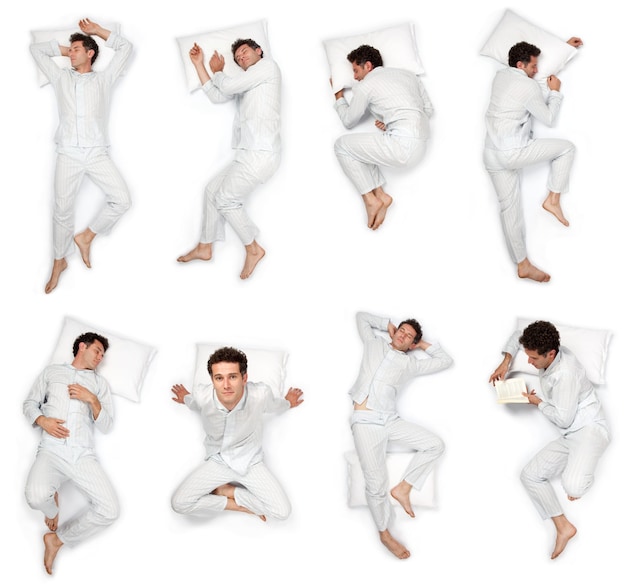
The vast majority of people sleep in one of four positionson your stomach (position prone), belly up (position supine), on the right side or on left side. However, numerous studies, through direct observation of sleeping participants, they have now established that very few people change positions less than three times in one night and which can also be reached more than thirty changes of position.
We must therefore not think that the position in which we fall asleep is also the same in which we spend most of our sleep. This simple fact alone explains why it is so difficult to establish what the “best” sleeping position is.
Lateral sleep posture and spine: scientific studies
For healthy people, the sleeping position is often negligible, except for the prone position (as explained by research on Musculosketal Care); Those who sleep on their stomachs more frequently report other symptoms such as cervical and lumbar paincontractures and other symptoms concerning the spine. The explanation could lie in the distribution of tension between muscles and joints of the back and neckwhich would not be optimal. In addition to this, the body weight weighs on the abdomen, in which viscera such as the intestine with its peristalsis can be hindered in their functions resulting in slowing of digestion and rest disturbance.
The positions less correlated to postural symptoms are the lateral onesboth on the right and on the left. The difference between the two is not yet evident, although the lateral position on the right side is often reported as more comfortable and less associated with various types of symptoms. However, it is not possible to establish the causes of this common perception.
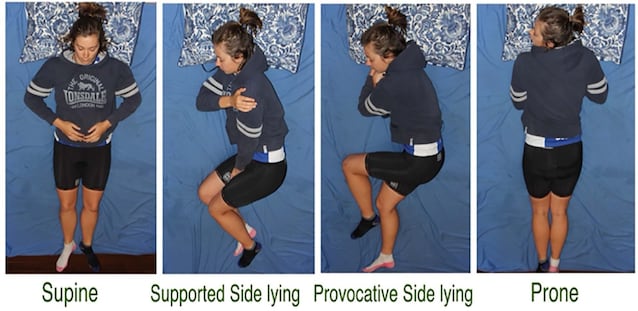
The 2021 study conducted by researchers Cary, Jacques and Briffa and published in the scientific journal PLOS One, reports recommendations that appear to improve the reported quality of sleep and reduce unpleasant symptoms upon waking. For example, if you sleep on your side, regardless of which one you prefer, it is better to use the arm you sleep on to partially support your shoulder, keep the free one relaxed with your hand between your legs and bring the leg you are leaning on closer to your abdomen than the free one. This combination seems to support them better physiological curves of the spine and cause less joint and muscle tension. The back is less extended, the weight of the legs is better distributed and the shoulders are more supported.
The worst position for snorers: belly up
For people suffering from pathological conditions such as Obstructive Sleep Apnea and snoring, the matter is slightly different. The supine position slightly modifies the structure of the respiratory tree: it is not a big problem for the healthy individual, but in people with a history of sleep apnea and snoring there can be serious consequences. There is now a lot of scientific evidence (Sleep Health, 2026) that indicates that supine position is the worst for those suffering from apnea and breathing disorders during sleep, as the airways tend to “collapse” on themselves in this position, obstructing the flow of air and making worse oxygenation of the organism.
For patients with sleep apnea, Positional Therapy is in fact indicated, which allows you to get used to sleeping on your back as little as possiblewith clear and marked improvements in symptoms even without the introduction of CPAP (Continuous Positive Airway Pressure), specific positive airway pressure machines to be worn at night.
The best one for reflux is the left side
To date, we have identified numerous physiological processes of the stomach that are influenced by sleep quality and it is known that the symptoms of gastroesophageal reflux often awaken patients during the night, thus configuring a vicious circle where poor sleep worsens reflux disease and reflux worsens sleep itself.
Fortunately, there can also be those who suffer from gastroesophageal reflux great benefits by changing your sleeping position. In these cases, for the study “Left lateral decubitus sleeping position is associated with improved gastroesophageal reflux disease symptoms: A systematic review and meta-analysis”, is particularly suitable lateral decubitus position on the left sidewhich naturally positions the lower esophageal sphincter, which leads to the stomach, higher than the stomach itself. This allows you to reduce the likelihood of gastric acids spilling over into the esophagus, damaging it, and therefore helps prevent dangerous complications of this disease.
