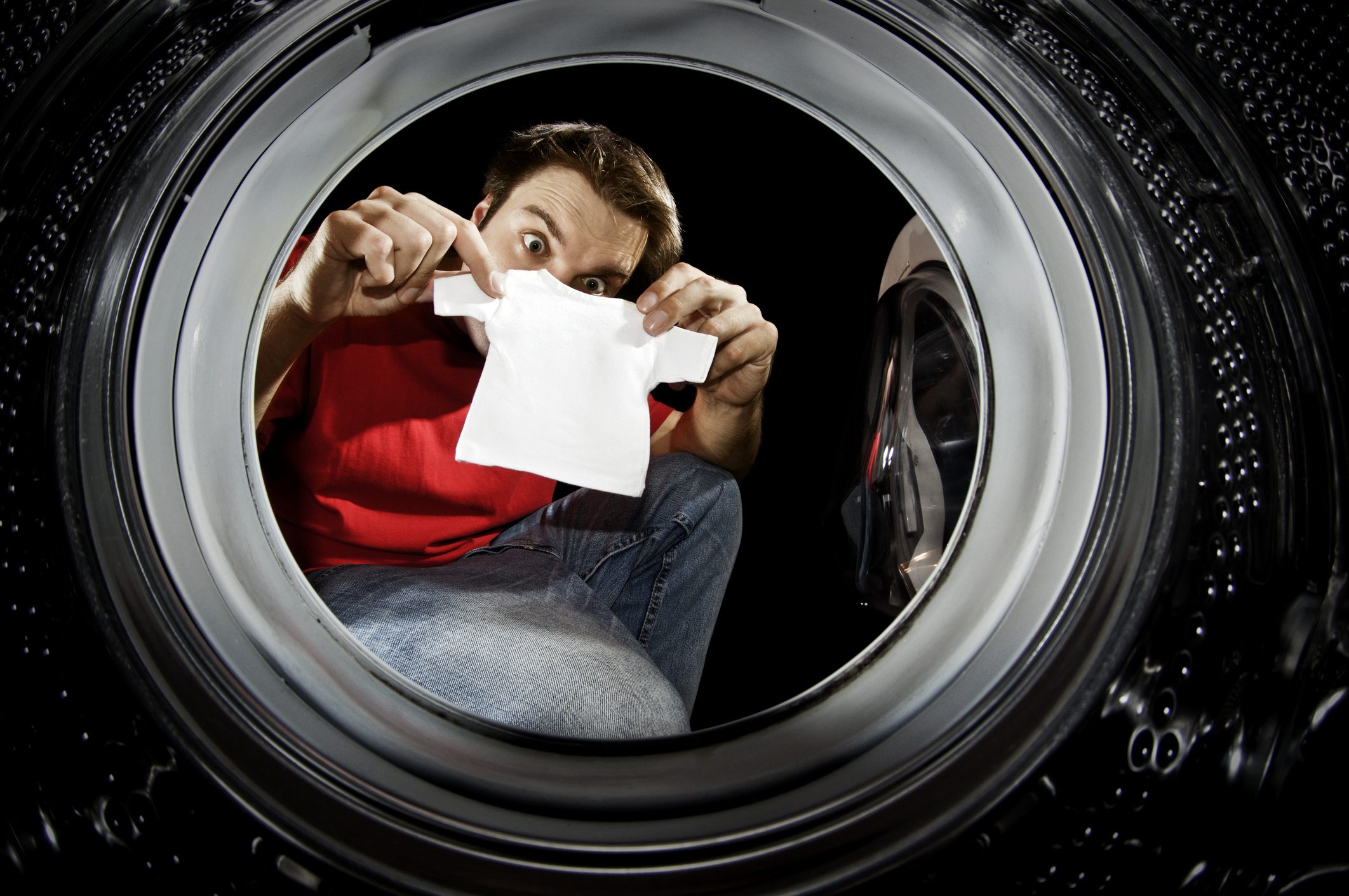
“To stretch clothes that have shrunk in the washing machine, use conditioner or vinegar.” On the web you may come across statements like this: “do it yourself” solutions for common household problems such as the shrinkage of a fabric after one or more washes in the washing machine. But how much is true? Is it really that easy to enlarge a dress that has shrunk? The short answer, unfortunately, is no: There is no scientific evidence that conditioner or vinegar “stretches” clothes causing them to recover their original shape. However, some of the shrinkage is unwanted – especially in cotton – can be reversible. While still wet, the fabric can be partially reshaped and regain some of its original shape, but that It depends on the physics of the fibers of the fabric, not thanks to a chemical reaction with conditioner or vinegar. Hair conditioner can contribute just because reduces friction between fibersbehaving a bit like a fabric softener, while vinegar has an even more limited effect: at most it can help “neutralize“alkaline residues deriving from detergents, but nothing more. The real decisive factor is only one: the structure of the material and how it is treated while it is still wet.
Because conditioner and vinegar don’t stretch felted sweaters
The balm for hair is a chemical formulation containing, among other molecules, of cationic surfactantssimilar to those used in softeners for fabrics. Depositing on the surface of the tissue, these molecules reduce friction between fibersallowing them to scroll more easily. Just like if we used a fabric softener, the fabric becomes softer because the fibers offer less resistance to each other’s movement, but it does not mean that the conditioner will stretch the fabric. Its action is superficial and does not modify the internal structure of the fibers: if a wet garment is pulled, the lower resistance between the fibers can make it easier to deform, but the recovery of the shape it depends exclusively by the residual elasticity of the materialnot from a chemical transformation induced by the conditioner. So, perhaps there is some truth: the conditioner can support the return to the original shape of our cotton t-shirt, but its action is limited to simulating that of a real softener, so, if we really have to, let’s choose one specifically designed for fabrics.
THE’vinegarhowever, is completely different on a chemical level. We are talking about a diluted solution of acetic acid which, if used correctly, does not damage cotton but it has no structural effect on the fibers. At most, it can neutralize any alkaline residues left by detergents, but it does not help to re-stretch a restricted item: vinegar It does not affect the elasticity either nor on the garment’s ability to recover its original size.
What really happens when a fabric shrinks
THE natural fabrics, like the cotton they are made of cellulosea polymer network of molecules held together by numerous hydrogen bonds. When we wash a garment, water enters the fibers and alters temporarily these bonds, making the material more flexible and less rigid in its “cellulose” structure; from humidthe fabric begins to lose the tensions accumulated in the production process that give it a shape (sleeves, collar, folds…). During drying, the chains rearrange themselves and the links between the chains reform into one new configuration, often more compact, therefore shorter and… restricted.
In fact, part of the shrinkage is reversible. As long as the fabric is still damp and the fibers are more mobile, it is possible deform it again by applying external tractionpartially recovering its initial dimensions. For example, a t-shirt can lose the tension that was given to it during production (like a long sleeve of a particular shape), shrinking and recompacting when dry, but if we wet it again and it we “stretch” it by lengthening itthe fibers can resume part of the original arrangement.
Now, not all fabrics work the same. It is important to distinguish the behavior of cotton from that of wool. In the case of wool, shrinkage occurs mainly by felting: the fibers have a flaky surface which, with water and movement, fit together in an often irreversible way.
