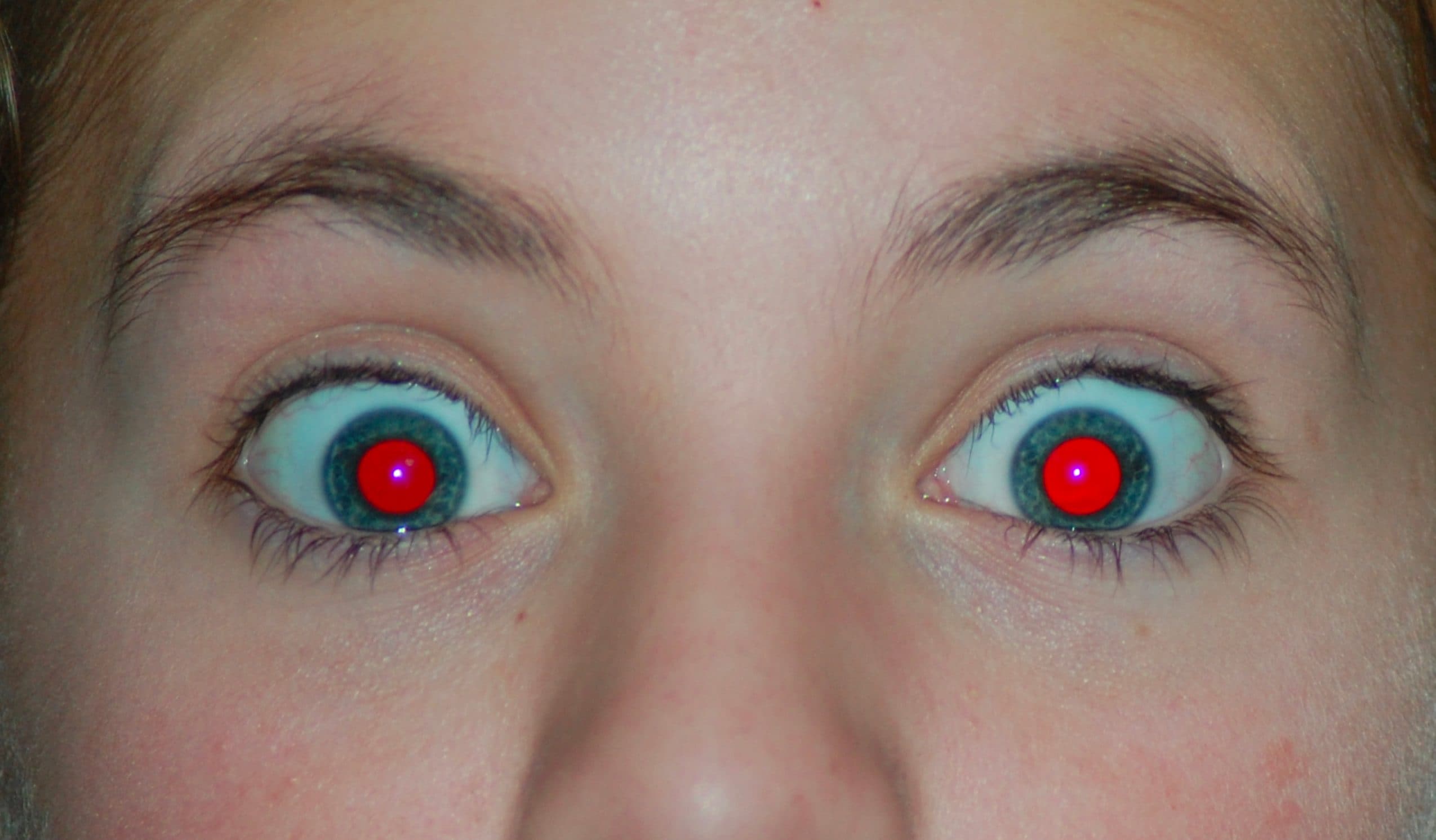
If you open an old photo album, there will most likely be someone who has the eyes red in colour. If you scroll through the gallery on your smartphone, you won’t find even one. But how is this possible? The effect “eyes red” is closely linked to the way in which our eyes react to light and today therefore we will not only understand the causes, but we will also delve into the reason why, today, this phenomenon is increasingly rare.
The phenomenon of light in the eye
It all starts from pupil: when we are in a dark place, it expands. This process is involuntary and is called mydriasis: the goal is to open the diaphragm of the eye to do let in more light and, therefore, allow us to see even in those conditions.
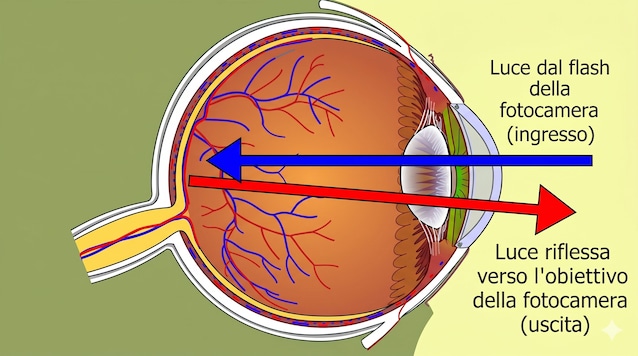
However, if, at that moment, someone takes a photo with the flash, things change. The lightning indeed lasts few milliseconds but the pupil cannot contract so quickly. The light then enters with the pupil completely open, passes through the eye and directly hits the fundus, i.e. the retina.
Just behind the retina is a layer called choroidwhich is extremely rich in blood vessels – and hence its red color. When the flash illuminates it, the light is reflected, escapes from the pupil (still dilated) and is captured by the camera lens. That’s why your eyes seem to turn red!
But why was the phenomenon so common with compact cameras but almost absent with professional cameras? The answer is geometric.
The role of the camera: the geometry of the flash
In one reflexthe flash is positioned above or laterally compared to the objective. Light is emitted from one direction, hits the eye, and bounces in a slightly different direction to the lens. The red reflection is not captured, or is captured in a very attenuated way. In compact cameras, however, the flash is a few millimeters from the lens. The light starts from almost the same point as the lens, hits the eye and bounces back in exactly the same direction it came from. Result: the red is perfectly focused and perfectly captured.
And actually the same thing happens to our smartphones today! The difference is that, compared to the cameras of twenty years ago, modern smartphones act on multiple levels: before the actual shot, many emit a pre-flash which causes the pupil to contract (reflex myosis), reducing the problem at the source. Furthermore, there is an integrated system that intervenes in post-processing to correct any residual red pixels.
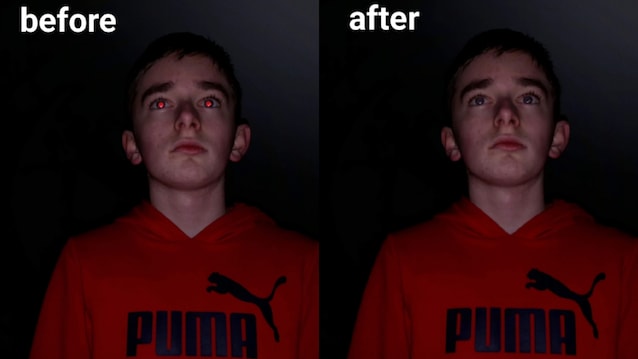
All this happens in the background, without the user doing anything. Et voilà, that’s it: the photo album we see in the gallery arrives already corrected.
