Have you ever wondered what exactly is under your feeton the other side of the planet? And above all, has it ever occurred to you to use theentire terrestrial globe as a “filling” for a sandwich? It seems crazy, but that’s exactly what a New Zealand boy and a Spanish boy did by simultaneously placing two slices of bread in two diametrically opposite points on the Earth and creating an “Earth sandwich”.
This feat, bizarre but scientifically very precise, was made possible by exploiting the geographical concept of antipodal pointsor those points that are at exact opposite ends of the Earth’s sphere.
How did the idea of making a sandwich with the Earth come about?
The first “viral” idea of making a “sandwich with the Earth” is attributed to the American comedian Ze Frank, but he’s not the only one who thought about it. Among the best-known stories is that of Etienne Naudea nineteen-year-old computer science student from Auckland, New Zealand, who in 2020 decided to transform his dream of creating a “Earth sandwich” actually. To achieve the feat, Naude would have had to place a slice of bread in New Zealand and place another in the exact opposite point, on the other side of the Planet (the antipodal point).
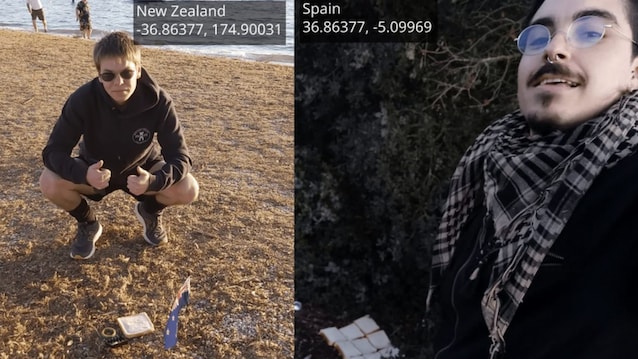
Using a calculation tool based on latitude and longitude, Naude discovered that its “exact opposite” was in southern Spain. But how to get there? The boy decided to ask for help online, on Reddit, to convince someone to put the other slice of bread in his place. Angel Sierra, a 34-year-old Spanish chef, took up the challenge to demonstrate “how people can collaborate across the globe” to create something bigger than themselves. In this case, literally, the largest sandwich in the world.
Having identified the precise coordinates (-36.863377, 174.90031 for New Zealand and 36.863377, -5.09969 for Spain), avoiding streams or bodies of water, roads and public paths on both sides, the two boys in 2020 put down their slices of bread and accomplished the feat, separated by approximately 12,742 km of rock, magma and earth’s core, ea 20,037 km of distance measured on the Earth’s surface from each other. On one side Naude positioned his slice after having engraved the words “Earth sandwich”; on the other Sierra used nine, to be mathematically sure of covering the perfect area.
What are the antipodal points with which the Earth sandwich was created and the calculation
In geography and solid geometry, two antipodal points they are two locations located at exactly opposite ends of a sphere: in this case, the Earth’s surface. Imagine drawing a straight line that starts from where you are right now, passes exactly through the center of the Earth and comes out on the other side: that is your antipode.
The term has ancient origins: it derives from Greek antipous, composed of anti- (meaning “opposite”) and –pous (which means “feet”) and can be traced back to Timaeus of Plato.
The distance as the crow flies, crossing the planet and its layers, is equal to the diameter of the Earth, while traveling on the surface you would have to travel half its circumference. How is it calculated? We only need yours starting coordinates (latitude and longitude) and two simple steps:
- For the latitudeyou simply need to reverse the sign (or hemisphere). If you are at 41.90° North, your antipode will be at 41.90° South.
- For the longitudeyou need to add 180° to your initial value and then “normalize” it, i.e. make sure that the result is between -180° and +180°. In practice, you exchange East for West and subtract the starting longitude from 180°.
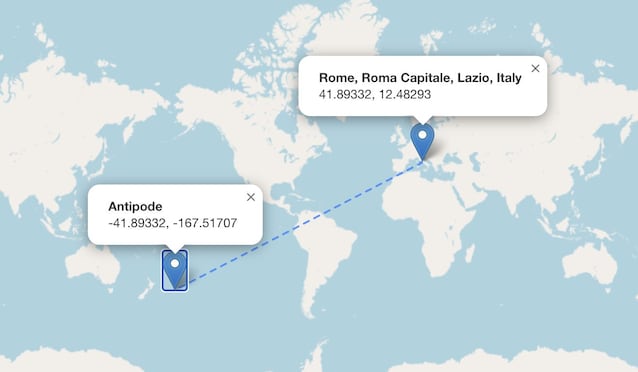
Let’s take a practical example. If you are in Rome (about 41.9° North and 12.5° East), by reversing the latitude you arrive at 41.9° South, and by adjusting the longitude you end up at 167.5° West. Looking on the map which point corresponds to those coordinates we will find the Ocean. THE’antipode of Rome it is located in the Southern Ocean (or South Pacific), several kilometers from any mainland – the closest is, again, New Zealand.
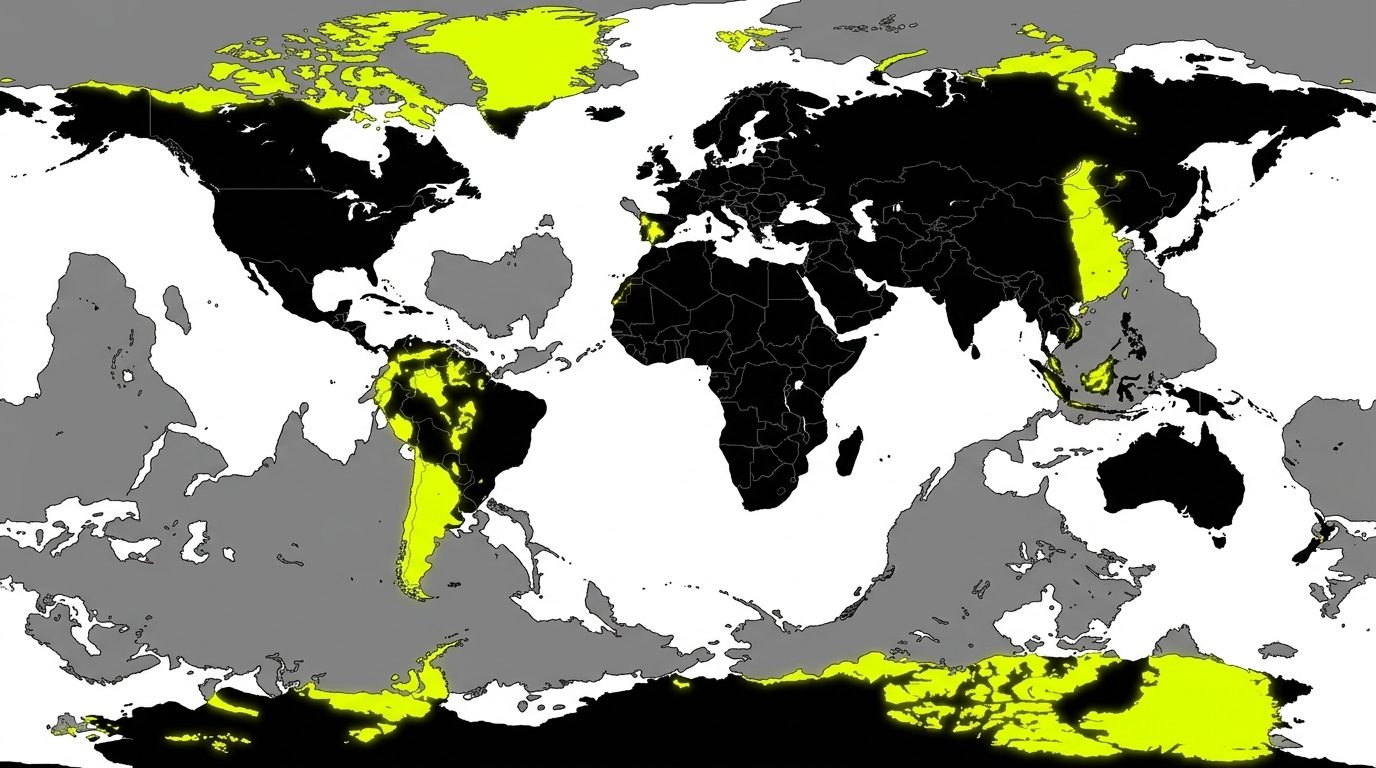
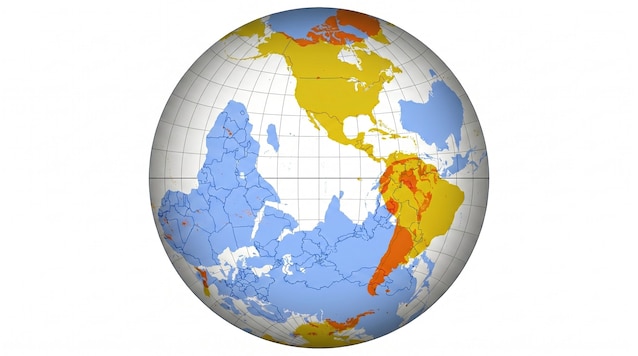
That the antipode of a point on land is in the middle of an ocean is quite frequent, because approximately the 71% of the earth’s surface is covered by oceans. “Land-to-Land” combinations are very rare, and northern New Zealand and Spain are one of these exceptions – the only match in Europe.
Other pairs include Central Argentina and Eastern China, Southern Chile and Mongolia, the Hawaiian Islands, and Botswana/South Africa. For us Italians, however, digging a tunnel straight under our feet would invariably lead to finding ourselves in the Southern Ocean.
If that scene common to many cartoons, especially of American origin, in which the protagonist begins to dig until he reaches the other end of the world (China or Australia) to escape, were scientifically correct, we would almost certainly see him emerge on the ocean floor! And if you want to have fun discovering all the antipodes of the Earth, you can do so on the antipodes-map.com website.
Sources
USGS – Latitude/Longitude and Antipodes concepts
Antipodes Map
BBC
