How sad Venice is
A golden rule of politics is to base any analysis on numbers. Beyond the spin, the social media managers, the influencers, the commentators and the electoral propaganda, the numbers don’t lie. Among the 118 municipalities over 15,000 inhabitants voting, the center-left won 34 municipalities in the first round, while the center-right obtained 26, and 41 municipalities went to the runoff. Of the 18 provincial capitals, the centre-left won in 7 cities, the centre-right in 3 and civic lists in another 2. Six capitals will go to the run-off. In fact, the centre-left, on a national scale, wins more municipalities, yet the narrative the following day speaks of a blowout in Campo Largo due to the defeat in Venice. It is true that the choice of the centre-left candidate was not fortunate – an unattractive exponent of the apparatus – but it is equally true that the centre-left did not lose this electoral round. But more than anything, what leaves a bitter taste in Campo Largo’s mouth is the failure to push the centre-right government.
In Venice the Campo Largo lost and was divided
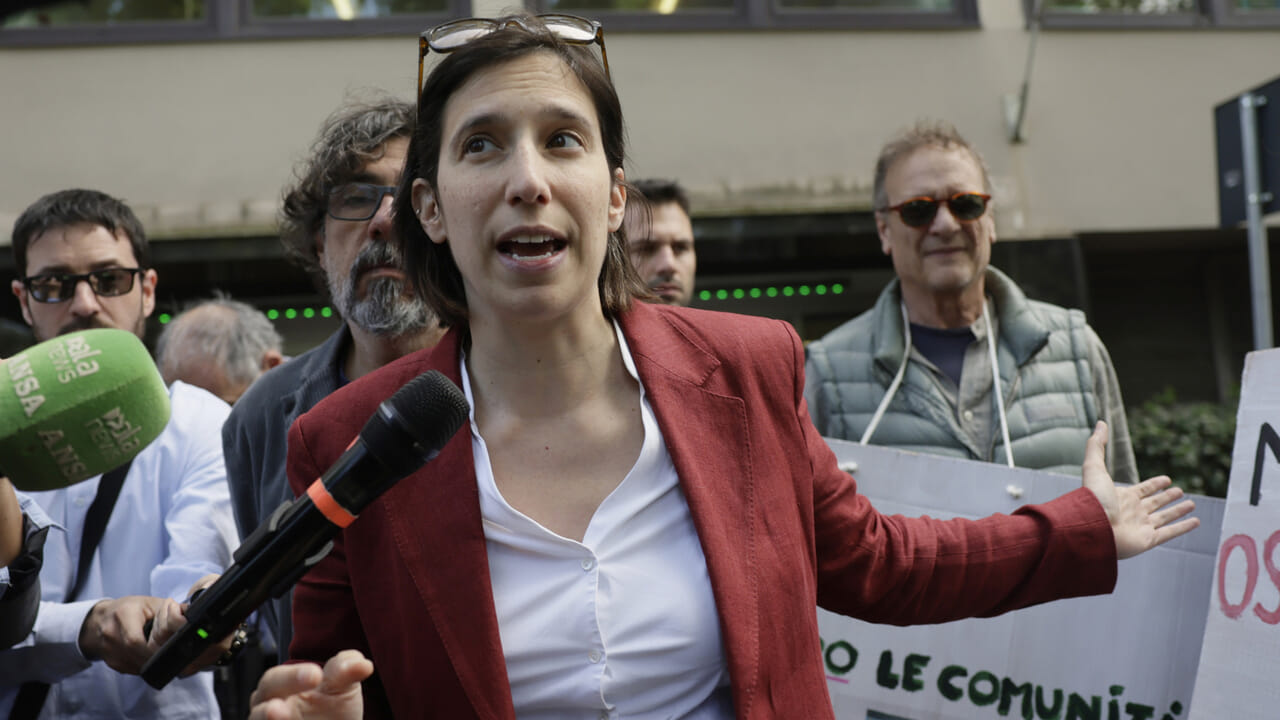
The excess of spin has led Elly Schlein’s Democratic Party to prepare a storytelling that sees the left losing across the board because it has lost Venice, despite the case of Beatrice Venezi at La Fenice – “the conductor” of the orchestra fired by the Meloni government – and the mess of the director of the Biennale Pietrangelo Buttafuoco who, against the opinion of the government and all of Europe, inaugurated the Russian pavilion, which has gone down in history as a sort of noisy and rather kitsch. There is something that doesn’t add up in the Democratic secretary’s strategy. Venice disappoints the centre-left, which in the only regional capital to vote had convinced itself of winning easily after the errors of the Meloni government at the Fenice and the Biennale. Instead Simone Venturini, outgoing councilor of the Brugnaro council, a former UDC who reinvented himself as a civic citizen, took the lead in the vote from the first minute, winning in the first round with a small but sufficient margin.
The surprise comes from the contained percentage of Andrea Martella, candidate of a broad but not unified progressive front (with PRC inside, Action outside), which stops below 40%, below the competitive threshold. The only positive note for the Democratic Party: it confirms its first position with 24%. And the element that hurts Campo Largo is the fact that half of the 5 Star Movement electorate votes for the centre-right candidate. An element, this of the otherness claimed by the M5S, which is also found in rather bizarre cases, such as in Ceglie Messapica, a small village in Puglia in which even Rocco Casalino, former Grillino spin doctor of the Grillo-Casaleggio era and then spokesperson for Giuseppe Conte at the time of the two governments between the pandemic, ran. It was said that Casalino, from the height of his 246 votes, allows himself to claim that he made the M5S of his native town gain more votes than the local Democratic Party. They are satisfactions.
Meloni holds out despite inflation, debt and scandals
The disappointment of the centre-left, if anything, is that of not having taken advantage of the post-referendum effect on justice. In addition to the fact that this government, at least at a media level – but also in the reality of things – would have to pay for the reduction of consensus following the peak inflation, the growth of public debt, the closeness to Donald Trump, the complaints in the various ministries to the sound of scandals and scandals, from steakhouses smelling of the Camorra to investigations into crimes such as fraud against the State. Yet, compared to before, the administrative map changes little. Giorgia Meloni holds, the center-right does not lose too much ground. And if there was any hope, the center-left should nurture it towards Roberto Vannacci’s new party – which is slowly eroding consensus and representatives from both the League and Fratelli d’Italia – and Marina Berlusconi, who is repositioning Forza Italia on more liberal and progressive demands. The two sides exchange some cities such as, for example, Pistoia which passes from the right to the left. Then there are the civic victories that are difficult for progressivism to digest, like Vincenzo De Luca who wins by a landslide for his fifth mandate in Salerno, to whom the Nazarene PD – therefore, always Schlein and her janissaries – had not granted the symbol, while the Campania PD is presided over by De Luca junior. Same thing in Enna, with former dem senator Mirello Crisafulli, also deprived of the PD symbol.
Schlein doesn’t even score with an empty net
The center-left receives a harsh lesson: Campo Largo stutters and the M5S is all a continuous and poisonous distinction with respect to the Democratic Party; many candidates were wrong, betraying a tendency of the ruling class of the dem to prefer loyalty to the secretary, to the detriment of real recognition in the area. The push didn’t happen and in the Nazarene area there are fears that there never will be. And it is impressive to read, in the aftermath of the electoral round, in the headline of the refounded “Rinascita”, the nine-column headline “To win you have to go back to politics” signed by Mario Ciarla, a very fine mind and current group leader of the Democratic Party in the Lazio Regional Council. As if to say: what has been done so far is not enough. And that the Democratic Party has external contenders – Giuseppe Conte’s 5 Star Movement, Renzian Silvia Salis – is well known. But the fact that there is also an internal contender makes everything more interesting and compelling. It remains to be understood who, within the Democratic Party, is champing at the bit to dethrone a secretary who doesn’t even score with an empty net.
